Owner’s manual
 Error Codes


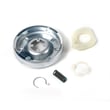
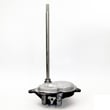
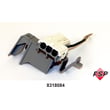
Does my Kenmore top load washer have a filter?
Yes, your Kenmore top load washer model 11028522701 uses a drain-pump system that can trap debris, but it does not have a simple, front-access “lint filter” like many front-load washers. For the exact cleaning and maintenance steps for your washer, use the 11028522701 owner's manual.
Where “filtering” happens on this washer
On this style of Kenmore top load washer, small items and lint are typically caught in places that act like a filter.
- The drain pump inlet area (coins, hair pins, small socks)
- The drain hose (kinks or partial clogs slow draining)
- The tub and basket area (lint and residue from overloading)
- The household drainpipe or laundry tub (slow drain can cause backups)
If you suspect a drain restriction, the pump can hum or gurgle during draining; that sound is normal, but slow draining is not.
Quick checks before you take anything apart
- Unplug the washer.
- Confirm the drain hose is secured and not kinked.
- Check the laundry tub or standpipe for a slow or clogged drain.
- Run a drain and spin cycle with the basket empty.
Common symptoms and what they point to
| Symptom | Most likely cause | What to check first |
|---|---|---|
| Water drains slowly | Partial clog in pump or hose | Drain hose routing and standpipe flow |
| Clothes end cycle too wet | Unbalanced load reduces spin | Load height and balance in basket |
| Water backs up at drain | Household drain cannot keep up | Sink/standpipe capacity and clogs |
When a part is the “filter” problem
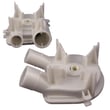
If the washer will not drain, drains very slowly, or you find debris in the pump, the drain pump is the first part we inspect and replace when needed. For this model, the correct pump is the washer drain pump WP3363394.
Why it matters
A restricted drain path can leave loads too wet, cause poor rinse performance, and create leaks or water backup at the standpipe. Keeping the drain path clear protects the pump, clutch, and drive system from extra strain.
Last updated: February 2026
How many cubic feet is a Kenmore Model 11028522701 washer?
Kenmore washer model 11028522701 is a top-load design; washers in this Kenmore 110 platform are typically about 3.2 to 3.5 cu. ft. capacity. For the exact published capacity for your specific unit, we recommend confirming it in the 11028522701 owner's manual.
How to confirm the exact capacity on your washer
We use these quick checks to verify capacity without guessing:
- Check the specifications section in the 11028522701 owner's manual
- Look under the lid for the model and serial label (the manual notes the label is located under the washer lid)
- Compare your tub size and basket style to the parts diagram when ordering major tub components
- If you are measuring for load size, use the basket hole rows as a practical fill guide (do not load above the top row of basket holes)
Typical capacity range (what it means for load size)
| Capacity (cu. ft.) | Typical load size | Common examples |
|---|---|---|
| 3.2 | Medium | Everyday mixed loads, towels (not overpacked) |
| 3.5 | Medium-large | Bulkier items with more room to circulate |
Why it matters
Capacity affects cleaning performance and spin balance. Overloading reduces agitation, increases vibration, and can contribute to off-balance spinning. The manual’s guidance to keep loads balanced and below the top basket-hole row helps protect the drive system and suspension.
Last updated: February 2026
How to hard reset kenmore washer?
For Kenmore washer model 11028522701, the most reliable “hard reset” is a simple power reset: unplug the washer (or switch the breaker off) for 1 minute, then restore power and restart the cycle. This clears most temporary control and cycle issues without changing normal settings. See the 11028522701 owner's manual for model-specific operating steps.
Quick reset steps (recommended)
- Press the cycle knob to stop the washer (if it is running).
- Unplug the washer (or turn the circuit breaker OFF).
- Wait 60 seconds.
- Plug back in (or turn breaker ON).
- Close the lid and pull out the Cycle Control knob to start.
- If the washer was paused mid-cycle, restart the cycle from the beginning for best results.
If it still will not start or spin
These checks fix the most common “won’t run” symptoms after a reset:
- Confirm the lid is fully closed; a failed lid switch can prevent spin.
- Make sure the drain path is clear; slow drains can stop the cycle.
- Verify the outlet has power (test with a lamp).
- Redistribute the load evenly; off-balance loads can interrupt spin.
- If the washer drains but will not spin, inspect the lid switch and drive system.
Common symptom-to-part match
| Symptom | What it often points to | Example part for this model |
|---|---|---|
| Won’t spin with lid closed | Lid switch not sensing closed lid | Washer lid switch assembly WP8318084 |
| Hums but won’t drain | Drain pump jammed or failed | Washer drain pump WP3363394 |
| Agitates poorly or slips | Worn agitator dogs | Agitator dog 80040 |
Why it matters
A power reset clears “stuck” timer positions and minor electrical glitches. If the same problem returns right away, the washer is usually reacting to a real condition (lid not sensed closed, draining restriction, or a worn drive component) rather than needing repeated resets.
Last updated: February 2026
How to identify a Kenmore washer model?
Your Kenmore washer model number is printed on the model and serial number label; for Kenmore model 11028522701, the manual specifies that label is located under the washer lid. Use the full model number (and serial number) when ordering parts or scheduling service. See the 11028522701 owner's manual.
Where to look on Kenmore washers
Most Kenmore washers place the model/serial label in one of these spots:
- Top-load washers: under the lid (often along the rim of the opening)
- Front-load washers: inside the door opening (around the door frame)
- Some models: on the back panel near the power cord or control console
What the model number looks like
Kenmore model numbers commonly start with a 3-digit prefix such as 110 (as shown in the manual’s product record section for this washer). When you write it down, copy it exactly.
| What to record | Example for this washer | Why we need it |
|---|---|---|
| Model number | 11028522701 | Ensures parts fit your exact design |
| Serial number | (from the same label) | Helps match production changes |
| Purchase date | (your records) | Useful for maintenance tracking |
Tips to avoid ordering the wrong part
- Copy the model number character-for-character (no spaces added)
- Take a clear photo of the label before you close the lid
- Match the part to the symptom (drain, spin, agitate) before buying
- If the washer will not spin, check common safety-related items like the washer lid switch assembly WP8318084
Why it matters
Kenmore washers can look similar across many series, but internal components (timer, lid switch, drain pump, coupling) can vary by model and even by serial range. Using the exact model number keeps your repair accurate and prevents returns.
Last updated: February 2026
Is it worth repairing a Kenmore washing machine?
Yes; repairing a Kenmore washer is worth it when the fix restores reliable washing and spinning for less than replacing the machine. For Kenmore model 11028522701, many common failures involve serviceable parts (lid switch, drain pump, coupling) that are typically cost-effective to replace using the 11028522701 owner’s manual.
When repair is the smart choice
We recommend repair when the washer’s tub and cabinet are in good shape and the problem is isolated to a wear part.
- The washer fills and drains but will not spin (often a lid switch or drive issue)
- The motor runs but agitation is weak (often agitator components)
- It will not drain or drains slowly (often a pump or blockage)
- The timer or cycle control is inconsistent (control/timer issue)
- The repair is a straightforward part replacement, not a full rebuild
Quick cost-to-value guide
Use this simple rule: if the repair cost is under about 50% of a comparable new washer, repair usually makes sense.
| Scenario | Typical outcome | Usual recommendation |
|---|---|---|
| Single failed wear part | Restores normal operation | Repair |
| Multiple major drive/tub issues | Higher labor and downtime | Compare costs carefully |
| Repeated leaks or severe vibration | May indicate deeper wear | Diagnose before buying parts |
Parts that commonly make repair worthwhile on this model
These are frequent, high-impact fixes for top-load Kenmore washers like 11028522701:
- Washer lid switch assembly WP8318084 (won’t spin or drain with lid “open”)
- Washer drain pump WP3363394 (no drain, slow drain, humming)
- Coupling 285753A (motor runs but washer won’t agitate/spin)
- Agitator dog 80040 (agitator slips or doesn’t move clothes well)
Why it matters
A targeted repair can extend the life of a dependable washer and avoid the learning curve and fit issues that come with replacing a machine. The manual also emphasizes safe operation and avoiding DIY repairs unless the instructions specifically recommend it, so using the correct procedure and parts matters for safety and performance.
Last updated: February 2026
What is the average lifespan of a Kenmore washer?
Most Kenmore washers average 10 to 15 years of service life with normal household use and basic maintenance. For Kenmore model 11028522701, following the care and safety guidance in the 11028522701 owner's manual helps you reach the upper end of that range.
Typical lifespan and what changes it
A washer’s lifespan is driven by load size, cycle frequency, water quality, and how quickly small issues (leaks, vibration, slow drain) are corrected.
- Normal use: 10 to 15 years
- Heavy use (large family, daily loads): closer to 8 to 12 years
- Light use (few loads per week): often 12 to 15 years
- Best single habit: avoid overloading; loads should move freely during washing
Maintenance that extends life (and prevents common failures)
The manual calls out several care items that directly reduce wear and water damage.
- Replace inlet hoses on a schedule; the manual recommends every 5 years
- Inspect hoses periodically for bulges, kinks, cuts, wear, or leaks
- Keep loads balanced and avoid overfilling the basket
- Use bleach correctly (never pour undiluted bleach directly on clothing)
- If storing or moving in freezing weather, winterize the washer first
Quick maintenance schedule
| Item | What to do | When |
|---|---|---|
| Water inlet hoses | Replace and write the date on the hose | Every 5 years |
| Load size | Keep loads balanced, not overloaded | Every wash |
| Leak check | Look under/behind washer for drips | Monthly |
| Drain performance | Watch for slow drain or standing water | As needed |
Parts that often determine “repair vs. replace”
If performance drops, these are common wear items that can restore operation and extend life.
- If it will not drain or leaves water behind: check the washer drain pump WP3363394
- If it will not spin or stops when the lid opens: check the washer lid switch assembly WP8318084
- If agitation is weak or intermittent: inspect the agitator dog 80040
Why it matters
A washer near the end of its lifespan often shows early warning signs (leaks, vibration, slow drain, weak agitation). Addressing those quickly can prevent secondary damage to the drive system, basket, and gear case.
Last updated: February 2026