Owner’s manual
 View engine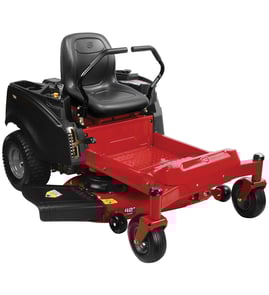



Where can I find my lawn mower engine model number?
On a Craftsman rear-engine riding mower model 247204190, the engine model number is printed on the engine’s ID label, not on the mower’s deck or frame tag. You will usually find it on the engine shroud, near the muffler, or near the spark plug area; confirm the exact label location in the 247204190 owner’s manual.
Common places to check on the engine
Look for a sticker or metal tag on the engine itself (often on flat sheet metal or the blower housing):
- Near the spark plug (on the engine shroud or nearby sheet metal)
- Next to the muffler or heat shield area
- On the recoil starter housing (if equipped)
- Under the top engine cover or shroud (after removing a few screws)
- On the side of the blower housing facing the seat or rear of the mower
What to write down (so you get the right parts)
Engine identification usually includes more than one number. We recommend recording:
- Engine model (the main model identifier)
- Type/spec (variant information that affects parts)
- Code/date (production code, sometimes needed for exact matches)
Quick reference table
| Label item | What it’s used for | When it matters most |
|---|---|---|
| Engine model number | Identifies the engine family | Ordering tune-up and internal engine parts |
| Type/spec number | Identifies the exact build | Carburetor, ignition, governor, muffler variations |
| Code/date | Identifies production run | When parts changed mid-production |
Why it matters
Your mower model 247204190 identifies the tractor, but the engine model number identifies the engine manufacturer’s exact configuration. Using the engine label helps prevent ordering the wrong ignition parts, fuel system parts, or exhaust components.
Safety and access tips
- Shut the engine off and let it cool completely before checking near the muffler.
- Remove the key and disconnect the spark plug wire before reaching around the engine.
- Wipe dirt and oil off the label area; a flashlight helps.
Last updated: January 2026
What brand engine does Craftsman use?
Craftsman uses engines from multiple manufacturers, and the exact engine brand on a Craftsman mower depends on the specific model and the engine’s own model/type label. For Craftsman model 247204190, we identify the correct engine brand by checking the engine ID tag and the specifications in the 247204190 owner’s manual.
How to identify the engine brand on model 247204190
Look for the engine identification label (often on the blower housing, valve cover area, or near the starter). Use these details to confirm the manufacturer:
- Engine brand name (for example, Briggs & Stratton, Kohler, Honda)
- Engine model and type numbers
- Code/date number (common on small engines)
- Displacement (cc) or horsepower rating
- Any emissions label information
Where Craftsman engines typically come from (general guidance)
Across Craftsman riding mowers and rear-engine riders, it’s common to see engines sourced from major small-engine makers. Which one you have is model- and production-run specific.
| What you’re checking | What it tells you | Why it helps |
|---|---|---|
| Engine brand badge/label | Manufacturer name | Confirms who built the engine |
| Engine model/type code | Exact engine family | Helps match tune-up and repair parts |
| Craftsman mower model number | Mower platform | Helps match chassis and mower deck parts |
Why it matters
The engine brand determines the correct maintenance parts (spark plug, air filter, fuel filter) and the right service procedures. Using the engine’s model/type numbers prevents ordering the wrong parts even when the mower model number is correct.
Last updated: January 2026
What kind of engine does a Craftsman riding lawn mower have?
For Craftsman model 247204190, the exact engine make and model (for example, Briggs & Stratton vs. another supplier, single-cylinder vs. V-twin, and horsepower) cannot be identified from the model-specific information we have here. We recommend confirming the engine identification using the mower’s labels and the 247204190 owner’s manual.
How to identify the engine on model 247204190
Use these quick checks to get the correct engine details before ordering tune-up parts or troubleshooting a no-start:
- Look for the engine ID label on the blower housing, valve cover, or near the starter
- Record the engine manufacturer (Briggs & Stratton, Kohler, etc.) and the engine model/type/code
- Check the mower’s product label (often under the seat or on the frame) for emissions and engine family info
- Compare what you find to the engine section and specifications in the manual
- If the label is missing, use the mower model number 247204190 to narrow down compatible assemblies and diagrams
Why it matters
Engine brand and model determine the correct spark plug, air filter, oil filter, fuel filter, and even the correct muffler style. Using the wrong engine spec is one of the most common reasons parts do not fit.
Common engine types you may see on similar Craftsman riders
We cannot assume these apply to 247204190 without verifying the engine tag, but these are typical on many Craftsman riding mowers:
| Engine type | What it usually means | Typical use case |
|---|---|---|
| Single-cylinder | Simpler design, fewer cylinders | Flat to moderately sloped yards |
| V-twin | Smoother running, more torque | Larger yards, heavier mowing |
| OHV (overhead valve) | More efficient combustion | General-purpose mowing |
Parts that relate to the engine (when you are diagnosing exhaust or safety issues)
If you are tracking down an exhaust leak or a mower that stalls when you leave the seat, these model-compatible parts are commonly involved:
- Muffler 751P10528E: exhaust noise control and routing
- Seat switch 725P05058: safety interlock that can shut off the engine if it opens unexpectedly
Last updated: January 2026
What is the difference between a front engine and rear engine riding mower?
On the Craftsman 247204190 rear-engine riding mower, the engine sits behind the operator, which typically improves rear-wheel traction and keeps the hood area more open for steering and visibility. A front-engine rider places the engine up front, which can change balance, turning feel, and service access.
Key differences you’ll notice
- Weight distribution: Rear-engine riders put more weight over the drive wheels; front-engine riders put more weight over the front axle.
- Traction on slopes and with attachments: Rear-engine designs often maintain drive-wheel grip better when the rear is loaded (for example, with a bagger).
- Turning and maneuvering: Front-engine riders often feel more “tractor-like”; rear-engine riders can feel more nimble in tight areas.
- Service access: Front-engine models usually offer easier access to the engine from the hood area; rear-engine models often require lifting the seat or rear cover.
- Noise and heat location: Rear-engine riders place more engine noise and heat behind you.
How this applies to model 247204190
We use the model’s configuration and operating guidance in the 247204190 owner’s manual to confirm controls, safe operation, and maintenance points for a rear-engine layout (seat area, rear cover access, and safety interlocks).
If you plan to collect clippings, a compatible bagger can add rear weight; for this model, one common accessory is the lawn tractor bagger 19A70043OEM.
Quick comparison
| Feature | Front-engine riding mower | Rear-engine riding mower (like 247204190) |
|---|---|---|
| Engine location | In front of operator | Behind operator |
| Typical balance | Front-heavy | Rear-biased |
| Drive-wheel traction | Can vary with load | Often stronger under rear load |
| Engine access | Often easier | Often from rear/seat area |
Why it matters
Engine placement affects traction, handling, and how you maintain the mower. Choosing the right layout can reduce wheel slip, improve cut consistency, and make routine service (oil changes, belt checks, safety switch checks) more straightforward for your yard.
Last updated: January 2026