Owner’s manual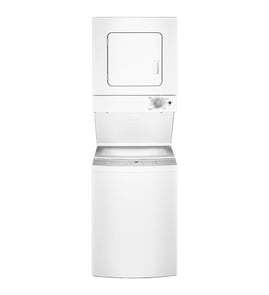


What are the most common issues with 41794872302?
For the Kenmore 41794872302 stacked laundry center, the most common problems are dryer noise or no-heat complaints, dryer not starting, and washer not draining or spinning. These issues usually trace to a few high-wear parts and basic airflow or drain restrictions; the owner's manual helps confirm the correct checks and settings.
Most common symptoms and likely causes
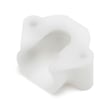
- Dryer is noisy (squeal, thump, scraping): worn drum support parts such as a dryer drum bearing 131825900, drum glides, or felt seals
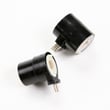
- Dryer tumbles but does not heat (gas models): ignition or gas valve circuit issues; common suspects include a dryer igniter 5304517325 or a gas valve coil
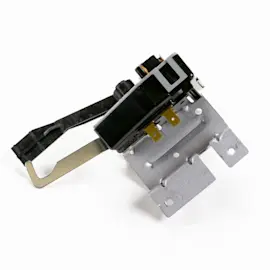
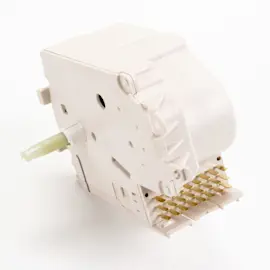
- Dryer will not start: door switch circuit, timer, or a failed start switch
- Washer will not drain or leaves water in tub: clogged drain path, kinked hose, or a failing washer drain pump 137221600
- Washer will not spin or spins poorly: out-of-balance loads, lid/door switch issues, or drive system wear
Quick checks we recommend before replacing parts
- Reset and verify settings: unplug for 2 minutes, then reselect the cycle and options.
- Check dryer airflow: clean the lint screen and confirm strong airflow at the exterior vent.
- Confirm the door closes firmly: a weak latch or misalignment can prevent starting.
- Inspect washer draining: look for a kinked or clogged washer drain hose 134592700 and clear the standpipe.
- Listen and localize noise: front, rear, or under the cabinet helps narrow the failing component.
Symptom-to-part cheat sheet
| Symptom | Most common area | Example part on this model |
|---|---|---|
| Squealing or grinding in dryer | Drum support | Dryer drum bearing, drum glide, felt |
| No heat (dryer runs) | Ignition/gas valve | Dryer igniter, gas valve coil |
| Dryer won’t start | Start/door circuit | Start switch, door switch harness, timer |
| Washer won’t drain | Drain system | Washer drain pump, drain hose |
Why it matters
Catching these issues early prevents secondary damage, like a worn bearing damaging the drum, or a restricted vent overheating the dryer. Using model-correct parts keeps fit and performance consistent for the 41794872302.
Last updated: March 2026
What is the cubic feet capacity of Kenmore model 41794872302?
The exact cubic feet capacity for Kenmore stacked laundry center model 41794872302 is listed in the product specifications section of the 41794872302 owner's manual. This model is a compact, stacked laundry center; most units in this class typically fall in the 2.0 to 3.5 cu. ft. washer-capacity range.
How to find the capacity in the manual
Look for a section labeled Specifications, Features, or Washer capacity in the 41794872302 owner's manual. Capacity is usually shown as:
- Washer tub capacity (cubic feet)
- Maximum dry load guidance (sometimes shown by fill level markers)
- Cycle and load size recommendations
- Electrical and water requirements (not capacity, but often nearby)
Typical capacity ranges (for planning)
If you are planning loads or comparing models, these ranges are a practical guide for stacked laundry centers like the Kenmore 41794872302:
| Laundry type | Typical washer capacity | What it comfortably handles |
|---|---|---|
| Compact stacked laundry center | 2.0 to 2.6 cu. ft. | Small to medium loads, light bedding |
| Full-size stacked laundry center | 2.7 to 3.5 cu. ft. | Medium to large loads, some bulky items |
Why it matters
Washer capacity affects cleaning performance and spin efficiency. Overloading can lead to poor agitation, out-of-balance spinning, and longer dry times because clothes come out wetter than normal.
Related tip for better results
Even with the right capacity, performance depends on loading correctly:
- Load items loosely; do not pack the tub
- Balance mixed items (towels with smaller pieces)
- Use the correct load size or water level setting (if equipped)
- If the load goes out of balance, pause and redistribute
Last updated: February 2026
What is the life expectancy of a Kenmore washer?
Most Kenmore washers typically last 10 to 15 years with normal household use and basic maintenance. For the Kenmore 41794872302 stacked laundry center, following the care, loading, and operating guidance in the 41794872302 owner's manual helps you get the longest service life.
What affects washer lifespan the most
A washer’s life is driven more by use and care than by the calendar. These factors make the biggest difference:
- Load size and balance: frequent overloading or unbalanced loads increase wear on the drive system
- Detergent habits: too much detergent can leave residue that stresses draining and rinsing
- Drain performance: slow draining makes the pump work harder and can leave water behind
- Water quality: hard water can increase buildup on internal components
- Heat protection events: if the motor overheats, the overload protector can stop the motor and restart after a cool-down period (up to about 30 minutes)
Maintenance that extends life
These simple habits reduce strain on the tub, motor, and pump:
- Use the correct cycle and water temperature for the fabric type
- Keep loads at a reasonable size; mix large and small items to improve balance
- Check pockets and remove hard objects (coins, screws, pins) before washing
- Use the right amount of HE detergent (if your detergent is HE); avoid over-sudsing
- If you notice standing water or slow draining, address it early (a failing pump can shorten washer life)
Common “wear” symptoms and what they usually point to
| Symptom | What it often means | What to check first |
|---|---|---|
| Won’t drain or drains slowly | Drain restriction or pump issue | Hoses, clogs, pump operation |
| Loud noise or vibration | Unbalanced load or worn components | Load balance, leveling, suspension |
| Stops mid-cycle then restarts later | Motor overheated and cooled down | Load size, airflow around unit |
Why it matters
A washer that is overloaded or not draining correctly wears out faster and can also leave clothes less clean. Catching early symptoms and following the operating steps in the manual helps protect major components like the drive motor and drain system.
Last updated: February 2026