Installation guide
 Owner’s manual


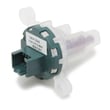
Does Electrolux still make dishwashers?
Yes. Electrolux still makes dishwashers, and your Electrolux EWDW6505GB0 is supported with documentation and replacement parts. If you are comparing models or planning a replacement, we recommend using the features and cycle options listed in the EWDW6505GB0 owner’s manual as your baseline.
How to confirm what you have (and what fits)
To avoid ordering the wrong part or comparing the wrong platform, match these details:
- Confirm the full model number on the rating label (use EWDW6505GB0, not a partial).
- Use the cycle and option descriptions in the manual to compare like-for-like features.
- If you need installation requirements (power, grounding, mounting), use the install guide.
- For performance issues, check for any displayed error indicators before assuming a part failure.
- When replacing parts, match by model and the exact part ID.
Common support items owners replace
Even when a brand continues production, older models are typically maintained through parts support. For EWDW6505GB0, common service items include:
| What you’re fixing | Common symptom | Example part for this model |
|---|---|---|
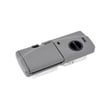
| Detergent dispensing | Detergent cup not opening or leaking | Dishwasher detergent dispenser assembly 5304507354 |
| Door closing/starting | Door won’t latch, unit won’t start | Door latch (match by model) |
| Water level protection | Overfilling behavior or fill errors | Float switch assembly (match by model) |
Why it matters
Knowing Electrolux still produces dishwashers helps, but what matters most for repairs is model-specific compatibility. Using the correct Electrolux documentation and the exact EWDW6505GB0 part IDs prevents fit issues and repeat repairs.
Last updated: February 2026
What is the life expectancy of an Electrolux dishwasher?
Most Electrolux dishwashers, including model EWDW6505GB0, typically last over 10 years with normal household use and basic maintenance. Real-world lifespan depends most on water quality, how often you run it, and whether leaks or drainage problems are corrected early using the care steps in the EWDW6505GB0 owner’s manual.
Typical lifespan and what affects it
A dishwasher’s service life is usually driven by wear on moving water-system parts (pump, hoses, spray arms), door sealing, and electronics.
- Hard water and heavy detergent use can shorten component life
- Frequent short cycles can leave buildup that causes odors and poor cleaning
- Leaks that go unchecked can damage wiring and controls
- Clogged filters and spray arms make the pump work harder
- Overloading racks can bend tines and stress the door latch
Maintenance checklist to help it reach its full lifespan
We recommend these habits for the EWDW6505GB0:
- Clean the filter area and sump regularly (remove debris, rinse screens)
- Run a monthly cleaning cycle to reduce grease and mineral buildup
- Check the lower spray arm for blocked jets and clear them
- Inspect the door seal area for food residue and wipe it clean
- Confirm the unit is level and secured correctly (see the EWDW6505GB0 installation guide)
Quick guide: what “wearing out” usually looks like
| Symptom | Common cause | What to check first |
|---|---|---|
| Not draining | Drain restriction or valve issue | Air gap/garbage disposal plug, drain hose routing |
| Poor cleaning | Low spray pressure or blocked jets | Filter area, spray arm holes |
| Won’t start or stops | Control or door latch issue | Door closes firmly, power reset |
| Overfilling/leaking | Float or inlet control issue | Float moves freely, no debris under float |
Why it matters
Knowing the typical life expectancy helps you decide whether to repair or replace. If your EWDW6505GB0 is near the 10+ year mark, fixing a single failure (like a leak or drain issue) early often prevents bigger damage to the control assembly and wiring.
Last updated: February 2026
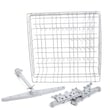
Can I replace dishwasher parts myself?
Yes, for the Electrolux EWDW6505GB0 dishwasher you can replace many common parts yourself if you can safely shut off power and water, follow the correct steps, and reassemble panels correctly. For wiring, grounding, or control-related repairs, we recommend using the installation guide and following electrical safety requirements.
What you can usually DIY (and what to leave to a pro)
Many mechanical, non-wiring repairs are straightforward; electrical and leak-risk repairs take more care.
- Good DIY candidates: racks, spray arms, some door hardware, simple covers and brackets
- Moderate DIY: detergent dispenser swaps, float-related checks, hose replacements (watch for leaks)
- Best left to a qualified technician: control and wiring diagnostics, junction box wiring, repeated breaker trips
- Always do first: disconnect electrical power before servicing
- After any repair: confirm all enclosure panels are installed before running a cycle
Safety steps we follow before any repair
Dishwashers combine water and electricity, so safe setup matters as much as the part.
| Step | What to do | Why it matters |
|---|---|---|
| Power off | Turn off the breaker and verify the unit is off | Prevents electric shock while servicing |
| Water off | Close the dishwasher supply valve | Prevents flooding during hose or pump work |
| Grounding | Keep all wiring enclosed in the junction box and ensure proper grounding | Reduces shock risk and protects the control |
| Recheck panels | Reinstall toe/kickplate and other panels | Prevents exposure to live parts and moving components |
Parts on this model that customers commonly replace
If your symptom matches, these are typical starting points for the EWDW6505GB0.
- Detergent door not opening or leaking from the dispenser: dishwasher detergent dispenser assembly 5304507354
- Overfill symptoms or fill issues tied to float movement: float 154763901
- Poor wash circulation or unusual pump noise: dishwasher water pump 154614002
- Door not latching or unit will not start because the door is not sensed closed: latch 154671402
Why it matters
A correct DIY repair saves time and money, but a dishwasher that is not properly grounded, sealed, or reassembled can create repeat failures (no-start issues, leaks, or error codes). For troubleshooting guidance before buying parts, use the Electrolux dishwasher error codes reference.
Last updated: February 2026
What is E3 error on Electrolux dishwasher?
On an Electrolux dishwasher, an E3 error indicates a heating problem; the dishwasher is not heating the water as expected during the cycle. For model EWDW6505GB0, use the error-code section in the EWDW6505GB0 owner’s manual to match what you see on the display to the correct troubleshooting steps.
What E3 usually means (and what you notice)
A heating fault typically shows up as poor wash results or the cycle stopping early.
- Water stays lukewarm or cool during the wash
- Dishes come out dirty because wash temperature never reaches target
- Drying performance drops (heater helps drying on many cycles)
- The cycle may pause, end early, or show an error again after restart
Safe checks we recommend first
These steps help rule out simple causes before you move to electrical testing.
- Cancel the cycle and let the dishwasher drain, then restart a normal cycle
- Confirm the hot water supply valve is fully open
- Run the kitchen hot water until it is hot before starting the dishwasher
- Make sure the door closes and latches firmly
- Check for obvious wash issues like a blocked spray arm or heavy soil filter buildup
What to do next if E3 returns
If the error comes back quickly, the issue is in the heating circuit or the control’s temperature feedback.
| Likely area | What it affects | Typical next step |
|---|---|---|
| Heater circuit | Water temperature rise | Test heater and wiring (technician-level) |
| Temperature sensing | Control “sees” wrong temp | Check sensor connections and harness |
| Control logic | Commands heat and monitors faults | Diagnose control outputs and error history |
If you need a model-matched electronic part during diagnosis, the control assembly 154750502 is one of the components involved in heater control and fault detection on this dishwasher.
Why it matters
A true heating error increases cycle time, reduces cleaning, and leaves dishes wet. Correctly identifying E3 as a heating fault helps you focus on the heater, sensor feedback, and control circuit instead of replacing unrelated parts.
Last updated: February 2026