 Owner’s manual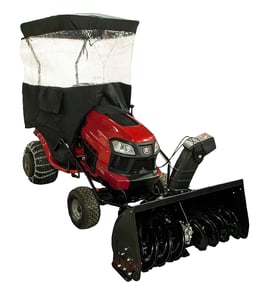


Are snowblower belts universal?
No. Snowblower belts are not universal; the correct belt must match the exact length, width, and V-belt profile your Craftsman snow thrower attachment model 486248460 uses, or the belt will slip, jump off pulleys, or stop the augers under load. Use the 486248460 owner's manual to confirm routing and tensioning.
We match belts by fit and construction, not by “universal” labeling.
- Match the belt type: V-belt (not a flat belt)
- Match belt dimensions: width and effective length
- Match pulley system: V side must seat in every pulley groove
- Use the correct routing: this model’s auger belt twists 1/4 turn under the side idler pulleys
- Replace belts that are frayed, torn, glazed, or stretched
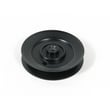
On the Craftsman 486248460 attachment, the auger belt must pass over the top of the large auger drive pulley, then twist 1/4 turn to run underneath the two side idler pulleys. If the belt is the wrong width or profile, it will not sit correctly in the grooves and can slip.
| What you notice | What it usually means | What to do |
|---|---|---|
| Augers stop turning | Belt loose, worn, or broken | Re-tension or replace the belt and verify routing |
| Belt rides out of pulley groove | Wrong belt profile or width | Install the correct V-belt spec for the model |
| Frequent slipping under load | Belt stretched or incorrect length | Replace with correct size and set proper tension |
A “close enough” belt can reduce throwing performance and increase wear on pulleys, idlers, and bearings. Correct belt fit also helps prevent sudden stoppages that can mimic shear bolt or gearbox problems.
When belt issues show up, we also inspect common wear items that affect how the attachment rides and loads the auger:
- Agri-fab lawn tractor snowblower attachment ground drive belt 46961
- Skid shoes and leveling shoes for height and scraping resistance
- Scraper blade edge for excessive wear
- Idler pulleys and brackets for wobble or binding
- Loose fasteners around the clutch/idler assembly
Last updated: February 2026
Can you put a snow blower on a lawn tractor?
Yes. You can put a snowblower attachment on a lawn tractor when the attachment is designed to mount to that tractor and you set it up exactly as specified for the Craftsman 486248460 snow thrower attachment. Proper mounting, belt routing, and rear counterweight are required for safe traction and control; see the 486248460 owner's manual.
- A tractor that accepts a front-mounted snow thrower attachment and the correct mounting hardware
- Correct belt routing and tension so the auger drive runs smoothly
- Rear counterweight installed (required for braking traction)
- Proper snow thrower height adjustment for the surface (pavement vs. gravel)
- No passengers; keep hands and feet away from rotating parts and the discharge opening
The 486248460 attachment is meant to be operated with the tractor at high engine RPM for best discharge, while using a slow ground speed (often 1st gear) for control. In deep or drifted snow, use full throttle and creep forward, stopping as needed to let the auger clear the snow.
The manual warns not to operate without rear weight attached because the rear wheels can lose braking traction. If your tractor feels light in the rear, correct that before you start throwing snow.
| Check | What “good” looks like | What to fix |
|---|---|---|
| Mounting alignment | Attachment sits square to tractor | Re-check hitch points and mounting notches per manual |
| Belt path | Belt stays on pulleys, no rubbing | Re-route and verify idlers and pulley alignment |
| Chute control | Chute rotates freely | Adjust chute crank/keepers as outlined in manual |
| Surface clearance | Skid shoes set for your surface | Adjust skid shoes and scraper height |
A lawn tractor snowblower setup adds winter versatility, but it also adds front weight and drivetrain load. Correct mounting and counterweighting prevent poor steering, reduced braking traction, belt slip, and premature wear on pulleys, bearings, and belts.
Last updated: February 2026
How to attach a Craftsman snowblower chute?
To attach the discharge chute on your Craftsman snow thrower attachment model 486248460, grease the discharge ring, set the chute onto the opening with the crank spiral aligned to the chute flange notches, then secure it with the chute keepers and anti-rotation bracket so the chute rotates freely. See the 486248460 owner's manual.
- Park the tractor/attachment on a flat surface and make sure the attachment cannot move.
- Coat the top of the ring around the discharge opening with general-purpose grease.
- Place the discharge chute (facing forward) onto the discharge opening.
- Align the crank rod spiral with the notches in the chute flange.
- Install the chute keepers (right side up) and the anti-rotation bracket under the chute flange.
- Tighten the hardware carefully so plastic parts are not deformed.
After the chute is bolted down, the goal is smooth rotation without binding.
- Rotate the crank rod and confirm the chute turns through its range.
- If the crank spiral rubs the bottoms of the chute flange notches, reposition the chute crank assembly and then tighten the nuts that were left loose during setup.
- If the chute does not rotate freely, loosen each of the keeper bolts about 1/4 turn, then re-check rotation.
| What you see | What it means | What to do |
|---|---|---|
| Chute rotates smoothly | Keeper tension is correct | No change needed |
| Chute binds or is hard to crank | Keepers too tight or crank spiral rubbing | Loosen keeper bolts slightly; re-align crank spiral |
| Chute feels sloppy/too loose | Keepers too loose | Tighten evenly until rotation is smooth |
A properly installed chute and anti-rotation bracket keep snow discharge control predictable. If the chute binds, you lose aiming control; if it is too loose, it can drift out of position while throwing snow.
Last updated: February 2026
How to tell year of Craftsman snowblower by serial number?
For the Craftsman snow thrower attachment model 486248460, the serial number is primarily used to identify your exact unit for parts and service; the year is typically determined by decoding the build date embedded in the serial format used by the manufacturer. Use the steps below and confirm the serial tag location in the 486248460 owner's manual.
The model and serial numbers are listed on a decal attached to the snow thrower attachment.
- Look for a decal on the attachment frame or housing
- Record the model number (486248460) and the serial number
- Write down the date of purchase as a backup reference
- Keep the information with your manual for future parts lookups
Many Craftsman-branded attachments were produced by partner manufacturers, and a common pattern is that the serial number begins with a short date code.
Typical decoding approach:
- Month is encoded as a letter (often A = January through L = December)
- Day of month is often two digits (01 to 31)
- Year is often a single digit (the year within a decade)
| Serial snippet | What it can mean | Example result |
|---|---|---|
B15x… |
B = February, 15 = day | Built Feb 15 |
…1… (year digit) |
1 = year within decade | 2001, 2011, or 2021 |
Because a single year digit can repeat every 10 years, use these checks to pin it down:
- Compare the decoded date to your purchase date
- Check whether your attachment uses newer-style hardware or older-style components
- Match your parts list to what is installed (for example, scraper and skid shoe styles)
- If the serial tag is worn, use the model number plus key parts to confirm the correct diagram
If you are matching what you have to the parts breakdown, these are common wear items to compare:
- Snowblower scraper blade 24309BL3 (scrapes the ground and protects the housing edge)
- Snowblower attachment skid shoe 24279BL1 (sets housing height and reduces surface gouging)
- Agri-fab lawn tractor snowblower attachment ground drive belt 46961 (drives the attachment)
Getting the build year right helps ensure you order the correct Craftsman 486248460 parts (especially belts, pulleys, and chute components) and prevents fit issues caused by mid-run design changes.
Last updated: February 2026
Should I spray my snowblower with WD-40?
Yes; for the Craftsman snow thrower attachment model 486248460, a light spray lubricant on moving linkages and a light coating on the chute or housing can help reduce sticking and keep controls moving freely. Follow the lubrication points and safety steps in the 486248460 owner's manual.
Use spray lubricant for control mechanisms; use a light coat on snow-contact surfaces to reduce sticking.
- Good places to lubricate: trigger assembly on the lift handle, chute tilt control assembly, and cables
- Good place to reduce sticking: inside of the discharge chute and housing (a light coat)
- Avoid: spraying belts, pulleys, or friction surfaces where slip can cause poor performance
- Avoid: spraying near hot engine/exhaust parts on the tractor
- Always: disengage power and shut off the tractor engine before clearing clogs or servicing
The manual calls for spray lubricant on specific assemblies and oil at pivot points; it also notes that a light coat of wax can help prevent snow from sticking.
| Task | What to use | How much | When |
|---|---|---|---|
| Free up cables and trigger assembly | Spray lubricant (WD-40-type works) | Light spray | Before season, then as needed |
| Pivot points on lift mechanism and idler arms | Light oil | A few drops | Periodically during season |
| Reduce snow sticking in chute/housing | Wax (or light coating) | Thin coat | After unit reaches outdoor temp |
Over-spraying can attract dirt and can contaminate belts or pulleys, which leads to slipping and weak snow throwing. Correct lubrication keeps the chute controls responsive and helps prevent clogging.
These wear items affect scraping and clearance, which also impacts clogging and performance:
- Skid shoes (set ground clearance): snowblower attachment skid shoe 24279BL1
- Scraper plate (takes ground impact): snowblower scraper blade 24309BL3
- Leveling shoes (help set contact and height): lawn tractor snowblower attachment leveling shoe G586868BL1
Last updated: February 2026
What are common Craftsman snowblower problems?
Common problems on the Craftsman 486248460 snow thrower attachment include the augers stopping, chute clogs, the tractor engine stalling under load, and poor steering or traction. Most issues trace back to belt tension, sheared auger bolts, ground speed being too fast, or snow conditions; our 486248460 owner's manual outlines the correct adjustments and safe clearing steps.
- Spiral augers stop turning: V-belt loose or broken, or shear bolts have sheared
- Discharge chute clogs: ground speed too fast, throttle too low, snow too deep, or snow melting and refreezing in the housing
- Tractor engine stalls: object jammed in auger, or heavy snow combined with too much ground speed
- Front wheels slide instead of steering: not enough traction; skid shoes set too high so the scraper plate drags
- Attachment rides up over snow: ground speed too fast, or bottom layer is icy/hard packed
- Shut down safely: stop engine, disengage the attachment, remove key, and disconnect the spark plug wire before clearing or inspecting.
- Check for jams: inspect the auger and chute for packed snow or a foreign object.
- Verify belt condition and tension: a loose or broken belt is a top cause of “auger not turning.”
- Adjust operating technique: run full throttle and reduce tractor ground speed in deep or heavy snow.
- Set skid shoes correctly: lowering skid shoes raises the scraper plate to reduce drag and improve steering.
| Problem | Most likely cause | Typical fix |
|---|---|---|
| Auger stops | Loose/broken V-belt; sheared bolts | Increase belt tension; replace belt; replace shear bolts |
| Chute clogs | Too fast ground speed; low throttle; wet snow | Slow down; full throttle; let attachment cool to outdoor temp |
| Poor steering | Scraper dragging; low traction | Lower skid shoes; add weight/traction as recommended |
These problems are more than inconvenience: a jammed auger or abnormal vibration is a warning sign. Stopping immediately and clearing correctly helps prevent belt damage, bent components, and unsafe operation.
Last updated: February 2026
What engine is in Craftsman snowblowers?
Craftsman snowblowers use engines sourced from multiple manufacturers, so there is no single “Craftsman engine.” For the Craftsman 486248460 snow thrower attachment, the engine is on the lawn tractor that powers the attachment; we use the tractor’s engine model number to identify the correct engine parts.
Check the engine itself (not the attachment) for an engine ID label or stamping. Common locations include the blower housing/shroud, valve cover, or near the muffler.
- Find the engine brand (often Briggs & Stratton, Tecumseh, Kohler, or LCT on many snow products)
- Record the engine model, type, and code/spec numbers
- Match parts using the engine numbers, not the attachment model
- If the label is dirty, wipe it clean and use a flashlight
- Keep the numbers with your records for tune-up parts (spark plug, air filter, fuel filter)
This Craftsman 486248460 unit is a lawn tractor snowblower attachment. The manual focuses on safe operation, belt routing, chute operation, and seasonal removal steps, which all assume the tractor provides the power.
| What you’re checking | Where it’s used | Examples on this attachment |
|---|---|---|
| Belts and pulleys | Transfers power from tractor to auger/drive | Pulleys, idlers, belt keepers |
| Chute controls | Directs snow discharge | Chute rotation and tilt controls |
| Wear items | Protects housing and improves scraping | Skid shoes and scraper blade |
If you are troubleshooting performance (poor throwing distance, vibration, belt slip), start with the setup and checks in the 486248460 owner’s manual.
Using the correct engine identification prevents ordering the wrong ignition, carburetor, or starting parts. For attachment issues, focusing on the correct system (belts, pulleys, skid shoes, scraper blade) speeds up diagnosis and repair.
Last updated: February 2026
What kind of oil does a Craftsman 24 inch snowblower take?
For the Craftsman snow thrower attachment model 486248460, the oil you need is for the tractor’s engine, not the attachment itself; use SAE 5W-30 for winter operation and follow the tractor manufacturer’s oil and capacity guidance in the 486248460 owner's manual.
- Use SAE 5W-30 engine oil in the tractor engine for cold-weather operation.
- Do not add engine oil to the snow thrower attachment; it has no engine crankcase.
- Use fresh, season-appropriate oil before heavy snow season.
- Check oil level on a level surface before starting.
- If your tractor manual allows it, full synthetic 5W-30 improves cold starts.
| Item | Where it goes | What to use |
|---|---|---|
| Engine oil | Tractor engine | SAE 5W-30 |
| Lubricating oil (maintenance) | Pivot points, chute rotation surfaces | Light oil as needed |
| Spray lubricant | Trigger assembly, chute tilt control, cables | General-purpose spray lubricant |
Using SAE 5W-30 helps the tractor engine crank and lubricate properly in freezing temperatures, which keeps the attachment running smoothly at full throttle and reduces wear during long snow-clearing sessions.
If snow discharge control feels stiff, keep the attachment lubricated: oil pivot points on the lift mechanism and apply a small amount of oil where the discharge chute rotates. If you are also seeing excessive scraping or poor clearing, inspect wear items like the snowblower scraper blade 24309BL3 and adjust the skid shoes.
Last updated: February 2026
Why do I keep breaking shear pins on my snowblower?
On the Craftsman snow thrower attachment model 486248460, repeatedly breaking shear pins (shear bolts) means the augers are repeatedly jamming or being overloaded. The most common triggers are hitting a foreign object, ice packing in the auger, or running too fast into deep or heavy snow; see the 486248460 owner's manual.
- Foreign object impact (rocks, frozen chunks, wood): clear the area first; stop immediately if you strike something.
- Ice jam or packed snow in the auger housing or chute: shut down and clear the jam before re-engaging.
- Ground speed too fast: use a lower tractor gear and slow down.
- Throttle too low: run at full throttle so the attachment maintains speed.
- Scraper plate set too low for gravel/uneven surfaces: raise the scraper plate by adjusting skid shoes and leveling shoes.
This attachment is designed so the shear bolts break to protect the auger drive when something jams. Use the shear bolt and lock nut specified for model 486248460 in the 486248460 owner's manual; using a harder bolt, a mismatched diameter, or a non-shear fastener causes repeated failures or can lead to more serious damage.
| What to check | Correct result | What it prevents |
|---|---|---|
| Shear bolt type | OEM shear bolt for 486248460 | Wrong strength or size |
| Installation | Fully seated through auger and shaft | Slop that hammers the bolt |
| Tightening | Secure, not binding the auger | Added drag and overload |
- Shut off the tractor, disengage the attachment, and remove the key.
- Clear debris from the auger and discharge chute.
- Rotate the augers by hand (machine off) to confirm they turn freely.
- Check belt condition and tension; slipping belts can contribute to stalling and jams.
- Inspect wear items that affect cutting height and load, including the snowblower scraper blade 24309BL3 and the snowblower attachment skid shoe 24279BL1.
Shear bolts are the overload protection for the auger system. If they keep breaking, correcting the jam or setup issue protects the auger shaft, bearings, pulleys, and belts from expensive damage.
Last updated: February 2026