Owner’s manual
 Error Codes




What is the average lifespan of an LG washer?
Most LG washers, including the LG WT7300CW, typically last 10 to 15 years with normal household use. Lifespan depends most on load habits, water quality, and routine maintenance; following the care steps in the WT7300CW owner’s manual helps you get the full service life.
What affects washer lifespan the most
- Overloading or consistently washing heavy, unbalanced loads
- Hard water mineral scale buildup on internal components
- Poor airflow after use (leaving the tub damp for long periods)
- Inlet hose condition and water pressure (leaks, bursts, or restricted flow)
- Small problems left uncorrected (noise, vibration, slow drain)
Maintenance habits that add years
The WT7300CW manual calls out several practices that directly support longer life.
- Run the Tub Clean routine as recommended; the SmartThinQ app can track when it is due.
- In hard-water areas, remove mineral buildup periodically and consider a water softener.
- Leave the lid open overnight if the washer will sit unused for several days so the tub can dry.
- Check fill hoses periodically for cracks, leaks, and wear; replace hoses every 5 years.
- Keep water supply pressure in the typical safe range (20 to 120 psi); use a pressure-reducing valve if needed.
Quick reference: lifespan vs. care level
| Care level | What it looks like | Typical outcome |
|---|---|---|
| Basic | Occasional cleaning, mixed load sizes | Reaches average life |
| Good | Regular Tub Clean, balanced loads, hose checks | Often reaches upper end |
| Poor | Frequent overloads, hard water scale, damp tub | Shortened life |
Why it matters
A washer usually wears out fastest from vibration stress, scale buildup, and water-related issues (hoses, valves, pressure). Preventing those problems reduces strain on key components like the drive system, drain pump, and water inlet valve.
Last updated: February 2026
What are the disadvantages of an LG top load washing machine?
LG top-load washers like model WT7300CW are convenient and fast, but the main disadvantages are more frequent out-of-balance vibration with small or bulky loads, more noise during load redistribution, and less flexibility for stacking than front-load designs. Load technique and cycle choice make a big difference.
Common disadvantages you may notice
- Out-of-balance vibration or thumping: single small items and bulky bedding can trigger stopping and refilling to redistribute the load.
- More noise that is still “normal”: humming/gurgling from the drain pump and water sloshing from the balance ring can be noticeable.
- Bulky items need special handling: comforters, pet beds, and thick blankets can tangle and bounce if mixed with other items.
- Water level may look low: high-efficiency top-load wash systems often do not fully cover the load.
- Lid must be closed to run: the washer will not fill or operate with the lid open.
How we reduce the biggest pain points (WT7300CW)
Use these habits to cut down on UE-type imbalance behavior, noise, and wear:
- Mix large and small items; load large items first and keep them under about half the load.
- Avoid washing single small items; add 1 to 2 similar items.
- Wash thick, bulky items individually and use the Bedding cycle when appropriate.
- Load loosely under the maximum fill line; do not press clothes down.
- Use a mesh bag for small, light items (helps prevent items catching near the impeller area).
Quick guide: what you hear vs. what it usually means
| What you notice | Typical cause | What we do first |
|---|---|---|
| Thumping during spin | Load is out of balance | Pause, wait for lid unlock, redistribute |
| Washer stops and refills | Auto-redistribution | Rebalance load, avoid single items |
| Humming/gurgling | Drain pump running | Confirm draining is normal |
| Water sloshing | Balance ring fluid | No action needed |
Why it matters
Most “disadvantages” of a top-load washer show up as vibration, noise, or poor cleaning when the load is packed too tightly or poorly mixed. Following the loading rules in the WT7300CW owner's manual improves performance and helps protect the tub, washplate, and suspension.
For more help with imbalance symptoms, use our LG top load washer ue and ue error codes guide.
Last updated: February 2026
What is the most common problem with LG washers?
The most common issues we see with LG washers (including model WT7300CW) are draining problems, out-of-balance spinning (UE-type symptoms), and filling or lid-lock interruptions. Many of these come down to load size, water supply setup, and a few high-wear parts; use the WT7300CW owner's manual troubleshooting chart to match symptoms to the right fix.
Most common problems (and what they look like)
- Drain problems: water left in the tub, long cycle times, or the washer stops mid-cycle.
- Unbalanced loads: loud banging, walking, or repeated spin attempts.
- Filling problems: slow fill, low water level concerns, or no fill when starting.
- Lid lock issues: won’t start or won’t spin because the lid does not lock.
- Dispensing and staining: bleach or softener releases too soon and marks clothing.
Quick checks we recommend first
These are the fastest, most common fixes before replacing parts:
- Confirm both hot and cold faucets are fully open.
- Check inlet hoses for kinks and clean the small inlet valve screens.
- Redistribute the load; avoid tightly packing the tub (the lid should close easily).
- Make sure nothing is caught under the lid and the latch fully engages.
- If paused for more than about 4 minutes, restart the cycle (some LG washers drain and cancel after a long pause).
Parts that commonly relate to these symptoms
If the basic checks do not solve it, these model-matched parts are frequent suspects:
| Symptom | Common part to inspect | Example for WT7300CW |
|---|---|---|
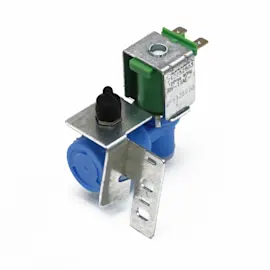
| Won’t fill or fills poorly | Water inlet valve, pressure sensing | LG washer water inlet valve assembly AJU75152602, LG washer water-level pressure switch 6501EA1001R |
| Won’t start or won’t spin | Lid lock and switch | Washer lid lock and switch assembly EBF61674802 |
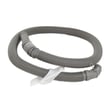
| Won’t drain | Drain pump, drain hose | Washer drain pump AAN73209838, washer drain hose AEM73732901 |
Why it matters
Catching the “common” problems early prevents repeat cycle failures, reduces vibration wear on suspension components, and helps protect clothing from staining or wrinkling caused by overloads or incorrect water temperature hookups.
Last updated: February 2026