Error Codes


What is the lifespan of a Kenmore dryer?
A Kenmore electric dryer like model 11096565110 typically lasts 10 to 13 years. With consistent airflow maintenance (lint and vent cleaning) and prompt replacement of wear items, many dryers of this design run 15 years or longer.
What affects dryer lifespan the most
- Airflow and venting: restricted venting overheats the heater and thermostats
- Load habits: frequent overloading strains the drum support system and motor
- Heat settings: high heat on every load increases thermal stress
- Lint control: lint buildup increases drying time and component temperatures
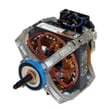
- Timely part replacement: worn drive parts can damage the drum or motor
Common wear items that can extend life when replaced early
If your 11096565110 starts squealing, thumping, or stopping mid-cycle, these parts are often involved:
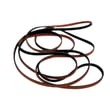
- Drum belt 341241 (broken belt, drum will not turn)
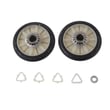
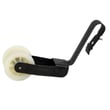
- Dryer idler pulley WP691366 (squeal, belt wear, intermittent tumbling)
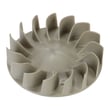
- Dryer blower wheel WP694089 (rumbling, weak airflow, longer dry times)
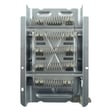
- Element 279838 (no heat or poor heat on electric models)
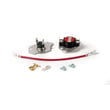
- Cut-off kit 279816 (no heat after overheating event)
Quick symptom-to-part guide
| Symptom | Most likely area | Example part for this model |
|---|---|---|
| Runs but no heat | Heating circuit safety or heater | Element 279838; Cut-off Kit 279816 |
| Drum will not turn | Belt drive system | Drum Belt 341241; Dryer Idler Pulley WP691366 |
| Loud rumble or poor airflow | Blower and lint path | Dryer Blower Wheel WP694089 |
| Stops when door moves | Door switch/latch | Dryer Door Switch W10820036; Strike 279570 |
Why it matters
A dryer that is forced to run hot or run long (because of lint or vent restriction) wears out the heating element, thermostats, and motor faster. Keeping airflow strong is the simplest way to protect expensive components and shorten cycle times.
Last updated: February 2026
How to hard reset a Kenmore dryer?
To hard reset your Kenmore electric dryer model 11096565110, unplug it (or switch the breaker OFF) for 5 minutes, then restore power and start a cycle. This clears many temporary control glitches; if the dryer still acts up, a door switch or overheating safety device is usually the real cause.
Hard reset steps (works for most Kenmore dryers)
- Turn the dryer OFF.
- Unplug the power cord (or turn the 2-pole dryer breaker OFF).
- Wait 5 minutes.
- Restore power.
- Open and close the door once, then press Start.
If the reset does not fix it
A reset only clears the symptom; it does not repair a failed part. Check these common causes next:
- No start or stops immediately: door not fully closed, failed door switch, or start switch.
- Runs but no heat: heating circuit problem (element, thermostat, thermal cut-off).
- Shuts off mid-cycle: restricted venting causing overheating, or a high-limit device opening.
- Weak airflow or long dry times: lint screen clogged, vent crushed, blower issue.
Parts that commonly relate to “won’t start” or “won’t heat”
| Symptom | What to check first | Example part for this model |
|---|---|---|
| Won’t start | Door switch, start switch | Dryer door switch W10820036 |
| No heat | Heating element, thermal cut-off | Element 279838, cut-off kit 279816 |
| Poor airflow | Lint screen, blower wheel | Screen W10874409, dryer blower wheel WP694089 |
Why it matters
Hard resets are useful for clearing a stuck control state, but repeated overheating or no-start conditions usually point to a safety or airflow problem. Fixing the root cause helps prevent repeat shutdowns and protects the heating circuit.
For electronic error displays, use our Kenmore 110 series electronic control model dryer error codes guide to match the code to the most likely failure.
Last updated: February 2026
How do I get my dryer out of lock mode?
On the Kenmore 11096565110 electric dryer, “lock mode” is usually the control lock (child lock). We unlock it by pressing and holding the lock-designated key (often Control Lock or the key with a lock icon) for about 3 to 5 seconds until the lock indicator turns off.
Quick unlock steps
- Press Power/Cancel once to wake the control.
- Press and hold the Control lock/lock icon button for 3 to 5 seconds.
- Watch for the lock light to go out or the display to return to normal.
- If the panel is unresponsive, unplug the dryer for 60 seconds, then retry.
- If the dryer starts but won’t run a cycle, confirm the door is fully closed and the latch engages.
If your model doesn’t have a clearly labeled lock button
Some Kenmore 110-series dryers use a secondary function key (for example, a button that also toggles a feature like wrinkle care). Try these common options:
| What you see | What to try | What it means |
|---|---|---|
| Lock icon stays on | Hold the most “feature” style key (not Temp/Time) for 3 to 5 seconds | That key is assigned to control lock |
| Buttons beep but won’t change | Unplug 60 seconds, then hold the lock key again | Control needs a reset |
| Dryer won’t start after unlock | Check door closure and switch action | Door switch may not be closing |
Parts that can cause “locked” symptoms
If the control lock is off but the dryer still acts locked (won’t start when you press Start), these parts are common suspects:
- Dryer door switch W10820036 (fails to signal “door closed”)
- Dryer push-to-start switch WP3395382 (won’t send the start command)
- Loose wiring at the terminal block (power issues can mimic a locked control)
Why it matters
Control lock prevents accidental cycle changes. If the dryer still won’t respond after unlocking and a power reset, the issue is usually a start input (push-to-start switch) or a door-closed signal (door switch), not the heating system.
Last updated: February 2026
How do I tell what model my Kenmore dryer is?
Your Kenmore dryer’s model number is printed on the appliance’s ID label; for Kenmore 11096565110 dryers, it’s usually easiest to spot by opening the door and checking the door opening area. Once you have the full model number, we use it to match the correct parts and diagrams.
Where to look for the model number label
Check these common locations on Kenmore electric dryers:
- Inside the dryer door opening (on the cabinet frame)
- On the back panel of the dryer
- Along the door opening edge near the latch area
- Near the lint screen housing (depending on console and top design)
What the model number looks like (and why it matters)
Kenmore model numbers are typically 10 to 11 digits. The first three digits often indicate the manufacturing source (for example, many Kenmore dryers start with 110).
Quick ID checklist
- Write the model number exactly as shown (include all digits)
- Also record the serial number (helps with production date and revisions)
- Use the model number to confirm fit before ordering parts like a belt, heating element, or door switch
Common label types you might see
| What you see on the label | What it means | What to do |
|---|---|---|
| “Model” followed by digits | The model number | Use it to look up diagrams and parts |
| “Serial” followed by letters/numbers | The serial number | Keep it for reference |
| “Type” or electrical ratings | Voltage/amps info | Useful for troubleshooting and safe service |
Why it matters
Kenmore dryers can look similar across series, but parts can differ by model revision. Using the exact model number helps us match the correct replacement parts the first time, such as the drum belt 341241 or the dryer door switch W10820036.
Last updated: February 2026
What causes dryer heating element failure?
In a Kenmore electric dryer model 11096565110, the heating element most often fails from restricted airflow (overheating), normal wear, or electrical damage at the element terminals. Fixing the airflow problem is just as important as replacing the failed part, or the new element can burn out again.
Most common causes
- Clogged venting or lint buildup in the lint screen housing or blower area that traps heat
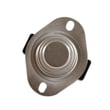
- Failed cycling thermostat that lets temperatures run too hot (check dryer operating thermostat WP3387134)
- High-limit overheating events from poor airflow or a stuck thermostat (often tied to cut-off kit 279816)
- Loose or burned wires/connectors at the heater terminals (inspect and consider dryer heating element wire kit 279457)
- Normal element fatigue after years of heat cycles and vibration
Quick checks we recommend (before replacing parts)
- Unplug the dryer and verify the vent duct is clear from the dryer outlet to the exterior hood.
- Clean the lint screen and check that the screen housing is not packed with lint.
- Run a timed dry cycle and confirm strong airflow at the outside vent.
- Inspect heater wiring for discoloration, melted insulation, or loose spade terminals.
- If you have a multimeter, test the heater circuit components for continuity.
What to replace (typical scenarios)
| Symptom | Most likely issue | Common fix |
|---|---|---|
| No heat, drum tumbles | Open heating element | Replace element 279838 |
| No heat after overheating | Thermal cut-off opened | Replace cut-off kit 279816 and correct airflow |
| Heat is too hot or cycles poorly | Cycling thermostat issue | Replace dryer operating thermostat WP3387134 |
| Burned terminals at heater | Connection damage | Replace dryer heating element wire kit 279457 |
Why it matters
A heating element usually fails because it ran too hot for too long. Restoring proper airflow protects the new element, improves drying times, and helps prevent repeated thermal cut-off trips.
Last updated: February 2026
What size is a Kenmore Model 11096565110 dryer?
Kenmore electric dryer model 11096565110 is a standard, full-size 27-inch class dryer. For planning an install, use typical full-size dimensions (about 27 inches wide, 38 to 44 inches tall, and 27 to 30 inches deep), then confirm your exact fit by measuring your dryer and the space.
Typical size ranges to plan around
These ranges cover most Kenmore 110-series full-size electric dryers, including common cabinet and door-clearance needs:
- Width: about 27 inches
- Height: about 38 to 44 inches (varies by control console style)
- Depth (cabinet): about 27 to 30 inches
- Depth (overall): often 30 to 33 inches (includes door and front panel)
- Rear clearance: plan 4 to 6 inches for the vent elbow and power cord
What to measure (so the dryer actually fits)
Measure both the appliance and the installation space; depth is where most surprises happen.
- Dryer width at the widest point
- Dryer height from floor to top of console
- Dryer depth from back panel to the front (include the door)
- Space depth from back wall to the front edge of the opening
- Door swing clearance and the vent path behind the unit
Quick planning table
| Measurement | What to include | Typical planning number |
|---|---|---|
| Width | Cabinet sides | 27 in. class |
| Height | Floor to top of console | 38 to 44 in. |
| Depth | Door, front panel, rear vent bend | 27 to 33 in. |
Why it matters
Correct sizing prevents a crushed vent and restricted airflow, which causes long dry times and overheating. Good airflow also helps protect heating components such as the element 279838 and thermostats.
Last updated: February 2026