Installation guide
 Owner’s manual


Is it worth replacing the heating element in a dryer?
Yes, it’s usually worth replacing the heating element in your Kenmore electric dryer model 11063032101 when the dryer still runs but won’t heat. The repair cost is typically far less than replacing the dryer, and it restores normal drying when the root cause is corrected.
When replacement makes sense
- The drum tumbles normally but clothes stay cold or take much longer to dry
- You have proper power to the dryer (many electric dryers use two fuses or breakers)
- Airflow is strong at the outside vent hood (no clog, no crushed or kinked vent)
- The dryer has no other major failures (motor, drum, cabinet damage)
- You plan to keep the dryer for several more years
Check these first (prevents repeat failures)
Our installation instructions for this style of Kenmore electric dryer recommend running the dryer for about 5 minutes, then opening the door and feeling for heat. If there’s no heat, check power supply first because there may be two fuses or circuit breakers feeding the dryer. Use the installation guide for the step-by-step heat check and power-supply checklist.
Also confirm airflow: a restricted vent can overheat the heater circuit and contribute to blown safety devices.
Quick “no-heat” checklist
| What you observe | Most likely cause | What to do next |
|---|---|---|
| Dryer runs, no heat | Power issue (one breaker tripped) | Reset both breakers, verify 240V supply |
| Dryer runs, no heat | Blown thermal fuse | Test and replace if open |
| Dryer runs, weak heat/long dry | Vent restriction | Clean/replace venting |
| Dryer runs, no heat | Failed heater | Replace heating element |
Parts that are commonly involved
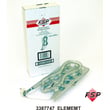
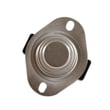
If testing confirms the heater is open, the correct replacement is the dryer heating element WP3387747. If the dryer overheated, also check the dryer thermal fuse WP3390719 and correct the venting issue before running the dryer again.
Why it matters
Replacing the heating element without fixing airflow or power-supply problems can lead to repeated no-heat symptoms and additional part failures. A clean lint screen and a clear exhaust path help the dryer heat safely and dry efficiently; see the owner’s manual for routine lint and vent cleaning guidance.
Last updated: February 2026
How to hard reset a Kenmore dryer?
A hard reset for your Kenmore dryer model 11063032101 is a simple power reset: turn the dryer off, unplug it (or switch off the breaker) for 1 to 5 minutes, then restore power and start a new cycle. Use the 11063032101 owner's manual for the exact start and restart steps.
Hard reset steps (safe, works for most issues)
- Turn the Cycle Selector to OFF.
- Unplug the dryer or turn both dryer breakers off (many electric dryers use 2 breakers).
- Wait 1 to 5 minutes.
- Restore power.
- Close the door fully, select a cycle and temperature, then press PUSH TO START.
- If it still will not run, confirm the door is firmly closed and power is present.
If the dryer still will not start after a reset
A reset does not fix an underlying safety trip or failed part. On model 11063032101, the most common no-start causes are power supply issues, a door switch problem, or an overheated safety circuit.
Quick checks
- Verify the outlet has power and both fuses/breakers are on.
- Make sure the vent is not crushed or kinked behind the dryer.
- Clean the lint screen (do not wash it; remove lint dry).
- If the dryer overheated, check the thermal safety device.
| Symptom after reset | Most likely area to check | Common related part |
|---|---|---|
| No lights, no response | House power, breakers/fuses | (Power supply) |
| Runs only with door held | Door switch | Dryer door switch WP3406107 |
| Runs but no heat | Heating circuit, airflow | Dryer heating element WP3387747 |
| Stops and will not restart | Overheat protection, airflow restriction | Dryer thermal fuse WP3390719 |
Why it matters
Resetting clears a temporary control state, but airflow problems (lint buildup, crushed vent) can trigger overheating and repeat shutdowns. Keeping the venting clear helps the dryer heat properly and protects key parts like the heating element and thermal fuse.
Last updated: February 2026
What are signs of a bad dryer heating element?
A failing heating element in your Kenmore 11063032101 electric dryer usually shows up as no heat (dryer tumbles but clothes stay cool and damp) or weak, inconsistent heat that makes cycles run long. Confirm basic power and heat checks in the 11063032101 installation guide before replacing parts.
Common signs you have a heating problem
- Dryer runs and tumbles, but there is no heat
- Clothes take much longer than normal to dry
- Heat seems to come and go during the cycle
- You notice a burning smell only on first use after installation (this is normal for a new element and should fade)
- The dryer shuts off early or won’t maintain temperature (often tied to thermostats or fuses, not just the element)
Quick checks we recommend first (before buying parts)
- Run a timed cycle on high heat for about 5 minutes, then open the door and feel for heat (the install instructions describe this check).
- Verify the dryer has full power: many electric dryers use two fuses or two breakers; if one trips, the motor can run but the heater will not.
- Check venting and airflow basics: restricted venting can cause overheating and repeated safety shutoffs.
Parts that commonly get blamed (and how they differ)
| Symptom | More likely cause | Example part for 11063032101 |
|---|---|---|
| Tumbles, no heat | Thermal fuse open or heater circuit issue | Dryer thermal fuse WP3390719 |
| Weak heat, long dry times | Airflow restriction or thermostat cycling wrong | Dryer operating thermostat WP3387134 |
| No heat after power is confirmed | Heating element failed | Dryer heating element WP3387747 |
Why it matters
Running an electric dryer with poor airflow or a failing heat circuit can lead to repeated shutdowns, longer dry times, and extra wear on the blower wheel, drum support rollers, and belt system.
Last updated: February 2026
Can I replace a dryer heating element myself?
Yes, many homeowners can replace the heating element on a Kenmore 11063032101 electric dryer with basic hand tools and careful wire handling. The key is safety: disconnect power first, document wire locations, and confirm the dryer is actually getting full 240V before replacing parts.
Safety first (before any disassembly)
- Unplug the dryer or shut off both dryer breakers.
- Let the dryer cool completely.
- Avoid touching bare terminals; 240V circuits can cause serious injury.
- If you smell burning the first time the new element heats, that can be normal for a new element.
Quick checks that prevent unnecessary parts replacement
Before you replace anything, we follow the same basics called out in the installation instructions:
- Confirm the Start button is pushed firmly.
- Verify the dryer is plugged into a grounded outlet.
- Make sure the door is fully closed.
- Check both fuses or circuit breakers (many electric dryers use two).
5-minute heat test
Run the dryer for 5 minutes, then open the door and feel for heat. If there is no heat, power supply issues (one breaker tripped) are a common cause. See the installation guide.
What the DIY replacement typically involves
Most Kenmore 110-series electric dryers use a rear-access heating circuit.
- Remove the rear panel.
- Locate the heater housing and disconnect the element wires.
- Transfer any mounted components (such as thermostats) if required.
- Install the new element, reconnect wires, and reassemble.
A common replacement part for this model is the dryer heating element WP3387747.
What to replace (and when)
| Symptom | Most likely area | Common related parts |
|---|---|---|
| Runs but no heat | Heater circuit or power supply | Heating element, thermal fuse, cut-off kit |
| Heats then stops | Overheating from poor airflow | Operating thermostat, venting restrictions |
| Long dry times | Airflow restriction | Lint screen, exhaust vent, blower wheel |
Why it matters
A failed heating element is common, but restricted airflow can also blow a thermal fuse or overheat the dryer. Cleaning the lint screen every load and keeping the exhaust vent clear helps the new part last and keeps drying times normal. For care and safety guidance, use the 11063032101 owner's manual.
Last updated: February 2026
How do I tell what model my Kenmore dryer is?
Your Kenmore dryer’s model number is printed on the model and serial number label; on model 11063032101, that label is located at the top inside the dryer door well. Write down the full model number and serial number so we can match the correct parts and specifications.
Where to look on Kenmore model 11063032101
Check these common label locations in this order:
- Top inside the dryer door well (most common for this model)
- Inside the door opening on the cabinet frame
- Back panel of the dryer cabinet
- Behind or near the lint screen housing (varies by design)
For diagrams and the exact wording used on the label, use the 11063032101 owner’s manual.
How to read the number so you get the right parts
Kenmore model numbers often start with a 3-digit prefix that helps identify the manufacturing source and parts family. For example, many Kenmore dryers use a 110 prefix.
- Record the entire model number (all digits)
- Record the serial number (helps with production variation)
- Match the model exactly when ordering parts like a heating element, thermal fuse, or door switch
Quick checklist
| What to capture | Example format | Why it matters |
|---|---|---|
| Model number | 11063032101 | Ensures correct part fit |
| Serial number | Letters and numbers | Confirms production series |
| Purchase date (if known) | Month/day/year | Helps with service history |
Why it matters
A single digit off can point to a different Kenmore dryer design, which changes key items like the heating circuit, drum support, and control components. Using the exact model number helps us avoid wrong-part returns and repeat repairs.
Last updated: February 2026
How much does it cost to replace a heating element in a Kenmore dryer?
For Kenmore electric dryer model 11063032101, replacing the heating element typically costs $70 to $350 total. The part itself is commonly $20 to $120, and professional labor often adds $100 to $250, depending on access, venting condition, and local rates.
Typical cost breakdown
| Cost item | Typical range | Notes |
|---|---|---|
| Heating element part | $20 to $120 | Model-specific; OEM parts cost more than generic |
| Service call + labor | $100 to $250 | Often 1 to 2 hours plus trip charge |
| Total installed cost | $70 to $350 | DIY is usually part cost only |
What you can expect for model 11063032101
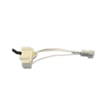
For this Kenmore dryer, a common replacement is the dryer heating element WP3387747. If the dryer has been overheating or has a burnt terminal, we often replace the element wiring at the same time using the dryer heating element wire kit 279457.
Before you buy parts: quick checks that affect cost
A “no heat” complaint is not always the heating element. We recommend these checks first (power off when inspecting wiring):
- Confirm the dryer has full power; many electric dryers use two fuses or two breakers, and one can trip while the drum still turns.
- After starting a cycle, check for heat after about 5 minutes (then stop the dryer before inspecting anything).
- Clean lint buildup and verify strong airflow; restricted venting can cause overheating and repeat failures.
- Inspect the element terminals for discoloration, loose spade connectors, or melted wire ends.
- If the dryer overheated, test safety devices; a blown fuse can point to a venting problem.
Why it matters
A failed heating element stops drying, but poor airflow and power supply issues can mimic the same symptom. Fixing the root cause (especially vent restrictions) helps prevent repeat element and thermal fuse failures.
Helpful references
- Use the 11063032101 installation guide for electrical and venting requirements.
Last updated: February 2026
What is an F1 code on a Kenmore dryer?
On a Kenmore dryer, an F1 code indicates a control problem, most commonly a failed electronic control board or a keypad/user-interface input that is sending an invalid signal. On Kenmore model 11063032101, start by resetting power; if the code returns, the control circuit needs diagnosis and repair.
Quick checks to try first
- Unplug the dryer (or switch the breaker off) for 5 minutes, then restore power.
- If the code appears immediately at power-up, suspect the control board first.
- If the code appears when pressing buttons or turning the timer, suspect the user-interface input path.
- Verify the dryer is installed correctly and on a stable, level surface; vibration and poor airflow can contribute to repeated faults.
- If the dryer will not run, confirm the door is fully closed and the latch engages.
What usually causes the F1 code
| Likely cause | What you may notice | Typical fix |
|---|---|---|
| Electronic control board fault | F1 returns after reset, random beeping, cycle won’t start | Inspect connections; replace control if failed |
| Keypad or input circuit issue | F1 appears when pressing certain buttons | Check harness and console; replace failed input component |
| Loose wire harness connection | Intermittent F1, works sometimes | Reseat connectors; repair damaged terminals |
Parts that can be involved (symptom-based)
These parts are not the only possibilities, but they are commonly checked during “won’t run” or “acts dead” complaints that can appear alongside control errors:
- Dryer door switch WP3406107 (if the dryer will not start when the door is closed)
- Dryer timer WP3976576 (if cycles do not advance or the dryer behaves inconsistently on timed settings)
- Dryer thermal fuse WP3390719 (if the dryer is completely dead after an overheating event)
Why it matters
An F1 code is the dryer telling you it cannot reliably control the cycle. Continuing to run the dryer with a recurring control fault can lead to no-start conditions, incomplete drying, or repeated shutdowns. Use the 11063032101 owner’s manual for model-specific operating and diagnostic guidance.
Last updated: February 2026
How do I know if my Kenmore dryer thermal fuse is blown?
On Kenmore electric dryer model 11063032101, a blown thermal fuse commonly shows up as a dryer that won’t run at all. In some cases, the dryer may run but have no heat; the sure way to know is to unplug the dryer and test the fuse for continuity using the steps in the 11063032101 owner's manual.
Quick symptoms to look for
- Dryer does not start even though the door is closed and a cycle is selected
- Dryer runs but there is no heat (electric dryers can still tumble if one house breaker trips)
- Dryer stops mid-cycle and then will not restart until the issue is corrected
- You recently had poor airflow (clogged lint screen or vent restriction)
How we test the thermal fuse (best confirmation)
- Unplug the dryer (or shut off power at the breaker).
- Access the thermal fuse (typically on the blower housing or exhaust duct area).
- Remove at least one wire from the fuse terminal.
- Use a multimeter on continuity or ohms.
- Good fuse: continuity (beep) or near 0 ohms. Blown fuse: no beep or OL/infinite resistance.
What to replace if it’s blown
If the fuse tests open, replace the fuse and correct the airflow problem that caused overheating. For this model, the correct replacement is the dryer thermal fuse WP3390719.
Don’t confuse a blown thermal fuse with a power supply issue
Your installation instructions note that electric dryers can be on a circuit with two fuses or breakers; the drum may turn but you can lose heat if one side trips.
| Symptom | Most likely cause | What to check first |
|---|---|---|
| Won’t start | Thermal fuse, door switch, timer, power | Door closes firmly; breaker; fuse continuity |
| Tumbles, no heat | One breaker tripped, heating circuit issue | Both breakers/fuses; heat test after 5 minutes |
Why it matters
A thermal fuse is a safety device; when it blows, it’s usually reacting to overheating from restricted airflow. Replacing the fuse without fixing venting can lead to repeat failures and longer dry times.
Last updated: February 2026