Owner’s manual
 Error Codes


How many cubic feet is a Kenmore Model 11020922990 washer?
The Kenmore washer model 11020922990 is a classic top-load, agitator-style washer; models in this Kenmore 110 series typically run about 3.2 to 3.5 cubic feet of capacity. For the exact capacity listed for your unit, check the specifications section in the 11020922990 owner's manual.
How to confirm the exact capacity for your washer
Capacity is usually listed in the model specifications, feature list, or product information pages of the manual.
- Look for a “Specifications” or “Product features” section
- Check any model identification page that lists key specs
- If your manual lists only basket type and features, use the typical range above
- Record your full model number from the model and serial number plate for accurate matching
Typical capacity range for this washer style
Most Kenmore 110-series, Whirlpool-built, direct-drive top-load washers from this era fall into a narrow capacity band.
| Washer type | Typical capacity (cu ft) | What you will notice in use |
|---|---|---|
| Standard top-load with agitator (like 11020922990) | 3.2 to 3.5 | Full-size loads, normal water levels |
| Larger-capacity top-load (newer designs) | 3.8 to 4.5+ | More room around bulky items |
Why it matters
Knowing cubic feet helps us match the right basket, agitator, and wash performance expectations (load size, rollover, and water level behavior). It also helps when comparing replacement parts and planning laundry loads.
Related parts that affect usable space and wash action
If you are troubleshooting poor agitation or reduced rollover (which can make the washer feel “smaller”), these common wear items are worth checking:
- Agitator dog 80040 (worn dogs can cause weak agitation)
- Agitator WP8538246 (damaged fins or loose fit affects turnover)
- Washer drive block WP389140 (wear can cause basket drive issues)
Last updated: February 2026
How to identify a Kenmore washer model?
To identify your Kenmore washer model, find the model and serial number plate on your Kenmore washer model 11020922990. On this style of washer, it’s typically on the main cabinet or around the control panel area; the exact location is shown in the 11020922990 owner's manual.
Where to look on the washer
Check these common label locations first:
- On the back of the control panel
- On the top or underside of the washer lid area
- On the side of the main cabinet near the bottom front
- Around the lid opening (under the lid, near the rim)
- On the rear panel of the cabinet
What to write down (and why)
Record both numbers exactly as printed:
- Model number (used to match parts diagrams and compatible replacement parts)
- Serial number (used to identify production details and version changes)
- Date of purchase (helpful for maintenance history and service records)
Quick ID checklist
| Item | What it’s used for | Example format |
|---|---|---|
| Model number | Correct parts lookup | 110XXXXXXXXXX |
| Serial number | Production run details | Letters and numbers |
| Type | Confirms washer style | Top-load, direct-drive |
Why it matters
Kenmore washers often have multiple versions that look similar, but use different parts such as a lid switch, drain pump, or inlet valve. Using the exact model number helps us match the right components the first time.
Last updated: February 2026
How to unclog drain hose on Kenmore washer?
For Kenmore washer model 11020922990, we unclog the drain hose by safely disconnecting it, clearing the blockage, then reinstalling it so it seats fully on the washer drain connector and keeps an air gap at the standpipe. Use the steps in the 11020922990 owner's manual to prevent leaks afterward.
Safety first
- Unplug the washer.
- Turn off both water faucets.
- Have towels and a shallow pan ready for water in the hose.
- If the washer was just running, let water cool before handling hoses.
Step-by-step: unclog the drain hose
- Pull the washer forward enough to access the back.
- Remove the drain hose from the home drain (standpipe or laundry tub).
- Check for kinks and straighten the hose.
- Inspect the hose for lint, coins, socks, or sludge; flush with hot water.
- If needed, soak the clogged end in hot water (a hot water plus vinegar soak helps loosen buildup), then flush again.
- Reinstall the hose on the washer outlet: twist the straight end onto the drain connector until it hits the ribbed stop, then position the clamp about 1/4 inch (6 mm) from the end.
- Reinstall the hooked end at the standpipe or tub; keep it secure but loose enough to maintain an air gap.
Quick checks that prevent repeat clogs
- Keep the hooked end; do not straighten it and force extra hose into the standpipe.
- Do not tape or seal the hose into the standpipe; the hose needs an air gap.
- Make sure the drain height is correct; this model can have drain and spin issues if the hose is routed too high (over 96 inches above the floor).
- Avoid oversudsing; too much detergent can contribute to drain problems.
Common symptoms and likely causes
| Symptom | Most common cause | What to do |
|---|---|---|
| Won’t drain or won’t spin | Hose kinked or clogged | Clear hose and reroute to remove kinks |
| Continues to drain or siphons | Hose fits too tightly in standpipe | Loosen fit and maintain air gap |
| Wet loads after cycle | Neutral drain behavior or suds | Use correct cycle, reduce detergent |
Why it matters
A partially clogged or incorrectly installed drain hose can cause slow draining, siphoning, leaks, and “won’t spin” complaints. Correct hose seating and an air gap protect your floors and help the washer complete the drain and spin sequence.
Last updated: February 2026
Is it worth repairing a Kenmore washing machine?
Yes, it’s usually worth repairing a Kenmore washer, especially a proven direct-drive style like model 11020922990, when the fix addresses a common wear part and the total repair cost stays well below the price of a comparable new washer. Many repairs restore reliable washing for years.
Quick way to decide (cost vs. value)
Use this simple rule: repair when the problem is isolated to a serviceable part and the machine is otherwise in good shape (no major tub leaks, severe rust, or repeated failures).
- Repair first when symptoms point to common wear items (no spin, no drain, no agitate)
- Replace when multiple major systems are failing at once (drive system plus leaks plus electrical)
- Prioritize safety and basics: stable installation, correct power, and water supply
- Confirm operating and troubleshooting steps in the 11020922990 owner's manual
Common repairs that are often worth it on this model
These are frequent, straightforward fixes on Kenmore 110-series top-load washers:
- Won’t spin or won’t start: check the washer lid switch WP3949238
- Won’t drain or drains slowly: inspect the washer drain pump WP3363394 and drain path
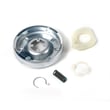
- Agitator slips or “ratchets”: replace agitator dog 80040
- No agitation/spin with motor running: inspect coupling 285753A
What to check before spending money
A few checks can prevent replacing the wrong part.
| What you notice | What it often means | Typical next step |
|---|---|---|
| Fills but won’t spin | Lid switch not closing | Test/replace lid switch |
| Hums but won’t drain | Pump jam or failed | Check pump for debris |
| Agitator moves poorly | Worn agitator dogs | Replace agitator dogs |
| Loud grinding in spin | Drive/clutch/gearcase wear | Inspect clutch, gear case |
Why it matters
A targeted repair on a washer like the Kenmore 11020922990 often costs far less than replacement and avoids the learning curve of a new machine. The owner’s manual also emphasizes correct installation checks (leveling, tight front leg nuts, proper electrical and water supply), which can prevent vibration and repeat issues.
Last updated: February 2026
What are the parts of a washer called?
A Kenmore washer like model 11020922990 is made up of water-handling parts (fill and drain), wash-action parts (basket and agitator), and drive and safety parts (motor drive, clutch, lid switch). The exact names and locations for your unit are shown in the 11020922990 owner's manual.
Common washer parts and what they do
Here are the most common part names you will see when looking up washer parts:
- Washer inlet valve: lets hot and cold water into the tub
- Drain pump: pumps water out during drain and spin
- Basket (inner tub): holds clothes and spins to extract water
- Outer tub: holds water around the basket
- Agitator: moves clothes through water for cleaning
- Motor coupling / drive system: transfers motor power to the transmission/drive
- Lid switch: safety switch that allows spin when the lid is closed
Parts you can actually buy for Kenmore 11020922990
These are examples of real, model-matched parts and the names you will see on parts diagrams:
| Part name (as listed) | Part ID | What it affects |
|---|---|---|
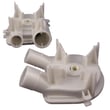
| Washer drain pump | WP3363394 | Draining, spin performance |
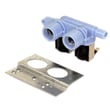
| Washer inlet valve | 285805 | Filling, water temperature issues |
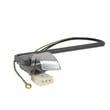
| Washer lid switch | WP3949238 | No spin, no drain in some cycles |
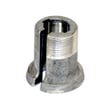
| Coupling | 285753A | Agitation and spin drive |
| Clutch | 285785 | Spin engagement and speed |
Why part names matter when troubleshooting
Using the correct part name helps you match symptoms to the right system. For example, a “won’t drain” complaint usually points to the pump or drain hose, while “won’t spin” often involves the lid switch, clutch, or drive coupling.
Quick tips when identifying parts
- Start with the symptom (won’t fill, won’t drain, won’t spin, noisy, leaking).
- Match the symptom to a system (fill, drain, wash action, drive, suspension).
- Use the manual diagrams and terminology so you order the correct item.
- If the washer will not spin, check the lid switch first because it is a common safety stop.
Last updated: February 2026
What is the average lifespan of a Kenmore washer?
A Kenmore washer typically lasts 10 to 15 years. For Kenmore model 11020922990, lifespan depends most on load size, how often it runs, and basic care like keeping the washer level and using the right cycle and water level settings (see the 11020922990 owner's manual).
Typical lifespan and what changes over time
Most washers reach the 10 to 15 year range before wear shows up in moving parts and water-handling components.
- 0 to 5 years: mostly maintenance and minor adjustments
- 5 to 10 years: common wear items start showing symptoms
- 10 to 15 years: higher chance of leaks, spin issues, or agitation problems
- 15+ years: repairs can still make sense if the tub and drive system are in good shape
Parts that commonly affect “how long it lasts”
When a washer stops washing well or won’t spin, it is often a few serviceable parts rather than the whole machine.
- Agitation problems: worn agitator dog 80040
- Won’t spin or weak spin: clutch wear, drive system wear
- Won’t start or won’t spin with lid closed: lid switch issues
- Won’t drain: drain pump or drain hose restrictions
- Overfilling or wrong water level: water-level switch or pressure hose issues
Quick care checklist (adds years)
These habits reduce strain on the motor, gear case, basket, and suspension.
- Keep the washer level and the front leg nuts tight (reduces vibration)
- Avoid overloading; distribute bulky loads evenly
- Use the correct water level and cycle for the load size
- Do not wrap items around the agitator when loading
- Periodically check hoses for wear and make sure faucets are fully on
Repair vs. replace: a simple guide
| What you’re seeing | Most likely direction | Why |
|---|---|---|
| Minor symptoms (noise, weak agitation, intermittent no-start) | Repair | Often a single part restores performance |
| Repeated leaks, severe vibration, multiple failures close together | Compare costs | Multiple repairs can add up |
| Tub or major drive system damage | Compare costs carefully | Labor and major assemblies can be expensive |
Why it matters
A washer’s “lifespan” is really the point where wear items start affecting cleaning and reliability. Staying on top of leveling, loading, and drainage helps Kenmore model 11020922990 reach the full 10 to 15 year average.
Last updated: February 2026
When was the Kenmore 90 series washer made?
Kenmore “90 Series” washers were produced across multiple years (it’s a series name, not one exact build year). For Kenmore model 11020922990, the owner’s manual we have is printed April 1999, which places this washer in the late-1990s era; confirm the exact build date from the model and serial tag using the 11020922990 owner’s manual.
How to find the exact manufacture date
We use the model and serial number plate on the cabinet to pinpoint the production date.
- Unplug the washer before reaching around the cabinet edges.
- Locate the Model and Serial Number Plate (commonly under the lid or on the cabinet opening).
- Write down the full serial number exactly as shown.
- Use the serial format guidance in the 11020922990 owner’s manual to interpret date codes (if provided).
- If the plate is damaged or missing, replace the plate or have a technician verify the unit.
What “90 Series” means for dating
“90 Series” is a Kenmore lineup label used on several top-load designs over time, so the most accurate way to date your washer is always the serial number.
| What you have | What it tells you | Best next step |
|---|---|---|
| “Kenmore 90 Series” label | Series family, not a single year | Check serial number plate |
| Model 11020922990 | Specific design/version | Use manual and serial to date |
| Manual printed 4/99 | Washer documentation era | Confirm exact build month/year from serial |
Why it matters
Knowing the approximate age helps us match the right Kenmore washer parts and repair approach (for example, common wear items like the washer lid switch WP3949238 or coupling 285753A vary by design generation).
Last updated: February 2026