 Owner’s manual


How do I tell what model my KitchenAid dishwasher is?
You can identify your KitchenAid dishwasher model by checking the rating label on the inside edge of the door. On model KUDS01FLSS1, the label lists both the model number and serial number, which you can use to match parts and manuals.
Most KitchenAid dishwashers, including KUDS01FLSS1, place the rating label in one of these common spots:
- Along the inner left side of the door opening
- Along the inner right side of the door opening
- On the tub frame near the latch area
- Occasionally on the side of the tub just behind the door seal
If the label is hard to read, wipe it gently with a damp cloth and use a flashlight to see the printed characters.
Record these details exactly as shown on the label:
- Model number (example format: KUDS01FLSS1)
- Serial number (helps confirm production series)
- Electrical rating (useful for service checks)
- Type/style (sometimes listed on the same tag)
The model number is what we use to ensure parts like a door hinge, drain hose, or control panel components match your exact dishwasher configuration.
| Item | What it tells you | Used for |
|---|---|---|
| Model number | The exact dishwasher design | Correct part fit and diagrams |
| Serial number | When your unit was built | Version changes and service reference |
Use the diagrams and identification notes in the KUDS01FLSS1 owner’s manual. If the label is missing, match by physical features (control style, tub type, rack style) and then confirm with the model number format used on KitchenAid dishwashers.
Last updated: February 2026
What's the average lifespan of a KitchenAid dishwasher?
Most KitchenAid dishwashers last 10 to 14 years with normal household use. For your KitchenAid KUDS01FLSS1, consistent cleaning, correct loading, and fixing small issues early (leaks, draining problems, unusual noises) are the biggest factors in reaching the high end of that range.
- Water quality: hard water speeds up mineral buildup on the pump, spray arms, and heating system.
- Maintenance habits: regular cleaning reduces strain on the wash system.
- Loading and detergent use: overloading and excess detergent can cause poor washing and residue.
- Small leaks or drainage issues: ignoring them can damage components and wiring.
- Noise events: the manual notes that a hard object can enter the wash module; if noise continues after a full cycle, service is recommended.
Use the care and troubleshooting steps in the KUDS01FLSS1 owner's manual.
- Clean the interior and check for debris around the sump area.
- Keep spray arm holes clear so water pressure stays strong.
- Run hot water at the sink before starting a cycle to improve wash performance.
- Use rinse aid to improve drying and reduce spotting.
- Inspect for drips at the door and bottom edge; replace worn seals or gaskets promptly.
| Category | Examples on this model | Typical symptom when failing |
|---|---|---|
| Seals and gaskets | Door gasket, vent gasket | Leaks, moisture around door |
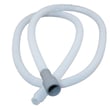
| Drain path | Drain hose | Not draining, water left in tub |
| Wash system | Pump and motor assembly, chopper | Poor cleaning, grinding noises |
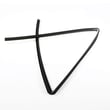
If you’re troubleshooting a leak or moisture at the door, the dishwasher vent gasket WP8269259 is one of the model-matched parts that can be involved.
A dishwasher that is cleaned and kept leak-free runs with less resistance, which reduces stress on the circulation pump, drain system, and electronic controls. That directly improves reliability and helps your KUDS01FLSS1 reach its normal service life.
Last updated: February 2026
What is the most common problem with a KitchenAid dishwasher?
The most common issue we see with KitchenAid dishwashers like model KUDS01FLSS1 is poor wash results (dishes still dirty) caused by restricted water flow through the wash system, often from clogged spray arm holes, a dirty chopper area, or circulation problems. Use the KUDS01FLSS1 owner’s manual to match symptoms to the right checks.
- Food left on dishes: spray arm jets blocked, chopper area clogged, or weak circulation
- Standing water: drain path restriction (hose, pump, disposer connection)
- Leaks at the door: worn door seal or vent gasket
- Grinding or crunching noise: hard object in the wash module; the manual notes the noise should stop once the object is ground up, but persistent noise after a full cycle needs service guidance
- No start or dead control: power supply issue, door latch/controls, or a blown thermal fuse
- Turn off power at the breaker.
- Inspect and clear spray arm holes; rinse away debris.
- Check the bottom of the tub for broken glass, labels, or bones that can cause grinding.
- Confirm the drain hose is not kinked and the sink/disposer connection is clear.
- Load dishes so they are stable and do not strike together; the manual warns that unstable loading can cause chipping and damage.
| Symptom | Common fix area | Example part for this model |
|---|---|---|
| Not cleaning well | Chopping/filtration, wash circulation | Dishwasher chopper assembly W10083957V |
| Not draining | Drain path | Dishwasher drain hose 8269144A |
| Door leaking | Door sealing surfaces | Gasket W11196317 |
| No power / won’t run | Safety fuse in control circuit | Fuse 8193762 |
When water flow is restricted, detergent cannot circulate and rinse properly, so you get poor cleaning, odors, and sometimes noise. Catching clogs early also helps protect the pump and motor assembly.
Last updated: February 2026
How to fix rubber seal on KitchenAid dishwasher?
On KitchenAid dishwasher model KUDS01FLSS1, fixing the rubber door seal usually means reseating it evenly in the door channel or replacing it if it’s torn, hardened, or won’t stay seated. Press the seal in section-by-section, then keep the door closed for several hours so it conforms.
- Turn off power at the breaker before working around the door and inner panel.
- Let the unit cool; avoid contact with hot components right after a cycle.
- Remove sharp items from the racks; they can nick the door seal.
- Wipe the tub rim and seal channel clean and dry.
- Inspect for food debris or detergent buildup that can push the gasket out.
- Open the door and locate the seal channel around the tub opening.
- Starting at the top center, press the seal into the channel using your fingers.
- Work down both sides in small sections, keeping the seal straight (no twists).
- Close and latch the door; leave it closed for several hours to help the seal “set.”
| What you see | What it usually means | What to do |
|---|---|---|
| Seal bulges out in one spot | Not fully seated, debris in channel | Clean channel, press in again |
| Seal looks flattened or cracked | Worn gasket | Replace the seal |
| Leak at bottom corners | Door alignment or seal ends not seated | Reseat ends; check hinges |
Replace the seal if you notice any of these:
- Tears, splits, or missing sections
- Hard, shiny, or permanently flattened rubber
- Repeated leaks after reseating
- Visible cuts (often caused by sharp utensils contacting the seal)
If you’re replacing the door seal on this model, use the correct part for KUDS01FLSS1; a common match is the gasket W11196317. For diagrams, placement, and door-latching details, follow the KUDS01FLSS1 owner’s manual.
A properly seated door gasket keeps wash water inside the tub, protects the inner door area from moisture, and helps prevent nuisance leaks that can look like a pump or hose problem.
Last updated: February 2026








