

How do I know if my Kenmore dryer thermal fuse is blown?
If your Kenmore electric dryer model 11086980100 won’t start at all, or it runs but won’t heat, a blown thermal fuse is one of the first things we check. The sure way to know is a continuity test with a multimeter after disconnecting power; a blown fuse reads open (no continuity).
- Dryer will not start (most common)
- Motor hums but drum does not turn
- Dryer runs but has no heat (on some designs)
- Cycle stops unexpectedly
- You recently had poor airflow (clogged lint screen or vent)
- Unplug the dryer (or switch off the breaker).
- Access the fuse (often on the blower housing or exhaust duct area).
- Pull the wires off the fuse terminals (note their positions).
- Check the fuse with a multimeter set to continuity or ohms.
- Result:
- Continuity (beep or near 0 ohms) = fuse is good
- No continuity (OL or no beep) = fuse is blown
A thermal fuse usually blows because the dryer overheated from restricted airflow. Fix the cause, or the new fuse can blow again.
| What to check | Why it matters | What we do |
|---|---|---|
| Lint screen and housing | Lint buildup reduces airflow | Clean thoroughly before testing again |
| Vent duct to outside | Kinks, clogs, long runs trap heat | Clear the full vent path |
| Blower wheel | Loose or broken wheel reduces airflow | Inspect and replace if damaged |
| Cycling thermostat / cut-off | Failed safety controls can overheat | Replace as a matched kit when applicable |
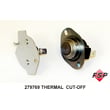
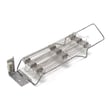
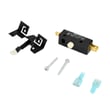
- If you’re replacing the fuse, we typically pair it with the safety cut-off kit used on many Kenmore 110-style dryers: cut-off kit 279769.
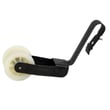
- If airflow is weak or noisy, inspect the blower wheel: dryer blower wheel WP694089.
The thermal fuse is a one-time safety device; it shuts the dryer down to prevent overheating. Replacing the fuse without correcting venting or airflow problems often leads to repeat failures.
Last updated: February 2026
Where is the model number on a Kenmore 80 series dryer?
On a Kenmore 80 Series dryer, the model number is printed on the appliance’s ID label; for model 11086980100, we most often see that label when you open the door and look around the door opening on the cabinet frame. If it is not there, check the back panel of the dryer.
- Open the dryer door; look on the cabinet frame around the door opening
- Check the inside face of the door itself
- Look behind the lint screen housing area (some designs place the label nearby)
- Check the rear panel of the dryer (upper area is common)
- Look inside the lower front access area (if your dryer has a small lower panel)
The ID label usually includes:
- Model number (example: 11086980100)
- Serial number
- Electrical ratings (volts/amps)
- Sometimes a manufacturing date code
We use the exact model number to match Kenmore electric dryer parts correctly (belt, thermal fuse, door switch, motor) because similar-looking 80 Series dryers can use different components.
Use this checklist to narrow it down:
- Compare your dryer’s door style and handle to the parts diagrams
- Match key wear items you can see or access
- Start with common maintenance and no-heat/no-start checks
| What you’re trying to do | What to use | When it helps |
|---|---|---|
| Confirm a common wear item while identifying the unit | Belt 341241 | Drum not turning, squealing, or belt visibly worn |
| Look up control-related fault info for Kenmore 110-series electronic models | Kenmore 110 series electronic control model dryer error codes | Dryer beeps, shows an error, or stops mid-cycle |
Last updated: February 2026
How to hard reset a Kenmore dryer?
To hard reset your Kenmore electric dryer model 11086980100, we recommend disconnecting power long enough for the control to fully clear, then restoring power and testing a cycle. This reset often fixes a frozen keypad, a non-starting cycle, or a control glitch.
- Turn the dryer OFF.
- Unplug the power cord; if you can’t access the plug, switch the dryer circuit breaker OFF.
- Wait 1 to 5 minutes.
- Restore power (plug back in or turn the breaker ON).
- Select a timed cycle and press Start to confirm normal operation.
A reset won’t fix a failed safety device or a broken drive system. Check these common causes next:
- Door not fully closed or a failed door switch (consider dryer door switch W10820036).
- Blown thermal fuse from restricted airflow (consider fuse WP3392519).
- Broken belt or seized idler pulley (consider belt 341241 and dryer idler pulley WP691366).
- Motor not starting or humming (consider motor 279827).
- Poor airflow from lint buildup; clean the lint screen and vent path.
| What you see | What the reset can help | What to check if it doesn’t |
|---|---|---|
| Buttons unresponsive | Clears a stuck control state | Door switch, power supply, control issues |
| Dryer won’t start | Clears a control glitch | Thermal fuse, door switch, belt, motor |
| Stops mid-cycle | Sometimes clears an error state | Overheating from vent restriction, fuse |
Hard resetting is the fastest safe first step because it rules out a simple control lockup before you spend time testing parts like a thermal fuse, door switch, belt, or drive motor.
Last updated: February 2026
Do Kenmore 80 series dryer elements have reset buttons?
Kenmore 80 Series electric dryers like model 11086980100 do not use a reset button on the heating element. When heat stops, the fix is almost always finding the overheating cause (restricted venting, lint buildup, failed airflow parts) and replacing the failed safety part such as the thermal fuse or thermal cut-off.
- Unplug the dryer; then clean the lint screen and the lint screen housing.
- Confirm strong airflow at the outside vent hood while the dryer runs.
- Inspect and clean the entire vent run (crushed flex duct, long runs, clogged hood).
- If the drum turns but there’s no heat, verify the home’s 240V supply (a tripped breaker can leave the dryer running on 120V with no heat).
- If the dryer won’t run at all, check the door switch and start circuit.
On Kenmore 80 Series designs, overheating typically opens a one-time safety device.
| Symptom | Most common cause | What we typically replace |
|---|---|---|
| Runs but no heat | Overheat event or poor airflow | Fuse WP3392519 |
| No heat, sometimes shuts down mid-cycle | Thermal cut-off opened | Cut-off kit 279769 |
| Won’t start when door is closed | Door switch not closing circuit | Dryer door switch W10820036 |
A “reset” would let the dryer heat again without fixing the reason it overheated. These dryers use non-resettable safety parts to prevent repeated overheating, which protects the heater housing, wiring, and drum area from damage.
- Clean the venting before the first test run.
- Run a timed heat cycle for 5 to 10 minutes and recheck airflow.
- If airflow is still weak, address the vent restriction before regular use.
Last updated: February 2026
What is the OEM part number 279838?
For Kenmore electric dryer model 11086980100, 279838 is widely used in the industry as an OEM heating element number for many Whirlpool-built electric dryers; however, it is not one of the listed parts on the 11086980100 parts list. For an exact match, we identify the heating element by the model’s parts diagram and the heater housing style.
Use these checks to avoid ordering the wrong heater:
- Confirm the full model number 11086980100 from the door opening label.
- Compare the heater housing shape, mounting tabs, and terminal location to your original.
- Check whether your dryer uses a separate heater housing or an integrated element canister.
- If terminals or wires look heat-damaged, replace the wiring at the same time.
- Address airflow issues (lint screen, vent, blower wheel) to prevent repeat heater failures.
A common related repair on this model is replacing overheated heater wiring using the dryer heating element wire kit 279457.
If the drum turns but there’s no heat, these parts are frequent culprits:
| Symptom | What to check | Example part for this model |
|---|---|---|
| Runs but no heat | Thermal fuse open | Fuse WP3392519 |
| Intermittent heat or shuts off | Thermal cut-off/overheat protection | Cut-off kit 279769 |
| Melted connectors at heater | Heater wiring damage | Dryer heating element wire kit 279457 |
Using the model-specific heating element prevents fit problems, incorrect wattage, and overheating. Replacing failed safety devices and damaged wiring at the same time helps the dryer heat safely and consistently.
Last updated: February 2026
What size dryer is a Kenmore 80 series?
Kenmore 80 Series dryers are full-size machines; Kenmore model 11086980100 is a standard 27-inch class electric dryer with a 6.5 cu. ft. drum capacity, which fits typical family-size loads and most bedding.
When customers ask about dryer size, it typically refers to one of these:
- Capacity (cu. ft.): how much the drum holds
- Cabinet width class: most full-size Kenmore 80 Series units are the 27-inch class
- Installation space: room for the cabinet plus venting and door swing
- Load type: everyday loads vs. bulky items (comforters, blankets)
| Spec | Kenmore 11086980100 | What it means for you |
|---|---|---|
| Drum capacity | 6.5 cu. ft. | Full-size, everyday to large loads |
| Dryer type | Electric dryer | Uses a heating element and 240V supply |
| Size class | 27-inch class | Standard laundry alcove fit in most homes |
Capacity affects how much you can dry efficiently, but real-world performance also depends on tumbling and airflow. A slipping belt or weak airflow can make a full-size 6.5 cu. ft. dryer act “small” by extending dry times.
If the drum does not tumble strongly or dry times are long, these common wear items are worth checking:
- Belt 341241 if the drum slips, thumps, or will not turn
- Dryer idler pulley WP691366 if you hear squealing or the belt loses tension
- Dryer blower wheel WP694089 if airflow is weak or you hear rattling at the blower housing
Last updated: February 2026