Owner’s manual
 Error Codes


How to fix oe on Samsung washer?
On the Samsung WF210ANW washer, an OE code is commonly associated with a drain problem (the washer is not draining or is draining too slowly). We fix it by checking the drain hose setup and clearing the drain pump debris filter, then retesting with a drain or Rinse + Spin cycle; see the steps in the WF210ANW use and care manual.
What to check first (fast fixes)
- Cancel the cycle and let the door unlock.
- If there is standing water, run Rinse + Spin to force a drain.
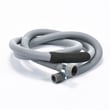
- Check the drain hose for kinks, crushing, or being pushed too far into the standpipe.
- Clean the debris filter (coins, lint, hair pins commonly block it).
- Verify the standpipe height is within the typical range for this model (the manual notes a minimum of 18 in.).
Step-by-step: clear the drain pump filter
The WF210ANW manual describes cleaning the debris filter and using the emergency drain tube.
- Unplug the washer.
- Open the lower filter access area.
- Drain remaining water using the emergency drain tube into a shallow pan.
- Remove the debris filter cap and clean out lint and objects.
- Reinstall the filter cap fully and close the cover.
Symptom-to-cause guide
| What you notice | Most likely cause | What to do |
|---|---|---|
| OE appears with water left in the tub | Clogged debris filter or pump restriction | Clean debris filter; check pump inlet |
| Drains slowly, then errors | Kinked hose or standpipe restriction | Straighten hose; clear standpipe |
| Hums but won’t drain | Pump jammed or failing | Check for blockage; replace pump if needed |
Why it matters
A drain restriction can leave water in the tub, stop the cycle mid-wash, and strain the drain pump. Clearing the filter and correcting the drain hose routing usually restores normal draining.
Last updated: January 2026
What is the capacity of Samsung WF210ANW XAA?
The Samsung WF210ANW washer is an extra-large-capacity front-load washer with a 3.5 cu. ft. tub, which is designed to handle bulky items like blankets and larger mixed loads. For model-specific features and specs, we recommend checking the WF210ANW manual.
How that capacity translates to real loads
A 3.5 cu. ft. washer like the Samsung WF210ANW typically handles these load types well:
- A full mixed load of everyday clothing (shirts, jeans, towels)
- A bulky item (like a comforter) plus a few smaller items for balance
- Multiple bath towels in one cycle
- Medium-to-large family laundry loads to reduce total weekly cycles
Tips to get the best cleaning at full capacity
To avoid poor cleaning, excess wear, or out-of-balance spinning:
- Do not pack laundry tightly; load loosely so items can tumble
- Mix large and small items to help balance the spin
- Use HE detergent only (this model is designed for high-efficiency detergent)
- Choose the right cycle (Normal, Heavy Duty, Perm Press, Delicates/Hand Wash)
- If the load ends too wet, re-run Spin Only or select a higher spin speed
Quick reference: capacity vs. what to watch for
| What you’re washing | Works well in 3.5 cu. ft.? | What to do if it struggles |
|---|---|---|
| Bulky bedding | Yes | Add a few towels to improve tumbling and balance |
| Heavy towels | Yes | Avoid overfilling; use High spin |
| Small loads (1-2 items) | Can be tricky | Add a few items to prevent unbalance |
Why it matters
Washer capacity affects cleaning performance, spin-out dryness, and vibration. Loading the Samsung WF210ANW correctly helps prevent unbalanced loads, reduces noise, and helps protect parts like the door seal/bellow, drain pump, and suspension.
Last updated: January 2026
What is the average lifespan of WF210ANW?
A Samsung front-load washer like model WF210ANW typically lasts 10 to 14 years with normal household use and basic maintenance. Keeping the drain system clear, using the right detergent, and preventing vibration helps you reach the high end of that range; see the WF210ANW owner's manual for care guidance.
Typical lifespan and what affects it
Most lifespan differences come down to load size, installation, and routine cleaning.
- Overloading and frequent heavy cycles increase wear on the drive system and suspension
- Poor leveling increases vibration and stress on the tub and dampers
- Hard water and excess detergent can cause buildup and odor
- Clogged drain paths make the drain pump work harder
- Leaving the door closed between loads traps moisture and promotes mold
Maintenance that extends washer life
These habits reduce strain on key components like the drain pump, door boot, and motor.
| What to do | How often | Why it helps |
|---|---|---|
| Clean the pump filter and check for debris | Monthly | Prevents slow drain and pump damage |
| Run a tub-clean cycle (or hot wash with washer cleaner) | Monthly | Reduces residue and odor |
| Wipe and dry the door gasket area | Weekly | Helps prevent mold and leaks |
| Level the washer and recheck if it moves | As needed | Reduces vibration and out-of-balance wear |
If you are seeing slow drain, standing water, or grinding during drain, the Samsung washer drain pump DC96-01585D is a common wear item on front-load washers.
Signs your washer is nearing end of life
Plan for repair or replacement when these become frequent or severe:
- Repeated out-of-balance shaking even with proper leveling
- Water leaks around the door boot or from underneath
- Long drain times or recurring drain errors
- Loud bearing-like rumble during spin
- Multiple component failures close together
Why it matters
Knowing the expected lifespan helps you decide whether a repair (like a drain pump or door boot) is cost-effective for your WF210ANW, especially once the washer is past the 10-year mark.
Last updated: March 2026