Installation guide
 Owner’s manual
 Error Codes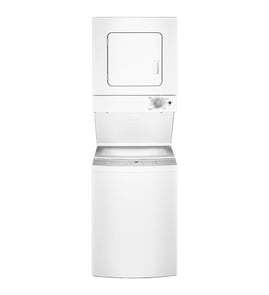


How many cubic feet is my Whirlpool duet washer?
Your Whirlpool LTE5243DQ6 is a stacked laundry center, not a Whirlpool Duet front-load washer; the washer capacity (cubic feet) is not the same as Duet models and varies by design. For the correct capacity reference for this exact unit, use the specs and use/care details in the LTE5243DQ6 owner's manual.
We match capacity by the exact model number on the rating label, then confirm it in the documentation.
- Check the model tag and confirm it reads LTE5243DQ6
- Use the capacity/specifications section in the LTE5243DQ6 owner's manual
- Do not use “Duet” capacity listings; Duet is a different Whirlpool washer platform
- If you are comparing for replacement, measure your available space and hookups (water, drain, vent)
- If you are troubleshooting performance (small loads, poor turnover), focus on cycle selection and loading, not just cubic feet
These ranges help you sanity-check what you see in the manual.
| Washer type | Typical capacity range | Notes |
|---|---|---|
| Compact/stacked laundry center washer | ~1.5 to 2.5 cu. ft. | Common in apartment-style units |
| Full-size top-load washer | ~3.5 to 4.8 cu. ft. | Larger basket, more bulky items |
| Front-load “Duet-style” washer | ~3.5 to 5.0+ cu. ft. | Model-dependent, often larger |
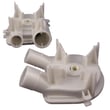
Capacity affects how much you can wash per load, how well clothes circulate during agitation, and how easily the washer can balance and spin. Using the correct LTE5243DQ6 specs also helps when ordering parts like the washer drain pump WP3363394 or planning installation clearances.
Last updated: February 2026
What are common problems with Whirlpool duet dryers?
Whirlpool Duet dryers most often have no-heat, no-tumble, no-start, noisy operation, or long dry times; those same symptoms can also happen on your Whirlpool LTE5243DQ6 stacked laundry center dryer. We use the troubleshooting steps in the LTE5243DQ6 owner's manual to pinpoint the cause.
- No heat or weak heat: restricted venting, failed heating circuit component, or an overheat safety opening
- Runs but won’t tumble: broken belt, worn idler pulley, drum support wear, or a failed motor
- Won’t start: power supply issue, door not latching, failed start switch, or timer problem
- Clothes still damp: long or kinked vent run, clogged lint screen/duct, or blocked exterior hood
- Squealing or thumping: worn idler pulley or drum support components
Restricted airflow is the most common reason for “no heat” complaints and slow drying because it overheats the dryer and reduces moisture removal. The venting guidance in the LTE5243DQ6 installation guide is the standard we follow.
- Clean lint from the lint screen housing and the entire vent run
- Confirm the exterior exhaust hood opens fully and is not packed with lint
- Use 4-inch heavy metal vent (avoid plastic or foil)
- Fully extend and support flexible metal vent; remove excess to prevent sagging
| Symptom | First check | Typical fix direction |
|---|---|---|
| No heat | Airflow and vent restriction | Clear venting before testing heater circuit |
| Long dry times | Vent length, kinks, hood flap | Shorten/straighten vent, clean hood |
| Won’t start | Door latch, start switch, timer | Verify latch, then test controls |
If airflow is good and the dryer still won’t run correctly, these LTE5243DQ6-COMPATIBLE parts are common repair items:
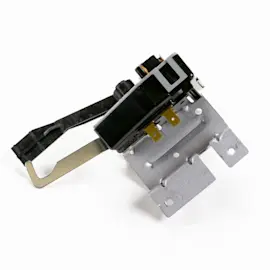
- Dryer push-to-start switch WP3977456 for intermittent or no-start
- Dryer idler pulley WP691366 for squealing and proper belt tension
- Strike 279570 when the door won’t latch consistently
Correcting venting and door-latch problems prevents repeat shutdowns, improves dry times, and protects the heater and motor from overheating and strain.
Last updated: February 2026
What is the average lifespan of a Whirlpool dryer?
A Whirlpool dryer typically lasts 10 to 13 years with normal household use. For the Whirlpool LTE5243DQ6 stacked laundry center, consistent airflow maintenance and correct venting (per the LTE5243DQ6 owner's manual) help the dryer heat efficiently and reduce wear on key components.
Most dryers fail early due to heat and airflow stress, not because the drum stops turning.
- Cleaning the lint screen every load reduces overheating and cycle time
- A restricted vent makes the heater run longer, shortening component life
- Overloading strains the drive system and increases drying time
- Long, kinked, or crushed venting causes poor airflow and higher temperatures
- Regularly checking the exhaust hood outside prevents hidden blockage
Use these habits to keep your LTE5243DQ6 dryer running closer to the high end of the lifespan range:
- Clean the lint filter before every cycle
- Inspect and clean the full vent run periodically (not just the lint screen)
- Use 4-inch heavy metal venting and avoid plastic or foil vent
- Keep flexible metal vent fully extended and supported (no sagging)
- Stop using the dryer if you smell persistent burning or notice repeated overheating
| Usage pattern | Typical dryer lifespan | What to watch |
|---|---|---|
| Light (1 to 3 loads/week) | 12 to 15 years | Vent buildup over time |
| Average (4 to 7 loads/week) | 10 to 13 years | Longer dry times |
| Heavy (multiple loads/day) | 7 to 10 years | Heat stress, motor wear |
A dryer that takes longer to dry is usually fighting poor airflow. That extra run time increases heat exposure and can shorten the life of the heating circuit, motor, and timer. Our venting and care steps in the installation guide are the fastest way to protect performance and lifespan.
Last updated: February 2026