Owner’s manual
 View engine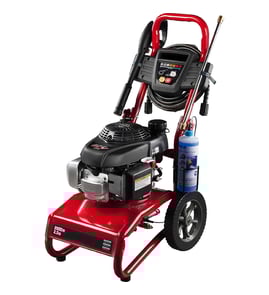



Is it worth repairing a pressure washer?
Yes, it’s often worth repairing a Craftsman 580752410 gas pressure washer when the issue is a normal wear item (nozzle, hose, seals) or routine maintenance; those fixes are usually far cheaper than replacing a 2900 PSI, 2.7 GPM unit. If the pump or engine has major internal damage, replacement can be the better value.
Quick decision checklist
- Repair first if the problem is low pressure from a clogged tip, a leaking connection, or a worn hose
- Repair first if the engine runs well and the washer still meets your needs (2900 PSI class)
- Replace if the pump is seized, the engine has low compression, or repair cost approaches half the price of a comparable new unit
- Replace if you need different performance (higher GPM for faster cleaning) or easier starting features
- Repair if downtime matters and you can fix it quickly with common parts and basic tools
Common “worth it” repairs on this model
Many performance complaints are caused by simple, serviceable items called out in the operator guidance.
- Clean or replace the spray tip; see nozzle 195983XGS
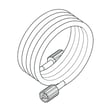
- Replace a damaged high-pressure hose; see hose 84006753
- Clean the inlet screen and in-line filter, then purge air from the pump (common after storage)
- Do routine engine maintenance (oil level, air filter, spark plug) per the Craftsman 580752410 operator’s manual
Cost-to-benefit guide
| Situation | Typical recommendation | Why it matters |
|---|---|---|
| Weak spray but engine runs smoothly | Repair/maintain | Often a nozzle, filter, or air-in-pump issue |
| Leaks at fittings or wand | Repair | Small seals or connection issues can waste pressure |
| Pump/engine major internal failure | Consider replacing | High labor and parts cost; reliability risk |
Why it matters
A pressure washer that’s maintained correctly avoids pump damage (especially from running without water) and keeps pressure and flow consistent. For the 580752410, staying on top of nozzle and hose condition can prevent “no pressure” symptoms that look worse than they are.
Last updated: January 2026
What are the most common issues with 580752410?
The most common issues we see with the Craftsman 580752410 gas pressure washer are no-start or hard-start, low or surging pressure, leaks at the hose or wand connections, and poor spray pattern from a clogged or worn nozzle. Your owner's manual covers the correct setup and operating checks that prevent many of these problems.
Common symptoms and what they usually point to
- Won't start / starts then dies: stale fuel, dirty spark plug, clogged carburetor jet, low oil shutdown (if equipped), or restricted air filter
- Low pressure or pressure surging: clogged nozzle, air in the inlet, kinked hose, worn pump seals, or an unloader valve sticking
- Water leaking at connections: worn O-rings, loose couplers, cracked hose, or damaged wand fitting
- Detergent not siphoning: wrong spray tip, clogged chemical injector, or air leak on the suction side
- Spray pattern is weak or uneven: partially blocked nozzle or incorrect tip selection
Quick checks we recommend first (fast and safe)
- Turn water on fully and purge air: squeeze the trigger for 30 to 60 seconds before starting the engine.
- Inspect the spray tip and clean it; replace if the orifice looks worn. For replacements, match your tip style to a nozzle 195983XGS or nozzle 195983RGS.
- Check for leaks at the gun, wand, and hose ends; tighten connections and replace worn seals.
- Verify the high-pressure line is not kinked or damaged; replace if the outer jacket is cut or blistered (see hose 84006753).
- If pressure spikes or the engine bogs when you release the trigger, service the unloader valve.
Symptom-to-fix guide
| Symptom | Most likely cause | Best next step |
|---|---|---|
| No start | fuel/ignition issue | refresh fuel, check spark plug, follow starting steps in the manual |
| Low pressure | clogged tip or inlet restriction | clean/replace nozzle, confirm strong water supply |
| Pulsing pressure | air in water or unloader issue | purge air, check inlet screen, inspect unloader |
| Leaks | worn seals or cracked hose | reseat fittings, replace hose or seals |
Why it matters
Running the pump without steady water flow or with a clogged nozzle overheats the pump and accelerates seal wear; fixing simple flow and tip issues early protects the pump and improves cleaning performance.
For step-by-step troubleshooting by symptom, use solving pressure washer problems and pressure washer won't start.
Last updated: March 2026
What kind of gas goes in a Craftsman 3000 PSI pressure washer?
For the Craftsman 580752410 gas pressure washer, we recommend using clean, fresh, regular unleaded gasoline; do not mix oil with the fuel and do not use fuel containing methanol. This model’s operator guidance calls for at least 85 octane.
Fuel type and what to avoid
Use the same fuel you would put in most small 4-cycle outdoor power equipment.
- Use regular unleaded gasoline
- Use fresh fuel (old fuel can cause hard starting and rough running)
- Minimum octane for this model: 85 octane
- Do not mix oil into the gasoline (this is not a 2-cycle engine)
- Do not use fuel that contains methanol
For the full fueling steps and safety notes, see the Craftsman 580752410 operator's manual.
Quick reference
| Item | What to use | What to avoid |
|---|---|---|
| Gasoline | Regular unleaded | Methanol-containing fuel |
| Octane | 85 or higher | Lower than 85 |
| Oil in gas | None | Any oil-gas mix |
Why it matters
Using the correct gasoline helps your Craftsman engine start easier, run smoother, and reduces fuel-system issues during storage (like gumming in the carburetor). It also helps prevent performance problems that can feel like low PSI or surging.
Related maintenance tip (helps prevent fuel problems)
If you store the pressure washer for 30 days or longer, plan to prep the fuel system as outlined in the manual. For broader troubleshooting help, we also recommend solving pressure washer problems.
Last updated: January 2026