Owner’s manual
 Error Codes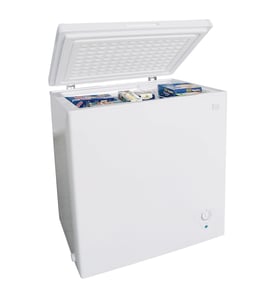


How many cubic feet is my chest freezer?
The cubic-foot capacity of your Kenmore chest freezer model 25519502010 is listed on the model’s rating label and in the 25519502010 owner's manual. If you cannot find it, we can estimate capacity by measuring the interior and converting to cubic feet.
Fast ways to find the exact cubic feet
- Check the rating label (commonly inside the cabinet wall near the top rim, or on the back).
- Look for wording like “Capacity”, “cu. ft.”, or “Total volume.”
- Review the specifications section in the 25519502010 owner's manual.
- If the label is missing or unreadable, measure the usable interior and calculate.
How to calculate cubic feet from interior measurements
- Measure the interior width, depth, and height in inches (usable space, not the lid).
- Multiply:
width × depth × heightto get cubic inches. - Divide by 1,728 to convert to cubic feet.
Quick conversion table
| If your interior measures (in.) | Cubic inches | Approx. capacity (cu. ft.) |
|---|---|---|
| 30 × 15 × 20 | 9,000 | 5.2 |
| 36 × 18 × 24 | 15,552 | 9.0 |
| 40 × 20 × 26 | 20,800 | 12.0 |
Why it matters
Knowing cubic feet helps us match the right storage baskets, plan food storage, and compare energy use across chest freezer sizes. It also helps when you are confirming fit for a replacement freezer in the same space.
Last updated: February 2026
How big is the Kenmore freezer model 25519502010?
The Kenmore chest freezer model 25519502010 is a full-size chest freezer, but the exact cubic feet and exterior dimensions (width, depth, height) depend on the specific specification sheet for this model. We list the precise measurements in the 25519502010 owner's manual.
What “big” usually means for a chest freezer
Most customers mean one (or more) of these:
- Capacity (cubic feet) for how much food it holds
- Outside dimensions to confirm it fits a space
- Interior floor space for large items (turkeys, bulk meat, boxes)
- Clearance needs for airflow and lid swing
How to find the exact dimensions for model 25519502010
Use the manual specs and measure your installation space.
- Check the specifications section in the 25519502010 owner's manual
- Measure your space in three directions: width, depth, height
- Add clearance for ventilation and for the lid to open fully
- If you are placing it in a tight spot, also account for the power cord and wall outlet location
Quick measuring checklist
- Measure width at the narrowest point (baseboards and trim matter)
- Measure depth from the wall to the front edge (include handles if present)
- Measure height to the top of the lid, then confirm overhead clearance for opening
Typical size ranges (helpful for planning)
If you are estimating before you measure, most chest freezers fall into these common ranges:
| Chest freezer size class | Typical capacity | Typical width range |
|---|---|---|
| Compact | 5 to 7 cu. ft. | 28 to 33 in. |
| Medium | 8 to 14 cu. ft. | 35 to 50 in. |
| Large | 15 to 22 cu. ft. | 55 to 74 in. |
Why it matters
Getting the right size prevents delivery surprises, improves airflow for efficient cooling, and helps avoid lid clearance issues that can lead to poor sealing and temperature swings.
Last updated: February 2026
How do I defrost my Kenmore freezer?
To defrost your Kenmore chest freezer model 25519502010, we unplug the freezer, move food to a cooler, open the lid, and let the frost melt; then we drain water, dry the cabinet, and restart the unit once everything is fully dry. For model-specific steps and drain location, use the 25519502010 owner's manual.
Safe defrost steps (recommended)
- Turn the temperature control to the warmest setting, then unplug the freezer.
- Remove food and baskets; keep food cold in a cooler with ice.
- Open the lid and place towels around the base to catch water.
- Speed up melting with bowls of hot water inside the cabinet; replace as they cool.
- When ice loosens, lift it off gently with a plastic scraper (never use a knife).
- Drain meltwater and wipe the interior completely dry.
Drain cap and cleanup tips
Many chest freezers use an interior drain opening with a cap. If your drain cap is missing, cracked, or leaking during defrost, replacing it prevents water from running under the cabinet.
| What you see | What it usually means | What we do |
|---|---|---|
| Water pooling inside but not draining | Drain opening blocked by ice or debris | Clear the opening, then drain again |
| Water leaking from the drain area | Drain cap not sealing | Inspect and replace the cap if needed |
| Slow draining | Freezer not level or drain tube restricted | Level the cabinet, clear the passage |
Helpful part for this model: freezer drain cap, inner 12132000000362.
What not to do
- Do not use a hair dryer, heat gun, or open flame inside the freezer.
- Do not chip ice with metal tools; puncturing the liner can damage the sealed system.
- Do not restart until the interior is dry; moisture can refreeze into heavy frost.
Why it matters
Regular defrosting keeps airflow and heat transfer efficient, helps the thermostat maintain steady temperatures, and reduces run time and energy use.
Last updated: February 2026
What are the parts of a chest freezer?
A Kenmore chest freezer like model 25519502010 is built around a sealed refrigeration system (compressor, condenser, evaporator, and refrigerant tubing) plus temperature controls, a lid and gasket, and a cabinet that insulates and supports everything. For model-specific component locations, use the 25519502010 owner's manual.
Main parts you will find in most chest freezers
- Compressor: pumps refrigerant through the sealed system
- Condenser (coils or condenser loop): releases heat to the room
- Evaporator: absorbs heat from inside the freezer to create cooling
- Capillary tube (or metering device): controls refrigerant flow into the evaporator
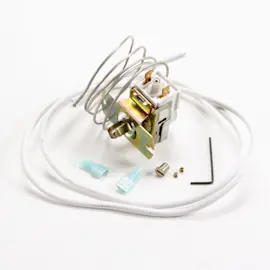
- Thermostat/temperature control: senses temperature and cycles cooling on and off
- Cabinet and insulation: keeps cold air in and heat out
Common “serviceable” parts customers replace
These are the parts that most often get replaced due to wear, damage, or access during service:
- Lid hardware and trim (hinges, covers)
- Temperature control knob and control covers
- Drain components used during manual defrost
- Sealed-system support parts (handled by a technician)
Examples of parts listed for Kenmore 25519502010
| Part | What it does | When it matters |
|---|---|---|
| Midea refrigerator temperature control knob 12131000003600 | Lets you adjust the thermostat setting | Knob is cracked, missing, or slipping |
| Midea freezer drain cap, inner 12132000000362 | Seals the defrost drain opening | Water leaks during defrost, cap is lost |
| Midea refrigerator filter dryer 501602000034 | Helps keep moisture/contaminants out of the sealed system | Used during sealed-system repairs |
Why it matters
Knowing the major components helps you troubleshoot symptoms correctly. For example, temperature swings often point to the thermostat/control area, while unusual clicking or no cooling can involve the compressor circuit or sealed system.
Last updated: February 2026
What can cause a chest freezer to stop working?
A Kenmore chest freezer model 25519502010 can stop working due to a power or control issue, poor airflow from heavy frost or overpacking, or a failed cooling-system component (thermostat, start device, or compressor). Start with simple checks, then move to component troubleshooting.
Quick checks first (most common)
- Confirm the outlet has power (try a lamp) and reset any tripped breaker or GFCI.
- Make sure the temperature control is not set to OFF or the warmest setting.
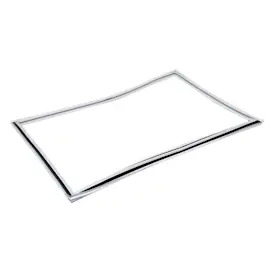
- Check the lid is closing fully and the gasket is sealing all the way around.
- Look for heavy frost buildup that can block airflow and reduce cooling.
- Verify the freezer is not overpacked; leave space for air circulation.
Likely causes and what you’ll notice
| Symptom | Common cause | What to do next |
|---|---|---|
| No lights/sound at all | No power, bad cord/outlet | Verify power, then inspect cord and connections |
| Hums then clicks off | Start relay/overload issue, compressor struggling | Test start components; consider pro service if compressor is hot |
| Runs but not cold | Frost/airflow issue, thermostat/control problem | Defrost fully; check control settings |
| Warm temps, long run time | Poor sealing, high room temp, blocked ventilation | Improve sealing, clearance, and loading |
Parts that can be involved on this model
If the control area is damaged or missing pieces, these model-matched parts can contribute to poor operation or inconsistent settings:
- Midea refrigerator temperature control knob 12131000003600 (setting changes, loose knob)
- Midea thermostat cover 12132000000087 (protects the thermostat/control area)
Why it matters
A freezer that “stops working” is often a simple power, setting, or airflow problem. Fixing those first prevents unnecessary parts replacement and helps protect food from unsafe temperatures.
Helpful references
- Use the 25519502010 owner’s manual for control settings, clearance requirements, and operating tips.
- If your freezer has an electronic display showing a fault, use Kenmore electronic control module freezer error codes to interpret the code before replacing parts.
Last updated: February 2026
Why is my Kenmore chest freezer not getting cold?
If your Kenmore 25519502010 chest freezer isn’t getting cold, the most common causes are a warm control setting, poor lid sealing, restricted airflow from heavy frost, or a compressor that isn’t starting or running correctly. Start with simple checks before moving to sealed-system concerns.
Quick checks we recommend first
- Confirm the temperature control is set colder and wait 24 hours for stabilization.
- Make sure the lid closes fully and the gasket is clean and making full contact.
- Verify the freezer has proper clearance around the cabinet for ventilation.
- Listen for the compressor: a steady hum is normal; repeated clicking points to a start problem.
- Check for heavy frost or ice buildup that can reduce cooling performance.
What you can observe and what it usually means
| What you notice | Likely cause | What to do next |
|---|---|---|
| Compressor runs but interior stays warm | Airflow issue or frost/ice restriction | Defrost and improve airflow; avoid overpacking |
| Clicking every few minutes, little or no running | Start device/relay issue or compressor problem | Follow a start-system check; consider a technician |
| Runs constantly, only slightly cool | Dirty heat-exchange surfaces or low refrigerant (sealed system) | Clean, improve ventilation; sealed system needs service |
| Frost/ice buildup is heavy | Defrost needed, lid not sealing, frequent openings | Fully defrost; check lid seal and habits |
Defrost and drainage tips (chest freezer)
A full manual defrost often restores cooling when ice buildup is the culprit.
- Unplug the freezer and move food to a cooler.
- Leave the lid open and let ice melt naturally.
- Use the drain (if equipped) and make sure the cap seals afterward.
- Reinstall the drain cap securely; a missing or loose cap can create leaks and moisture.
If your drain cap is damaged or missing, the midea freezer drain cap, inner 12132000000362 is a model-matched option for the 25519502010.
Why it matters
A freezer that is warm can spoil food quickly, and a compressor that short-cycles (clicking on and off) can overheat and lead to more expensive repairs. Catching airflow, frost, and ventilation issues early prevents repeat problems.
Helpful troubleshooting references
- Use the 25519502010 owner’s manual for control location, operating guidance, and defrost/drain instructions.
- If your freezer has an electronic display or fault indicators, check Kenmore electronic control module freezer error codes for code meanings and next steps.
Last updated: February 2026
How to clean condenser coils in chest freezer?
For Kenmore chest freezer model 25519502010, we clean the condenser area by unplugging the freezer, removing dust from the coil and nearby vents with a soft brush and vacuum, then restoring power. This improves airflow, helps the compressor run cooler, and supports steady freezing.
Before you start (safety and access)
- Unplug the freezer (or switch off the breaker) before cleaning.
- Protect the floor; dust and pet hair can fall from the base area.
- Use a flashlight so you can see the coil, fan openings, and air slots.
- Check the coil location and any panel removal steps in the 25519502010 owner's manual.
Cleaning steps (what we recommend)
- Vacuum the grille and intake/exhaust openings first.
- Use a coil brush (or soft paintbrush) to loosen packed lint and hair.
- Vacuum again with a brush attachment; avoid bending coil fins.
- Wipe the surrounding base area with a dry cloth.
- Plug the freezer back in and confirm it starts cooling normally.
How often to clean
| Home situation | Cleaning interval |
|---|---|
| Pets, dusty garage, laundry room | Every 3 months |
| Typical indoor use | Every 6 months |
| Very clean, low-traffic area | Every 12 months |
If it still runs warm or seems to run nonstop
After cleaning, give the freezer 12 to 24 hours to stabilize. If performance is still poor, we check these common causes:
- Lid not sealing well (gasket dirty, warped, or not closing squarely)
- Temperature control set too warm or knob slipping (inspect the refrigerator temperature control knob 12131000003600)
- Heavy frost buildup restricting heat transfer (manual defrost may be needed)
- Poor clearance around the cabinet (blocked airflow at the base)
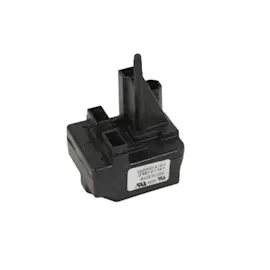
- Compressor start issues (use our guide: how to replace a freezer compressor start relay)
Why it matters
Dirty condenser coils trap heat. When the freezer cannot shed heat efficiently, it can run longer, use more electricity, and struggle to hold safe food-storage temperatures.
Last updated: February 2026