Owner’s manual

Are craftsman table saws any good?
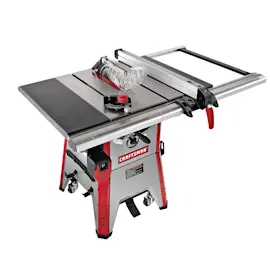
Yes. Craftsman table saws are a good fit for DIYers and home workshops when they are assembled, adjusted, and used with the proper safety gear; the Craftsman model 137248830 is a 10-inch table saw designed for typical ripping and crosscutting on standard household power. For the exact specifications and adjustment procedures, use the 137248830 operator’s manual.
A table saw earns a good reputation when it cuts straight, stays aligned, and can be used safely and repeatably.
- Fence locks parallel to the blade and stays there
- Blade is square to the table at 90° and accurate at 45°
- Miter gauge is set correctly for crosscuts
- Guard, splitter/riving knife, and anti-kickback parts are installed for through-cuts
- Stand or bench mounting keeps the saw stable
This Craftsman 10-inch saw is intended for common shop tasks like:
- Ripping boards and sheet goods with proper infeed and outfeed support
- Crosscutting with the miter gauge or a sled
- Bevel cuts after setting and verifying the angle stop
- Repetitive cuts once the fence and miter gauge are dialed in
| Use case | What matters most | Best practice |
|---|---|---|
| Straight rips | Fence alignment | Verify fence-to-blade parallel before long rips |
| Clean crosscuts | Miter gauge accuracy | Set to 90° and test-cut scrap first |
| Safer operation | Guarding and technique | Use the guard for through-cuts and a push stick |
Strengths
- Solid capability for homeowner projects and hobby work
- Straightforward maintenance and serviceability
- Good results with a sharp blade matched to the material
Trade-offs
- Accuracy depends heavily on setup and periodic re-checks
- Dust collection is typically basic unless you add a shop vacuum
- Lighter saws need solid support to prevent shifting
Most “bad saw” complaints come from a misaligned fence, out-of-square blade, or missing safety setup. Following the assembly, adjustment, and safety steps in the 137248830 operator’s manual is what turns the saw into a reliable, repeatable tool.
Last updated: February 2026
Can you use an 8 inch blade on a 10 inch table saw?
Yes; you can run an 8-inch blade on the Craftsman 137248830 10-inch table saw if the blade matches the saw’s arbor size and is rated for the saw’s operating speed. Expect less maximum cutting depth, and confirm the guard and splitter setup still works safely.
- Reduced cut depth: smaller diameter means a shallower maximum cut.
- Guarding may not fit: the blade guard, splitter, and anti-kickback pawls must align correctly.
- More setup sensitivity: blade height, bevel angle, and fence alignment become more critical.
- Cut quality can change: tooth count and grind matter more than diameter for finish quality.
- Kickback risk stays real: a smaller blade does not reduce kickback hazards.
- Unplug the saw before changing blades.
- Confirm the arbor hole matches the saw’s arbor.
- Confirm the blade’s maximum RPM rating meets or exceeds the saw’s speed listed in the manual.
- Verify the blade clears the table insert (throat plate) and does not contact the guard.
- Reinstall and test the blade guard and splitter for through-cuts.
| Item | 10-inch blade (standard) | 8-inch blade |
|---|---|---|
| Max cut depth | Deeper | Shallower |
| Guard compatibility | Designed for it | Must be verified |
| Best use | General ripping and crosscutting | When reduced depth is acceptable |
This model’s manual includes specific dado instructions: it states the saw includes a dado table insert, the arbor restricts maximum dado width to 1/2 inch, and it specifies using only a 6-inch dado set. Follow the step-by-step setup and safety notes in the 137248830 owner's manual.
Using a blade that does not match the arbor, RPM rating, or guarding setup increases the chance of poor cuts, binding, and kickback. Correct alignment and proper guarding protect you and help the saw cut straight.
Last updated: February 2026
How much is a Craftsman professional table saw 137248830?
A Craftsman 137248830 table saw price depends on condition, completeness, and local demand; most sales are used-market pricing, not a fixed MSRP. Use the included accessories list in the 137248830 operator’s manual to compare listings accurately and avoid overpaying for an incomplete saw.
When you compare listings for the Craftsman 137248830, these factors move the price the most:
- Completeness: rip fence, miter gauge, blade guard and splitter, throat plate (insert), wrenches
- Mechanical condition: smooth blade height and bevel adjustments, no binding
- Arbor and bearings: minimal vibration, no grinding or squealing noises
- Table condition: flat top, minimal rust pitting, intact extension wings
- Electrical condition: switch works consistently, cord insulation not cracked
- Stand/base: stable, no bent supports, hardware present
Use this to make sure you are comparing the same “package”:
| Item to verify | What to look for | Why it matters |
|---|---|---|
| Rip fence | Locks firmly and stays parallel to the blade | Cut accuracy and kickback prevention |
| Throat plate (insert) | Sits flush, not cracked | Safer cuts, less tearout |
| Guard and splitter | Present and mounts correctly | Basic safety equipment |
| Switch and cord | No intermittent power, cord jacket intact | Reliability and shock prevention |
The Craftsman 137248830 operator’s manual lists the saw’s key identifiers and what should be included. From the manual cover/spec callouts, this model is a 10 inch table saw with a 3.0 HP (max developed) rating and a 5000 R.P.M. specification.
- Confirm the model tag matches 137.248830
- Match included accessories to the manual’s parts list
- Verify safety components are present and functional
A low purchase price turns expensive fast if the rip fence, insert, or safety hardware is missing, or if the arbor bearings are noisy. Verifying completeness first keeps your total cost predictable.
Last updated: February 2026
How to change old craftsman table saw blade?
To change the blade on your Craftsman 137248830 10 inch table saw, we start by preventing accidental start (switch OFF, remove the switch key, and unplug). Then we remove the blade guard/insert as needed, loosen the arbor nut, and swap the blade and washers in the same order.
- Turn the switch OFF.
- Remove the yellow switch key.
- Unplug the saw from the outlet.
- Raise the blade to its highest position using the elevation handwheel.
- Move the blade guard out of the way (or remove it if your manual instructs removal for blade service).
For model-specific diagrams and the exact hardware order, use the 137248830 owner's manual.
- Remove the throat plate (blade insert) so you can access the arbor nut.
- Lock the blade: hold the blade steady with a scrap wood block against a tooth (keep hands clear of sharp edges).
- Loosen the arbor nut with the supplied wrench(es); remove the nut.
- Remove the outer washer/flange, then slide the old blade off the arbor.
- Install the new blade with the teeth facing the correct direction (match the rotation arrow on the blade to the saw’s rotation).
- Reinstall the washer/flange and arbor nut; tighten firmly while holding the blade steady.
- Reinstall the blade insert and blade guard assembly before cutting.
- Blade is seated flat on the arbor (no wobble).
- Washers are installed in the same order they came off.
- Arbor nut is tight.
- Blade insert is flush with the table.
- Guard/splitter is installed and aligned.
| Symptom after blade change | Most likely cause | What to do |
|---|---|---|
| Blade wobbles | Washer/flange reversed or debris on arbor | Clean mating surfaces; reinstall washers correctly |
| Burning or rough cuts | Dull/dirty blade | Clean pitch/gum; replace blade if worn |
| Kickback tendency | Fence/splitter alignment issue | Verify alignment per the manual before ripping |
A correctly installed blade cuts straighter and reduces vibration and kickback risk. The manual also emphasizes disconnecting power before adjustments and keeping the guard and insert installed for normal operation.
Last updated: February 2026
How to date a craftsman table saw?
To date a Craftsman table saw, we start with the model and serial number on the saw’s ID plate; for model 137248830 (also written as 137.248830), the most reliable method is matching the serial number format to the manufacturer’s coding and confirming against the model’s production era in the 137248830 owner's manual.
Look for a data plate or label on the saw; common locations include the rear of the cabinet, the side panel, or near the motor housing.
- Model number: 137248830 (may appear as 137.248830)
- Serial number: usually a longer string of letters and numbers
- Electrical rating label: often nearby (helpful for confirming you are reading the correct plate)
- Revision or type code: sometimes printed near the model or serial (use it when comparing parts and diagrams)
Craftsman tools were built by different manufacturers over the years, so serial number “date codes” are not universal. Use this process:
- Write down the full serial number exactly (include letters, dashes, and spaces).
- Identify the manufacturer (often implied by the model prefix; many Craftsman saws use a manufacturer code in the model number).
- Check for a year-week pattern in the serial (common formats include YYWW, WWYY, or a leading letter plus digits).
- Cross-check with features/specs from the manual (blade size, arbor size, rip capacity) to ensure you are dating the correct saw.
These specs help confirm you are working with the right unit before you interpret the serial number.
| Spec | What to look for on the saw/manual |
|---|---|
| Blade diameter | 10 inch blade |
| Arbor size | 5/8 inch |
| Max depth at 90° | 3 inches |
| Max dado width | 1/2 inch |
Knowing the build era helps us match the correct parts list, wiring layout, and safety components (like the blade guard assembly and insert) so repairs and adjustments fit your exact Craftsman 10 inch table saw.
Last updated: March 2026
What are the common table saw mistakes?
On the Craftsman 137248830 10 inch table saw, the most common mistakes are skipping safety devices, using the wrong cutting setup (especially when ripping), and poor blade and workpiece control. These errors increase kickback risk and make it easier for hands to enter the blade path; follow the 137248830 operator's manual safety rules every time.
- Operating without the blade guard, splitter, and anti-kickback pawls installed and aligned (for through cuts).
- Ripping with the miter gauge, or trying to use more than one fence setup in a single cut.
- Standing directly behind the workpiece during a rip cut (puts you in the kickback line).
- Cutting warped, twisted, or bowed stock, or stock without a straight edge against the fence.
- Setting up the saw poorly: loose blade on the arbor, loose bevel lock, or fence not parallel to the miter slots.
- Using a dull or incorrect blade, which can overload the motor and increase binding.
- Letting sawdust build up inside the saw or around the motor area (fire hazard and performance issues).
Before you start the motor, we recommend this routine:
| Check | What “good” looks like | Why it helps |
|---|---|---|
| Blade and arbor | Blade is tight on the arbor | Reduces wobble and binding |
| Fence setup (ripping) | Fence is locked and parallel to the miter grooves | Helps prevent pinching and kickback |
| Guarding | Guard is in place and working properly | Reduces contact and kickback risk |
| Workpiece | Straight edge against the fence; not warped | Prevents twisting into the blade |
| PPE | Safety glasses on | Protects from chips and dust |
- Keep the splitter and guard system installed for through cuts.
- Keep hands out of the blade path; use a push stick for narrow rips (many saws require it under about 2 inches).
- Do not release the workpiece until it is completely past the blade.
- Mount the saw securely on a bench or stand; vibration and shifting cause bad cuts.
Most table saw injuries and “scary moments” come from kickback and loss of control, not just blade contact. Correct fence alignment, proper guarding, and straight stock keep the cut stable and predictable.
Last updated: February 2026
What size arbor is on a craftsman table saw?
On the Craftsman table saw model 137248830, the manual focuses on arbor capacity (how much blade stack it can hold) rather than listing a specific arbor diameter. For blade fit, use the arbor measurement you take from the saw and match it to the blade’s bore size; see the 137248830 owner's manual for blade and dado setup limits.
Use this quick, accurate check so you buy the correct 10-inch blade bore.
- Unplug the saw and remove the switch key (if equipped).
- Remove the table insert (throat plate) to access the blade.
- Remove the arbor nut and outer flange, then slide the blade off.
- Measure the arbor shaft diameter with a caliper (best) or a precise ruler.
- Match that measurement to the blade bore size printed on the blade label or packaging.
The 137248830 manual states the arbor length limits the maximum dado stack width.
- Maximum dado width is 1/2 inch (arbor restriction).
- Use only a 6-inch dado set (do not exceed 6 inches).
- Do not use adjustable (wobble) dadoes.
| Item you’re fitting | Measurement that must match | Where to check |
|---|---|---|
| Standard saw blade | Blade bore equals arbor diameter | Blade label and your measurement |
| Dado stack | Total stack width (max 1/2 inch) | Dado instructions and manual |
| Blade hardware | Flange order and nut tightness | Manual blade/dado instructions |
A blade bore that does not match the arbor will not center correctly; that causes vibration, poor cut quality, and higher kickback risk. Correct fit keeps the blade clamped true between the flanges.
Last updated: February 2026
What size blade is a Craftsman 137248830 table saw?
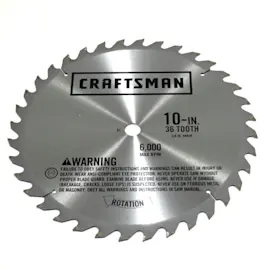
The Craftsman table saw model 137248830 uses a 10-inch blade. This is the standard blade diameter specified for this 10-inch table saw, and it matches the saw’s design speed and guarding components shown in the 137248830 operator's manual.
When you shop for a replacement blade, match these basics so the blade fits and runs correctly:
- Diameter: 10 inches
- Application: rip and crosscut (choose tooth count for your work)
- Arbor hole: match your saw’s arbor size (confirm in the 137248830 operator's manual)
- Max RPM rating: the blade must be rated at or above the saw’s operating speed
| What you’re doing | Typical tooth count | Result |
|---|---|---|
| Fast ripping (construction lumber) | 24T to 30T | Faster cuts, rougher finish |
| General purpose | 40T to 50T | Balanced speed and finish |
| Fine crosscuts (plywood, trim) | 60T to 80T | Cleaner finish, slower feed |
Using the correct 10-inch blade keeps the blade guard, riving knife/splitter alignment, and cutting capacity working as intended. An incorrect diameter can reduce performance and can interfere with safe operation.
- Unplug the saw before servicing.
- Inspect the arbor nut and arbor collar for damage or debris.
- Verify the blade is installed with teeth facing the correct direction.
- Spin the blade by hand (with power disconnected) to confirm it clears the insert and guard.
Last updated: February 2026
Where can I get Craftsman replacement parts?
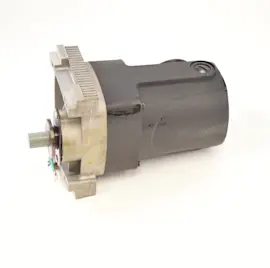
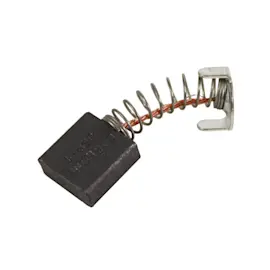
For Craftsman replacement parts for your Craftsman model 137248830 10-inch table saw, we recommend buying by exact model number and matching the part’s I.D. number from the parts list. Sears PartsDirect is a dependable source for model-matched parts; you can also shop other retailers as long as the part identifiers match.
- Search using the full model number 137248830.
- Use the parts list and diagrams in the 137248830 owner's manual to confirm the part description and I.D. number.
- For safety-related items (blade guard, switch, power cord, wiring), replace with the correct, identical-style part for this model.
- Compare mounting points, dimensions, and included hardware when multiple listings look similar.
- If you are ordering accessories, follow the manual’s compatibility limits (for example, dado blade size limits).
| What to check | Why it matters | Example on a table saw |
|---|---|---|
| Model number | Ensures correct fit | 137248830 |
| Part I.D. number | Prevents ordering a look-alike | Listed in the manual parts list |
| Left vs. right orientation | Avoids mismatched assemblies | Extension wing (left/right) |
| Electrical style and connectors | Helps ensure safe, correct replacement | Switch, cord, lead wire assembly |
Table saw parts are highly model-specific. Items like the rip fence assembly, throat insert, extension wings, and wiring components can look interchangeable across Craftsman saws, but small differences affect alignment, guarding, and safe operation.
Last updated: February 2026