Error Codes


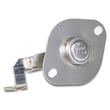
How do you know if a thermal fuse is blown on an Amana dryer?
On an Amana YNED4600YQ1 electric dryer, a blown thermal fuse most often shows up as a dryer that will not start, or a dryer that runs with no heat. The sure way to know is a continuity test with a multimeter; an open reading means the fuse has blown.
- Dryer will not start (common when the thermal fuse opens)
- Motor runs but there is no heat (some designs)
- Dryer stops mid-cycle and will not restart until it cools
- Burning smell or very hot cabinet (often points to airflow restriction)
- Long dry times leading up to the failure
- Unplug the dryer (electric shock risk).
- Access the fuse area (typically on the blower housing or heater housing).
- Remove at least one wire from the fuse terminal.
- Set a multimeter to continuity or lowest ohms.
- Touch probes to the fuse terminals.
Results guide
| Meter result | What it means | What to do next |
|---|---|---|
| Beep or near 0 ohms | Fuse is good | Keep troubleshooting heat or start circuit |
| No beep or OL/infinite | Fuse is blown | Replace the fuse and fix the airflow problem |
A thermal fuse is a one-time safety device; it opens when the dryer overheats. Overheating is usually caused by restricted airflow.
- Lint buildup in the lint screen housing
- Crushed, kinked, or overly long vent hose
- Clogged exterior vent hood or screen
- Blocked blower wheel or lint-packed blower housing
- Overloading the drum, which reduces airflow through clothes
For airflow and maintenance steps, use our guide: how to clean and maintain your clothes dryer.
If your YNED4600YQ1 needs an overheat-related repair, these model-matched parts are commonly involved:
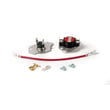
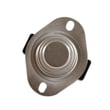
- Dryer thermal cut-off fuse kit 279816 (often used when addressing no-heat or overheat conditions)
- Dryer high-limit thermostat WP3977767 (can trip when temperatures run too high)
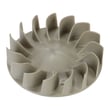
- Dryer blower wheel WP694089 (a damaged wheel can reduce airflow)
Replacing a blown fuse without correcting the venting issue usually leads to another overheat and another blown fuse. Restoring proper airflow protects the heating system, improves dry times, and helps prevent repeat failures.
Last updated: February 2026
Is it worth replacing a dryer heating element?
Yes, it’s usually worth replacing the heating element in your Amana electric dryer model YNED4600YQ1 when the dryer is otherwise in good shape. A no-heat problem is commonly caused by a failed heater circuit component, and replacing the failed part typically costs far less than replacing the dryer.
We recommend repairing (not replacing the dryer) when these are true:
- The drum turns normally and the dryer runs, but clothes stay cold or damp
- The cabinet, drum, and door are in good condition (no major rust or damage)
- You have no burning smell or repeated overheating symptoms after cleaning the vent
- The dryer is drying slowly mainly because it is not heating
- You can confirm airflow is strong at the outside vent hood
A common first repair on no-heat complaints is replacing the thermal cut-off and related safety parts using a kit such as the dryer thermal cut-off fuse kit 279816.
Before replacing any heating parts, we check the basics because airflow problems can cause repeat failures:
- Clean the lint screen and the lint screen housing
- Inspect and clear the entire vent run to the outside (crushed hose, lint clog, stuck damper)
- Verify the dryer is getting full 240V power (a tripped breaker can leave it running on 120V with no heat)
- Look for a loose or burned wire at the heater terminals (repair as needed)
For step-by-step guidance, use our electric dryer wont heat troubleshooting video.
| Repair path | Parts cost (typical) | Skill/time (typical) | Best for |
|---|---|---|---|
| Replace safety kit (thermal cut-off/thermostat) | Low to moderate | Moderate; 30 to 90 minutes | Dryer runs but won’t heat |
| Replace heating circuit wiring/terminals | Low | Moderate | Burned or loose heater connections |
| Replace multiple wear items while open | Moderate | Moderate to advanced | Older dryer with noise plus heat issues |
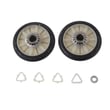
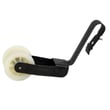
If your YNED4600YQ1 is also squealing or thumping, bundling maintenance while the cabinet is open can be cost-effective; the dryer repair kit 4392065 is a common way to refresh rollers and related wear parts.
A failed heating component is often a single-point repair, but restricted venting can overheat the heater housing and repeatedly blow safety fuses. Fixing airflow first protects the new parts and restores normal dry times.
Last updated: February 2026
What is the most common problem with the dryer?
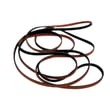
For the Amana YNED4600YQ1 electric dryer, the most common problems are airflow-related overheating that blows a thermal cut-off, and normal wear items that stop the drum from turning (especially a broken belt). These issues often show up as “won’t start,” “runs but won’t heat,” or “drum won’t spin.”
- Overheating from restricted venting: dryer shuts off, won’t heat, or repeatedly blows safety fuses; check the vent path first.
- Broken drum belt: motor runs but drum does not turn; sometimes you hear the motor humming.
- Worn drum support parts: squealing, thumping, or rumbling as the drum turns.
- Blower wheel problems: weak airflow, longer dry times, or unusual rattling.
- Timer or control wear: cycle won’t advance, inconsistent run times.
- Confirm power: electric dryers typically need a full 240V supply; a tripped breaker can leave the dryer running but not heating.
- Check airflow: clean the lint screen and make sure the vent is not crushed, kinked, or clogged.
- Listen and observe:
- Motor runs, drum still: belt or drum support issue.
- Heat problems plus poor airflow: venting, blower wheel, or safety thermostat/fuse.
| Symptom | Likely area | Example part for YNED4600YQ1 |
|---|---|---|
| Drum won’t turn | Drive system | Belt 341241 |
| Loud rumble/squeal | Drum support | Dryer repair kit 4392065 |
| No heat or overheats | Safety temperature control | Dryer thermal cut-off fuse kit 279816 |
| Long dry times | Air movement | Dryer blower wheel WP694089 |
Most “dryer problems” start with airflow. A clogged vent makes the heater run hotter than designed, which can trip a thermal cut-off and also cause slow drying. Fixing venting first prevents repeat failures and protects key components like the heating circuit and motor.
For step-by-step maintenance that helps prevent the most common failures, use our guide: how to keep a dryer clean and economical.
Last updated: February 2026
How long do Amana dryers usually last?
Most Amana dryers, including the Amana YNED4600YQ1 electric dryer, typically last 10 to 15 years with normal household use. Regular airflow maintenance and replacing wear items early (belt, rollers, blower wheel) is what most often keeps a dryer running closer to the high end of that range.
A dryer’s life is mostly determined by heat stress, airflow restriction, and drum-drive wear.
- Vent and lint buildup (overheats the heater and thermostats)
- Overloading (stresses the belt, motor, and drum supports)
- Long dry times (often caused by restricted airflow)
- Noisy operation (often worn rollers, shafts, or front bearing)
- Electrical issues (loose connections, damaged wiring)
These habits reduce overheating and mechanical wear.
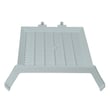
- Clean the lint screen every load; replace a damaged screen such as the dryer lint screen W11778253
- Check and clean the vent path regularly (lint screen housing, blower area, vent duct)
- Keep loads medium-sized so the drum turns freely
- Stop using the dryer if you smell burning or notice repeated overheating
- Address squealing, thumping, or scraping early to prevent drum and motor damage
If your YNED4600YQ1 is still heating but starts slipping, squealing, or tumbling poorly, these are common wear items.
| Symptom | Common wear area | Example part on this model page |
|---|---|---|
| Drum won’t turn or slips | Belt/drive | Belt 341241 |
| Squealing or rumbling | Drum support components | Dryer repair kit 4392065 |
| Loud vibration, poor airflow | Blower wheel | Dryer blower wheel WP694089 |
A dryer that runs hot or takes too long to dry usually wears out faster because the heating circuit and drum-drive system work harder each cycle. Keeping airflow strong and replacing worn drive parts early helps prevent bigger failures like a damaged motor or heater box.
For more upkeep tips that help your dryer reach its full service life, use our guide: how to clean and maintain your clothes dryer.
Last updated: February 2026