
Does Kubota make a tiller?
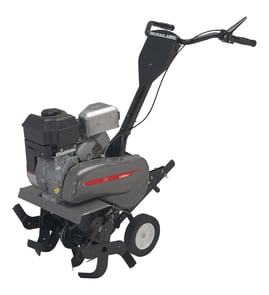
Yes. Kubota makes tillers, and your Kubota AT25 is a front-tine tiller model. Kubota also sells other tiller styles (such as rear-tine and PTO-driven rotary tillers) depending on the tractor or application.
What “tiller” can mean with Kubota equipment
Kubota tillers show up in a few common categories, so it helps to match the style to how you use it:
- Front-tine tiller (like the AT25): walk-behind style; tines pull the machine forward
- Rear-tine tiller: walk-behind style; better traction and stability in tougher soil
- Tractor-mounted rotary tiller: PTO-driven implement for compact tractors
- Forward-rotation vs. reverse-rotation (rotary tillers): affects soil finish and how aggressively it bites
How to confirm you have the right model for parts
For the most accurate parts match, we use the exact model number and the product ID tag information.
- Find the model number (AT25) on the tiller’s ID plate
- Write down any serial number listed on the same plate
- Compare the ID plate info to the model listing before ordering
- If your tiller has been modified (tines, belts, guards), match parts by the original configuration
Helpful reference: how to find your appliance model number (and what it means for parts)
Quick comparison: walk-behind vs. tractor rotary tiller
| Feature | Front-tine walk-behind (AT25) | Tractor PTO rotary tiller |
|---|---|---|
| Power source | Self-contained engine | Tractor PTO driveline |
| Best for | Small gardens, lighter soil | Larger plots, heavier soil |
| Typical wear items | Tines, belts, pulleys, seals | Tines, gearbox oil seals, driveline parts |
Why it matters
Kubota makes multiple tiller types, and parts are not interchangeable across styles. Confirming “front-tine AT25” versus a tractor rotary tiller prevents ordering the wrong tines, belts, or drive components.
Last updated: February 2026
What tiller is made in the USA?
Several tillers are made in the USA, but it varies by brand, model, and even specific product line. If you are shopping for a USA-made tiller to compare with your Kubota AT25 front-tine tiller, focus on brands that clearly state “Made in USA” for the exact model you are considering and confirm it before buying.
USA-made tiller brands and examples
These manufacturers are commonly associated with USA-made tillers (availability and specific models can change):
- MacKissic Merry Tiller (often marketed as USA-made)
- Power Dog (Kuhns) commercial-grade tillers (often marketed as USA-made)
- Northwest Tillers heavy-duty farm tillers (often marketed as USA-made)
- Mantis cultivators and tillers (some models are marketed as USA-made; confirm by model)
How to confirm a tiller is actually made in the USA
We recommend verifying the country of origin for the exact model, not just the brand name.
- Check the product data plate or ID tag on the tiller frame
- Look for “Made in USA” language on the carton and the machine label (not just marketing copy)
- Confirm the manufacturing origin for the exact model number and engine package
- Ask for written confirmation on the specific model you are buying
- Keep the model and serial number recorded for future parts lookup
Quick comparison: what “made in the USA” can mean
| Claim you see | What it usually means | What to check |
|---|---|---|
| Made in USA | Built and manufactured in the US (standards vary) | Label on the machine and documentation for that exact model |
| Assembled in USA | Final assembly in the US, parts may be imported | Country of origin for major components |
| Designed in USA | Engineering in the US, manufacturing may be elsewhere | Manufacturing location statement |
Why it matters
Country of origin can affect parts availability, build style (gear drive vs. belt drive), serviceability, and long-term support. For any tiller, matching the correct model number is what keeps parts ordering accurate.
For help identifying the correct model number format to use when searching parts, use how to find your appliance model number (and what it means for parts).
Last updated: February 2026
What is the benefit of a rear tine tiller?
A rear tine tiller’s biggest benefit is power and stability: the tines are behind the wheels, so the machine pulls itself forward while digging, which makes it ideal for breaking new ground and working rocky or root-filled soil. This applies even if you own a Kubota AT25 front-tine tiller, because the rear-tine advantage is mainly about tine placement and weight.
Key advantages of a rear tine tiller
- Better traction and control: wheels lead, tines follow, so it tracks straighter in tough soil.
- Easier on the operator: less bouncing and “walking” compared with many front-tine designs.
- Handles hard conditions: cuts into compacted soil, sod, and areas with roots more effectively.
- More consistent depth: tends to maintain a steadier tilling depth across uneven ground.
- Good for larger gardens: typically faster and less fatiguing over big areas.
Rear tine vs. front tine: quick comparison
| Feature | Rear tine tiller | Front tine tiller (like Kubota AT25) |
|---|---|---|
| Best use | New ground, heavy soil | Established beds, lighter soil |
| Stability | Higher | Moderate |
| Effort to steer | Lower | Higher |
| Typical weight | Heavier | Lighter |
Why it matters
Choosing the right tine layout saves time and reduces strain. If you are reclaiming a yard area, cutting through sod, or dealing with rocks and roots, a rear tine tiller usually finishes the job with fewer passes and less fighting the machine.
Helpful tip for parts and model matching
When you are comparing tiller types or shopping for maintenance items, match parts to the exact model number (AT25) to avoid fit issues. Our guide on how to find your appliance model number (and what it means for parts) helps you confirm the correct ID before ordering.
Last updated: February 2026
Which is better, front or rear Tine tiller?
A rear-tine tiller is better for breaking new ground, hard soil, and sod because it’s heavier, more stable, and typically tills deeper. A front-tine tiller (like the Kubota AT25) is better for lighter-duty work in already-loose garden beds where maneuverability and lower weight matter most.
Quick comparison (what to choose for your job)
| Feature | Front-tine tiller (Kubota AT25 style) | Rear-tine tiller |
|---|---|---|
| Best for | Existing beds, mixing compost, light cultivation | New ground, compacted soil, sod removal |
| Stability | Can “walk” or bounce in hard soil | Tracks straighter; less operator effort |
| Maneuverability | Easier in tight spaces | Heavier; harder to turn |
| Typical cost | Lower | Higher |
Choose a front-tine tiller when
- You’re working soil that’s already been gardened and is relatively loose
- You want a lighter machine that’s easier to transport and store
- You’re tilling smaller plots or working between rows
- You mainly need to blend amendments (compost, fertilizer) into the top layer
Choose a rear-tine tiller when
- You’re cutting into hard-packed soil, clay, or ground that hasn’t been tilled before
- You need deeper tilling and better traction
- You want the machine to pull itself forward with less “fighting” the handles
- You’re preparing a larger garden area and want faster progress per pass
Why it matters
Matching the tiller type to your soil saves time and wear on the machine. Using a front-tine tiller in very hard ground often leads to bouncing, shallow tilling, and extra strain on belts, tines, and the operator.
Parts and maintenance tip
If you’re comparing performance because your AT25 feels weak or won’t dig well, start with basics: check tine condition, drive/belt tension, and any shear pins or fasteners in the tine drive. For model-specific replacement parts, search by model number on Sears PartsDirect.
Last updated: February 2026