Owner’s manual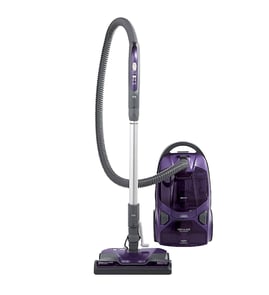



What are the disadvantages of a canister vacuum?
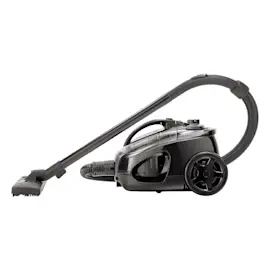
Canister vacuums like the Kenmore 11629219800 clean very well, but the tradeoffs are storage space, extra handling (hose, wand, power nozzle), and more effort on stairs because you are moving both a canister and a cleaning head. For model-specific handling and safety notes, use the owner's manual.
- Bulkier to store: you store the canister plus hose, wand, and attachments.
- More to maneuver: the canister follows behind and can bump furniture or walls.
- Stairs are awkward: you manage the canister separately from the wand and nozzle.
- More setup steps: switching tools and adjusting suction takes more hands-on effort.
- Hose management: hoses can twist or tug if you pull too quickly.
The 11629219800 manual calls out two practical downsides on stairs: the canister can be unstable if placed on steps, and you should carry or move the canister by its handle, not by pulling the hose. These handling limits are a big reason some people prefer an upright for multi-level homes.
| Feature | Canister vacuum | Upright vacuum |
|---|---|---|
| Storage footprint | Larger (multiple pieces) | Smaller (one main unit) |
| Stairs | Harder (separate canister) | Often easier (single unit) |
| Tool changes | More frequent | Often fewer |
| Furniture reach | Usually better | Usually less flexible |
If your home has lots of stairs, tight hallways, or limited closet space, the canister format can feel like extra work even when suction and reach are excellent.
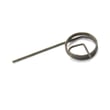
If a handling issue is caused by a worn latch or internal mechanism, you can order replacement parts for the Kenmore 11629219800 from the parts list for this model, or search by model number on Sears PartsDirect. If you are servicing a specific assembly that uses a spring, match it carefully by location and description before ordering the spring KC23DDGBZ000.
Last updated: February 2026
What is the best canister vacuum on the market today?
The “best” canister vacuum depends on your floors, pets, and filtration needs. For most homes, a high-quality bagged canister with strong sealed filtration and easy-to-find consumables performs best long-term; use your Kenmore 11629219800 features as a baseline when comparing.
We focus on performance and ownership factors that matter more than brand hype:
- Floor type match: bare floors vs. carpeted rooms (power nozzle helps on carpet)
- Filtration: sealed system and HEPA-style exhaust filtration for allergies
- Bagged vs. bagless: bagged is typically cleaner to empty and maintains airflow better
- Tool set: crevice tool, combination brush, and a powered head for pet hair
- Serviceability: belts, brush roll, and filters should be straightforward to maintain
For Kenmore 11629219800 owners, your owner's manual is the best reference for what your vacuum already supports (attachments, suction control use, and routine care).
| Household need | What to prioritize | Typical best-fit canister type |
|---|---|---|
| Pets and carpet | Power nozzle, strong agitation, easy hair removal | Bagged canister with powered head |
| Allergies | Sealed airflow path, high-efficiency exhaust filter, bagged design | Bagged HEPA-focused canister |
| Mostly hard floors | Smooth floor brush, suction control, maneuverability | Canister with dedicated floor tool |
| Small spaces | Light weight, tight turning radius, long cord reach | Compact canister |
A canister vacuum is only “best” if it keeps airflow high and stays easy to use. Your Kenmore 11629219800 manual emphasizes keeping airflow passages open and checking for clogs, plus changing the dust bag often for best cleaning results. Those same factors are what separate top performers from frustrating ones.
Keeping your current canister running like a top-tier vacuum often comes down to basic upkeep:
- Change the bag regularly (don’t wait until suction drops)
- Keep the hose and wands clear of clogs
- Maintain filters on schedule
- Avoid pulling the canister by the hose (use the handle)
You can order replacement parts for Kenmore 11629219800 from the parts list for this model, or search by model number on Sears PartsDirect.
Last updated: February 2026
Why does my vacuum have power but no suction?
If your Kenmore canister vacuum model 11629219800 turns on but has little or no suction, the airflow path is blocked or restricted. The most common causes are a full dust bag, clogged filters, a clog in the hose or wand, or the suction control being left open.
- Turn the vacuum off and unplug it before checking for clogs.
- Replace the dust bag if it’s full or packed.
- Check and clean or replace clogged filters (a clogged filter restricts airflow).
- Inspect the hose, wand, and floor nozzle for a blockage; remove any debris.
- Make sure all connections are fully seated so you are not losing airflow at a joint.
- Verify the suction control is set correctly (opening it reduces suction; closing it increases suction).
- Bag and filters first: A full bag or clogged filters is the fastest, most common fix.
- Check the “starred” clog points: This model’s manual calls out checking key airflow passage areas periodically for clogs.
- Confirm suction control setting: For best cleaning results, keep the airflow passage open and set suction control for the surface you’re cleaning.
- Look for air leaks: Cracks in the hose, a loose wand connection, or a poor seal at the bag compartment can reduce suction.
| What you see | Most likely cause | What to do |
|---|---|---|
| Motor runs, suction is weak everywhere | Full bag or clogged filter | Replace bag; clean/replace filters |
| Suction is fine at canister but weak at nozzle | Clog in hose/wand/nozzle | Clear the blockage |
| Suction changes when you move the handle | Loose connection or air leak | Reseat connections; inspect for cracks |
| Vacuum shuts off after a bit | Overheating from restricted airflow | Clear clogs, replace bag/filters, let it cool |
Your vacuum relies on steady airflow to carry dirt to the dust bag. When airflow is restricted, cleaning performance drops and the thermal protector can trip to prevent overheating. Keeping the bag, filters, and airflow passages clear restores suction and helps protect the motor.
- Use the 11629219800 owner’s manual for the exact airflow passage check points, suction control use, and thermal protector reset guidance.
- If you need replacement parts for this model, order from the parts list for model 11629219800 or search by model number on Sears PartsDirect.
- For more DIY troubleshooting steps by symptom, use the vacuum symptoms landing page.
Last updated: February 2026