Owner’s manual
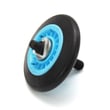


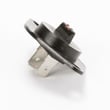
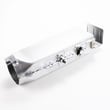
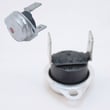
How to tell if Samsung dryer thermal fuse is bad?
On a Samsung DV330AEW dryer, a bad thermal fuse typically shows no electrical continuity when tested with a multimeter; the dryer may not heat or may not run at all. Replace the fuse only after fixing the overheating cause, most often restricted venting. See the DV330AEW owner's manual for venting and maintenance guidance.
- Dryer runs but no heat (common on electric models)
- Dryer won’t start or stops shortly after starting (varies by design)
- Cycle seems normal but clothes stay damp because heat shuts down
- You recently had long dry times or a very hot cabinet (overheating)
- Unplug the dryer (and shut off gas on gas models).
- Access the fuse location (often on the blower housing or heater housing).
- Pull at least one wire off the fuse terminal.
- Set a multimeter to continuity (beep) or ohms.
- Touch probes to the fuse terminals.
Results:
- Good fuse: beeps or reads close to 0 Ω
- Bad fuse: no beep or reads OL/infinite
The DV330AEW manual calls out periodic cleaning of the dryer interior and exhaust duct, and recommends metal venting and regular exhaust inspection/cleaning.
- Clean the lint screen and lint chute area
- Inspect the full vent run for kinks, crushed duct, or heavy lint
- Confirm the outside exhaust hood opens freely
- Avoid plastic or thin foil flex duct; use rigid or stiff-walled metal
- Keep the vent run as short and straight as practical
These parts can be part of the same overheating event. Match by symptom and test results.
| Part | What it does | When it’s suspect |
|---|---|---|
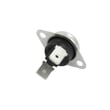
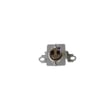
| Dryer thermal cut-off fuse, 320-degree f DC47-00015A | Opens on extreme heat | Dryer won’t heat or shuts heat down |
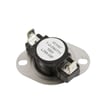
| Dryer high-limit thermostat DC47-00018A | Limits heater temperature | Overheating, cycling heat issues |
| Dryer thermistor DC32-00007A | Senses temperature for control | Erratic temps, poor drying, error behavior |
A thermal fuse is a one-time safety device. When it opens, it is telling us the dryer overheated; correcting airflow and heat-control issues helps restore normal drying and prevents repeat failures.
Last updated: February 2026
What's the average lifespan of a Samsung dryer?
A Samsung dryer typically lasts 10 to 15 years. For your Samsung DV330AEW, lifespan depends most on airflow (venting and lint buildup), load size, and how quickly you replace wear items; follow the care and venting guidance in the DV330AEW owner's manual.
- Airflow and venting: restricted exhaust overheats the heater and safety thermostats.
- Lint control: cleaning the lint screen every load reduces heat stress and run time.
- Load habits: chronic overloading strains the belt, motor, and drum support system.
- Heat system health: weak heat or cycling problems increase dry time and wear.
- Timely repairs: replacing small wear parts early prevents bigger failures.
| Symptom | Likely wear area | What it impacts |
|---|---|---|
| Squealing, thumping, rumbling | Drum support system (rollers, seals) | Smooth drum rotation and noise |
| Drum not turning | Belt or drive motor | Tumble action and cycle completion |
| No heat or poor heat | Heating circuit (element, fuses, thermostats) | Drying performance and safety shutoffs |
If your DV330AEW is taking longer to dry or running hotter than normal, start with airflow and lint buildup first; then check heating components such as the Samsung dryer heating element DC47-00019A if airflow is clear.
- Clean the lint screen every load.
- Inspect and clean the vent path regularly; keep the run short and free of kinks.
- Avoid overloading; dry bulky items in smaller batches.
- If dry times increase, correct airflow issues before continuing heavy use.
- Address unusual noises early to prevent secondary damage.
Most “short lifespan” dryers are dryers running too hot or too long because of restricted airflow. Keeping venting clear and fixing small problems early helps your DV330AEW stay in the 10 to 15 year range.
Last updated: February 2026
Is it worth replacing a heating element in a Samsung dryer?
Yes. For your Samsung DV330AEW dryer, replacing a failed heating element is usually worth it because it restores normal heat for far less than replacing the dryer, especially when the drum, motor, and controls are working normally. Use the DV330AEW owner's manual for safety and maintenance basics.
Replace the heater when the dryer tumbles but produces little or no heat and airflow is strong.
- Drum turns normally but clothes stay damp
- No obvious melted wiring or scorched terminal connections
- Lint screen is cleaned every load
- Outside vent hood has strong airflow
- Dryer is otherwise in good condition (no major noise or vibration)
A no-heat complaint often involves the heater circuit and safety cutoffs.
| Symptom | Part to check | What it does |
|---|---|---|
| Tumbles, no heat | Samsung dryer heating element DC47-00019A | Generates heat in the heater housing |
| Overheats, then stops heating | Dryer high-limit thermostat DC47-00018A | Limits heater temperature for safety |
| No heat after overheating | Dryer thermal cut-off fuse, 320-degree f DC47-00015A | Opens the heater circuit if temperature gets too high |
| Long dry times, heat seems inconsistent | Dryer thermistor DC32-00007A | Helps regulate temperature using sensor feedback |
Heating elements commonly fail from normal wear, but restricted venting can overheat the heater housing and repeatedly blow safety devices.
- Clean the lint screen before or after each load
- Check for crushed, kinked, or lint-packed vent ducting
- Keep the area around the exhaust opening free of lint and dust
- Dry bulky loads in smaller batches; reposition if needed
Last updated: February 2026