 Installation guide
 Owner’s manual
 Error Codes



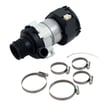
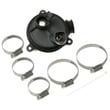

Can I replace dishwasher parts myself?
Yes, for the GE GDT655SMJ2ES dishwasher, we recommend DIY replacement for simple, non-wired parts (like spray arms, racks, and some seals) as long as you shut off power and water first and follow the steps in the GDT655SMJ2ES owner’s manual. For electrical, heating, or pump repairs, use extra caution and follow the GDT655SMJ2ES installation guide safety and grounding requirements.
What you can usually replace yourself
These repairs are typically straightforward with basic hand tools:
- Clean or replace a spray arm (for example, the dishwasher spray arm, lower WD22X33499)
- Clean the Ultra-Fine Filter (remove bottom rack, twist filter counterclockwise, rinse gently)
- Clear and clean an air gap (if your installation has one)
- Replace a drain hose if it’s split or kinked (for example, dishwasher drain hose WD24X10062)
- Replace rack hardware (rollers, brackets, rails) if the rack is falling off track
Repairs that are more advanced
These involve wiring, leak risk, or critical functions. We treat these as advanced DIY:
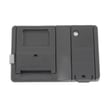
- Control and user interface issues (for example, dishwasher electronic control board WD21X24901C or dishwasher user interface WD21X31902C)
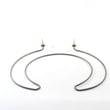
- Heating and drying problems (for example, dishwasher heating element WD05X30818)
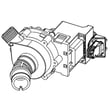
- Wash motor or circulation problems (for example, dishwasher circulation pump assembly WD26X23258)
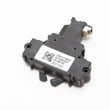
- Door won’t latch or unit won’t start due to door switch/latch alignment (for example, GE dishwasher door latch lock WD21X10490)
Safety checklist before you start
The manual guidance is clear: disconnect power before maintenance and avoid contact with hot components.
- Turn off electrical power at the breaker (not just the control panel)
- Shut off the water supply valve under the sink
- Let the heating element cool at least 20 minutes after a cycle before working inside
- Take photos of wire connections before disconnecting anything
- Confirm the dishwasher is properly grounded before restoring power
Quick “DIY or technician?” guide
| Repair type | Typical DIY level | Common symptom |
|---|---|---|
| Spray arm, filter cleaning | Easy | Poor cleaning, debris left behind |
| Drain hose, air gap cleaning | Medium | Not draining, water in tub |
| Control board, UI, pump, heater | Advanced | Won’t start, dead panel, no wash action, not drying |
Why it matters
Dishwashers combine electricity, hot water, and moving parts. Doing the right prep (power off, water off, cool-down time) prevents shocks, burns, and leaks, and it helps ensure the GE GDT655SMJ2ES runs correctly after the repair.
Last updated: February 2026
How to do a hard reset on GE dishwasher?
For the GE GDT655SMJ2ES dishwasher, the most reliable “hard reset” is a power reset: turn the dishwasher’s breaker OFF for 1 minute, then turn it back ON. After power is restored, you can cancel a stuck cycle by pressing and holding Start for 3 seconds (see the GDT655SMJ2ES owner’s manual).
Hard reset steps (power reset)
- Turn OFF the dishwasher circuit breaker (or unplug the unit if accessible).
- Wait at least 60 seconds.
- Turn power back ON.
- Wake the controls by opening and closing the door or pressing any pad.
- If the unit was mid-cycle, press and hold Start for 3 seconds, then close the door so it drains.
If it still will not run after the reset
These checks solve most “has power but won’t start” complaints on GE dishwashers:
- Confirm the door is fully latched; a weak latch can prevent starting.
- Make sure you press Start, then close the door within 10 seconds to begin the cycle.
- Check for a tripped breaker or a wall switch that controls dishwasher power (common near the disposer switch).
- If the control panel is locked, unlock the control panel per the GDT655SMJ2ES owner’s manual.
- If you see an error code, match it to the code list in GE electronic dishwasher error codes.
What “reset” does (and does not) do
| Reset type | What it helps | What it won’t fix |
|---|---|---|
| Power reset (breaker OFF/ON) | Frozen keypad, glitchy display, cycle stuck | Broken latch, failed pump, heater not heating |
| Cancel/Drain (hold Start 3 sec) | Stops a cycle and drains water | Power supply problems, wiring issues |
Why it matters
A power reset clears temporary control glitches, while the Start-hold cancel drains the tub and exits a stuck cycle. If the dishwasher only starts when you push the door hard, the door latch is the next place we look; the GE dishwasher door latch lock WD21X10490 is a common fix when latching is inconsistent.
Last updated: February 2026
Is it worth fixing a GE dishwasher?
Yes, it’s usually worth fixing a GE dishwasher like model GDT655SMJ2ES when the unit is under 10 years old and the repair is a common, mid-cost fix (latch, heating, draining, or wash performance). Replacement makes more sense when repairs stack up or a major electronic failure drives the total cost high.
Quick way to decide (cost vs. age)
Use this checklist before you buy parts or schedule service:
- If the dishwasher is under 10 years old, repairs are typically a good value.
- If the repair estimate is under about half the cost of a comparable new dishwasher, fix it.
- If you’ve had multiple breakdowns in the last 12 to 18 months, replacement is usually smarter.
- If the problem is one clear failure (won’t latch, won’t drain, not drying), repair is usually the best move.
- If the issue points to electronics (dead panel, random beeping, no response), compare repair cost carefully.
For model-specific operating and care guidance, check the GDT655SMJ2ES owner’s manual.
Common repairs on this model and what they typically mean
These are frequent “worth fixing” scenarios on GE dishwashers, including GDT655SMJ2ES:
| Symptom | Common cause | Example part for this model |
|---|---|---|
| Won’t start or stops when you close the door | Door latch not engaging | Door latch lock WD21X10490 |
| Dishes not drying well | Heater circuit issue, rinse aid use, cycle selection | Heating element WD05X30818 |
| Poor cleaning, food left behind | Clogged or damaged spray arm, low wash pressure | Dishwasher spray arm, lower WD22X33499 |
| Not draining | Drain restriction or drain pump problem | Dishwasher drain hose WD24X10062 |
Why it matters
A dishwasher repair is most cost-effective when it restores core functions (fill, wash, heat, drain) with one targeted part. Once multiple systems are failing, you can spend more chasing symptoms than you would by upgrading to a newer, more efficient unit.
Tips to avoid “unnecessary” repairs
Before replacing parts, we recommend these quick checks:
- Reset the house breaker; a tripped breaker can mimic a failed control.
- Confirm any nearby wall switch feeding the dishwasher is ON (common in some installs).
- Make sure the control panel is not locked.
- Clean for mineral buildup; hard water film can reduce performance over time.
- Wait at least 20 minutes after a cycle before inspecting inside; heating components can be hot.
If you’re seeing a fault code, use GE electronic dishwasher error codes to narrow the repair to the right system.
Last updated: February 2026
What are the commonly replaced parts in a dishwasher?
In a GE dishwasher like model GDT655SMJ2ES, the most commonly replaced parts are the wash and drain components (spray arms, pumps, diverter), door sealing and latching parts, and key electrical controls. These parts wear from heat, detergent, hard water buildup, and normal mechanical use.
Most common parts we see replaced
- Spray arms that clog, crack, or stop spinning: dishwasher spray arm, lower WD22X33499, dishwasher spray arm, middle WD22X33498
- Heating parts that affect drying and water temperature: dishwasher heating element WD05X30818
- Drain and wash circulation parts when water won’t move correctly: dishwasher drain pump WD19X25187, dishwasher circulation pump assembly WD26X23258
- Door closing and safety parts when the unit won’t start or won’t stay latched: GE dishwasher door latch lock WD21X10490
- Seals and gaskets when you notice leaks: dishwasher tub gasket WD08X23477
- Control electronics when the dishwasher has power issues or odd behavior: dishwasher electronic control board WD21X24901C
Quick symptom-to-part guide
| Symptom | Common part involved | Example part for GDT655SMJ2ES |
|---|---|---|
| Dishes not clean, weak spray | Clogged or damaged spray arm | WD22X33499 (lower), WD22X33498 (middle) |
| Not drying, water not heating | Heating circuit | WD05X30818 |
| Standing water, won’t drain | Drain path or drain pump | WD19X25187, also check drain hose routing |
| Won’t start, stops when door moves | Door latch system | WD21X10490 |
| Leaks at the door/tub edge | Gasket/sealing surfaces | WD08X23477 |
| Random lights, no response, error behavior | Control electronics | WD21X24901C |
Why it matters
Replacing the right part first prevents repeat failures. For example, a “not draining” complaint can be a drain pump issue, but it can also be a pinched or poorly routed drain hose, which the install checks call out.
Before you order a part (fast checks)
- Confirm the dishwasher is level and stable; a twisted tub or door can cause sealing and latching problems.
- Check that the drain hose is not pinched behind the dishwasher.
- Clean spray arm holes and remove debris that can block rotation.
- Let heating components cool at least 20 minutes before touching internal parts.
- If you’re seeing an error code, match it to the fault first using GE electronic dishwasher error codes.
For model-specific operating and care steps (including cleaning guidance and safety notes), use the GDT655SMJ2ES owner’s manual.
Last updated: February 2026
What is the average lifespan of a GE dishwasher?
A GE dishwasher typically lasts 10 to 12 years. For your GE GDT655SMJ2ES, lifespan depends most on water quality, how often it runs, and routine care like cleaning and checking seals; consistent maintenance helps you reach the upper end of that range. See the GDT655SMJ2ES owner's manual for model-specific care steps.
Typical lifespan range (what to expect)
Most GE dishwashers fall into this practical range:
- 8 to 10 years: heavy daily use, hard water buildup, limited cleaning
- 10 to 12 years: typical household use with basic maintenance
- 12 to 15 years: lighter use plus regular cleaning and prompt repairs
Maintenance that extends dishwasher life
The biggest lifespan gains usually come from preventing mineral buildup and keeping water moving freely.
- Clean and de-odorize the interior periodically (citric acid or dishwasher cleaner)
- Wipe the control panel with a lightly damp cloth, then dry
- Keep spray paths clear; remove debris from spray arm holes
- Avoid overloading; allow water to reach all surfaces
- Use the right detergent amount for your water hardness
- Address draining or heating issues early to prevent secondary damage
Quick “repair vs. replace” guide
Use this as a practical decision check for an older GDT655SMJ2ES.
| If your dishwasher is… | Usually makes sense to… | Common related parts |
|---|---|---|
| Under ~8 years old | Repair | Control, latch, pump, heater |
| 10 to 12 years old | Compare repair cost vs. condition | Pump, heater, control |
| 12+ years old | Replace if multiple major issues | Multiple assemblies |
If you are troubleshooting poor cleaning, a worn or clogged spray arm is a common fix; the dishwasher spray arm, lower WD22X33499 is a model-matched option for this unit.
Why it matters
Dishwashers are water-heating appliances, so scale buildup, restricted spray, and small leaks can shorten life quickly. Regular cleaning and catching performance changes early helps protect major components like the circulation pump and heating system.
Last updated: February 2026
What is the most common problem with a GE dishwasher?
The most common GE dishwasher problem is a drain issue: water stays in the tub because the filter area, drain path, or drain pump gets restricted. On the GE GDT655SMJ2ES, the next most common complaints are “won’t start” (door not latching or control lock) and poor drying tied to heater performance; confirm the basics in the GDT655SMJ2ES owner’s manual.
Most common symptoms and what they usually mean
- Standing water after the cycle: drain hose restriction, drain pump issue, or a clog in the sump area.
- Won’t start or stops mid-cycle: door not fully latched, control panel locked, or a control glitch.
- Not cleaning well: spray arm ports clogged, loading blocking spray, or low water flow.
- Not drying: heater circuit issue, rinse aid not used, or cycle selection.
- Suds/foam in the tub: wrong detergent (hand dish soap) or rinse aid spill.
Quick checks we recommend first (no parts required)
- Verify power is on (breaker and any wall switch that feeds the dishwasher).
- Make sure the door closes firmly and the latch engages.
- Confirm the control panel is not locked.
- Use only automatic dishwasher detergent; avoid anything that causes suds.
- If performance is poor, inspect spray arms for debris and confirm dishes are not blocking rotation.
Common fixes and the parts that match the symptom
| Symptom | Most likely area | Model-matched part to consider |
|---|---|---|
| Won’t start, beeps, or won’t stay running | Door latch system | GE dishwasher door latch lock WD21X10490 |
| Not cleaning, weak spray | Lower spray coverage | Dishwasher spray arm, lower WD22X33499 |
| Not drying, water not heating | Heater circuit | Dishwasher heating element WD05X30818 |
| Dead or erratic operation | Main control | Dishwasher electronic control board WD21X24901C |
Why it matters
Drain and start problems often look “electrical,” but they are frequently caused by simple restrictions, loading issues, or a door that is not fully latched. Starting with the basics prevents unnecessary part replacement and gets the GE GDT655SMJ2ES back to normal cycle performance faster.
For fault displays and diagnostic direction, we use the GE electronic dishwasher error codes reference alongside the manual.
Last updated: February 2026
Which dishwasher to stay away from?
If you’re shopping for a dishwasher, we stay away from any model line with a consistent pattern of service calls for leaks, poor drying, or repeated electronic failures. For your GE GDT655SMJ2ES, the best approach is to compare reliability signals (warranty history, parts pricing, and common repairs) before you buy.
What to look for (and avoid) when comparing dishwashers
We recommend avoiding models that show these repeat issues across many owners and service tech reports:
- Frequent leak complaints (door seal, tub gasket, or hose routing problems)
- Chronic “won’t start” or dead control symptoms (user interface or control board failures)
- Poor drying performance even with rinse aid and heated dry enabled
- Repeated drain problems (standing water, slow drain, drain pump noise)
- Hard-to-source parts or unusually expensive electronics for the class
Quick reliability checklist you can use in the store
Use this simple checklist to screen models quickly:
| What you check | Good sign | Red flag |
|---|---|---|
| Parts availability | Common parts in stock | Many parts discontinued/backordered |
| Electronics cost | Reasonable UI/board pricing | Very high UI/board pricing |
| Leak prevention | Solid door seal design, good install guidance | Many reviews mention leaks |
| Serviceability | Easy access to filters, spray arms | Complicated disassembly for basics |
Model-specific notes for GE GDT655SMJ2ES owners
If you already own the GE GDT655SMJ2ES, most “avoid it” complaints are preventable with correct installation and basic maintenance:
- Confirm the unit is square and level; all four legs must contact the floor (helps prevent door sealing issues).
- Make sure the drain hose is not pinched and is routed correctly.
- If cleaning is weak, inspect and clean the spray arms; a worn arm can reduce wash pressure.
- If drying is poor, verify heated dry settings and avoid plastic items near the heater.
For installation checks and safety basics, follow the installation guide. For operating and loading guidance, use the owner’s manual.
Why it matters
Dishwashers fail in predictable ways: leaks damage cabinets and flooring, and electronic control failures are often the most expensive repairs. Screening for those patterns helps you avoid a “bad fit” model and reduces long-term repair costs.
Last updated: February 2026





