Owner’s manual
 Error Codes



What is the average lifespan of a GE refrigerator?
A GE refrigerator like model GSS25LSWASS typically lasts 12 years. With normal use and basic maintenance (clean airflow, good door sealing, stable temperatures), many units reach 10 to 15 years before major repairs become more common.
Typical lifespan ranges (what to expect)
- Average: about 12 years
- Common range: 10 to 15 years
- Longer life is most likely when: temperatures stay steady and the sealed system stays healthy
| What you’re seeing | What it usually means | What to do first |
|---|---|---|
| Warmer temps, food spoiling | Cooling system struggling or airflow issue | Verify settings, clear vents, clean condenser area |
| Frost buildup, weak cooling | Defrost system issue | Check for heavy frost on the freezer back wall |
| Noisy operation, warm cabinet | Fan or compressor-side issue | Listen for fan noise; check for blocked airflow |
Maintenance that extends refrigerator life
These steps reduce compressor run time and prevent common failures:
- Keep condenser area clean and unobstructed (dust and pet hair raise operating temps)
- Make sure door gaskets seal tightly; replace if torn or loose
- Avoid overpacking; blocked vents reduce airflow to the fresh food section
- Keep freezer around 0°F and refrigerator around 37°F (typical targets)
- Replace the water filter on schedule if you use the dispenser; a restricted filter can reduce water flow
Parts that commonly affect performance as the unit ages
If your GSS25LSWASS starts running warm, frosting up, or cycling oddly, these model-matched parts are often involved:
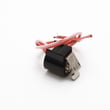
- Refrigerator temperature sensor WR55X10025 (temperature feedback and control)
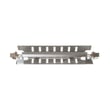
- Refrigerator defrost heater WR51X10055 (melts frost off the evaporator)
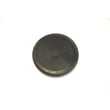
- Refrigerator defrost bi-metal thermostat WR50X10065 (defrost temperature safety/control)
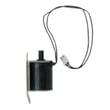
- Refrigerator evaporator motor WR60X10307 (moves cold air through the freezer and fresh food sections)
Why it matters
Once a refrigerator gets past the 10 to 15 year mark, small efficiency losses (dirty condenser, weak fan, failing defrost components) can push the sealed system harder. Keeping airflow and defrost working correctly is the best way to protect the compressor and extend service life.
For model-specific use and care details, follow the maintenance and operating guidance in the owner's manual.
Last updated: February 2026
What is the most common problem with a GE refrigerator?
The most common GE refrigerator complaint is not cooling properly (fresh food warm, freezer warming, or temperatures swinging). On the GE GSS25LSWASS, the fastest wins are confirming the controls are set correctly, allowing time after power-up, and checking airflow and defrost-related symptoms using the owner's manual.
Most common issues we see (and what to check first)
- Not cooling or weak cooling: verify temperature settings, make sure vents are not blocked, and confirm doors seal fully.
- Strange noises: sizzling, popping, buzzing, dripping, or gurgling can be normal during defrost and pressure equalization.
- Ice maker not making ice: check water supply, filter restriction, and dispenser lock.
- No water from dispenser: a clogged filter or a frozen reservoir can stop water flow.
- Water leaking: often tied to defrost drain issues, ice buildup, or water line connections.
- Door not closing: door alignment and loading can prevent a full seal.
- Light not working: bulb failure is common.
Quick troubleshooting steps for “not cooling”
- Wait after plugging in: after first power-up, allow up to 24 hours for full cool-down.
- Confirm power and mode:
- Make sure the unit is fully plugged in.
- If it is in a non-cooling display mode, unplug and plug back in.
- Check door seal and alignment: the doors are designed to self-close from partially open; if doors are uneven, adjust the door leveling screw (7/16-inch socket).
- Listen for normal defrost sounds: sizzling or dripping during defrost is expected.
Common “not cooling” parts that often test bad
| Symptom | Common suspect | Example part for GSS25LSWASS |
|---|---|---|
| Temps swing, erratic cooling | Temperature sensor | GE profile refrigerator temperature sensor WR55X10025 |
| Frost buildup, warm fridge | Defrost heater or thermostat | Refrigerator defrost heater WR51X10055, refrigerator defrost bi-metal thermostat WR50X10065 |
| Warm fridge, weak airflow | Evaporator fan issue | Refrigerator evaporator motor WR60X10307 |
Why it matters
A side-by-side like the GE GSS25LSWASS depends on steady airflow and a working defrost system. When cooling is weak, food safety and ice production are usually the first things affected, so checking settings, door sealing, and defrost symptoms early prevents bigger problems.
Last updated: February 2026
How do I find the model number on my GSS25LSWASS?
For the GE GSS25LSWASS side-by-side refrigerator, the model number and serial number are printed on a label inside the fresh food (refrigerator) compartment; it’s located at the top on the right side. Use that exact model number when ordering parts or checking the manual.
Where to look (exact location)
Open the refrigerator door and check:
- Inside the refrigerator compartment (not the freezer)
- At the top, on the right-hand side
- Near the light area (the label is often close to the light shield)
- On a sticker or rating plate that lists both Model # and Serial #
If you have trouble spotting it, the location is shown in the GSS25LSWASS owner’s manual.
What to write down
Record both numbers; they are used for parts lookup and service identification.
| Item | What it’s used for | Example format |
|---|---|---|
| Model number | Ensures correct-fit parts and diagrams | GSS25LSWASS |
| Serial number | Identifies production details for service | Letters and numbers |
Tips if the label is hard to read
- Wipe the label gently with a damp cloth and dry it
- Use a flashlight and take a close-up photo to zoom in
- Copy the model number exactly, including all letters
- Keep the numbers with your purchase receipt and manual
Why it matters
GE often uses similar-looking designs across multiple side-by-side refrigerators; the model number is what matches you to the correct parts list (for example, the correct refrigerator water filter MSWF or door components).
Last updated: March 2026