Owner’s manual
 View engine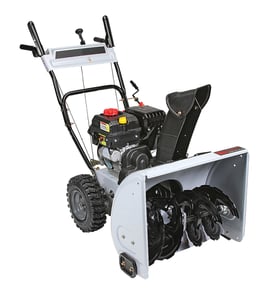




How to find Craftsman snowblower model number?
On the Craftsman snow thrower model 536886120, the model and serial numbers are on a decal attached to the rear of the snow thrower housing. We recommend writing down the model number, serial number, and purchase date for future parts matching and service. See the 536886120 owner's manual.
Where to look on the machine
Check these common label locations on Craftsman snowblowers, starting with the one confirmed for model 536886120:
- Rear of the snow thrower housing (decal with model and serial number)
- Back panel near the wheels
- Side of the frame near the auger housing
- Under the handle area on the main frame
- Near the engine mounting area (less common)
What to record (and why)
When you find the decal, capture these details:
- Model number (for example, 536886120)
- Serial number (identifies your exact production unit)
- Date of purchase (helpful for maintenance tracking)
| Item on decal | What it’s used for | Example |
|---|---|---|
| Model number | Matching diagrams and compatible parts | 536886120 |
| Serial number | Verifying production variations | Varies |
| Purchase date | Maintenance and service history | Varies |
Tips if the decal is hard to read
If the label is worn, you can usually still recover the information:
- Wipe the decal with a damp cloth and mild soap; avoid harsh solvents
- Use a flashlight at an angle to make embossed/printed text easier to see
- Take a close-up photo and zoom in
- If only part of the number is readable, match what you have against the format shown in the 536886120 owner's manual
Why it matters
Craftsman model numbers are the fastest way to ensure the parts you order fit correctly. Even small differences in a snowblower’s drive system, auger components, or chute hardware can change which belt, cable, or pulley is correct.
Last updated: January 2026
What is the typical lifespan of a gas snowblower?
A gas snowblower typically lasts 10 to 15 years with normal residential use and consistent maintenance. For the Craftsman 536886120 (22-inch, 5-hp snow thrower), staying on top of oil changes, belt condition, and off-season fuel storage is what most directly determines how long it keeps starting and throwing snow reliably.
What “typical lifespan” looks like
Most owners see these ranges:
| Condition | Typical lifespan | What usually ends it |
|---|---|---|
| Regular maintenance, stored properly | 10 to 15 years | Wear items (belts, friction disc), carburetor issues |
| Light use, excellent storage habits | 15 to 20 years | Corrosion, aging rubber parts, hard-to-source components |
| Minimal maintenance, fuel left in system | 5 to 10 years | Starting problems, drive/auger performance loss |
Maintenance habits that extend life the most
These are the highest-impact items for a Craftsman gas snowblower like model 536886120:
- Change engine oil on schedule (including the early break-in change); use the viscosity recommended for your temperatures.
- Use fresh fuel and follow proper storage steps so the carburetor does not gum up.
- Inspect and replace worn belts before they slip or shred (auger and ground drive).
- Keep the friction drive system clean and dry; avoid grease contamination where the friction wheel contacts the drive plate.
- Lubricate key points (chute rotation points, auger shaft during shear bolt service) and keep fasteners tight.
For model-specific maintenance intervals and procedures, follow the 536886120 owner’s manual.
Parts that commonly determine “repair vs. replace” timing
On older snowblowers, performance problems are often caused by normal wear parts, not the engine block itself. If you are maintaining this unit, these are common replacements over time:
- Auger belt 37X120MA (auger and impeller engagement)
- Snowblower drive belt 1733324SM (ground drive)
- Frction disc 1501435MA (traction drive slipping or poor movement)
Why it matters
A snowblower can be “running” but not “working” if the auger belt slips, the drive belt is stretched, or the friction disc is worn. Replacing those wear parts on time helps protect bigger components (pulleys, bearings, gearbox) and keeps the machine dependable during heavy snowfall.
Last updated: January 2026
Is a 2 stage or 3 stage snowblower better?
For the Craftsman 536886120, a 2-stage design is the right match because this model is a 22-inch, 5-hp dual stage snow thrower; a 3-stage machine can clear heavy, icy snow faster, but it is not inherently “better” unless you regularly face extreme drifts and packed snow. See the 536886120 owner's manual for how your dual-stage system is intended to operate.
Quick comparison: 2-stage vs 3-stage
| Feature | 2-stage snowblower (like Craftsman 536886120) | 3-stage snowblower |
|---|---|---|
| Snow intake | Auger feeds snow to impeller | Auger plus accelerator feeds impeller faster |
| Best for | Most driveways; moderate to heavy snowfall | Deep drifts; dense, icy end-of-driveway piles |
| Speed through heavy snow | Good | Faster |
| Complexity | Lower | Higher |
| Maintenance | Typically simpler | Typically more moving parts |
How we recommend choosing
Pick the stage count based on your snow conditions and the size of the area you clear.
- Choose 2-stage if you want strong performance with simpler upkeep for typical winter storms.
- Choose 3-stage if you often hit hard-packed plow berms, frequent ice, or very deep drifts and want faster intake.
- If you already own the Craftsman 536886120, focus on setup and maintenance (skid height, belts, shear bolts) to get the best performance from the dual-stage design.
Why it matters for Craftsman 536886120 owners
Your 2-stage snowblower depends heavily on correct auger/impeller drive and ground speed. If it starts to bog down or stops throwing well, the issue is often adjustment or wear, not “needing” a 3-stage machine.
- If the auger/impeller is not throwing snow strongly, inspect belt condition and tension.
- If the unit drives poorly or slips under load, the ground drive system may need attention.
Parts that commonly affect performance
- Auger belt 37X120MA (drives the auger/impeller system)
- Snowblower drive belt 1733324SM (drives the wheels/traction)
- Skid height and scraper bar adjustment (helps prevent gravel pickup and improves clean-down)
Last updated: January 2026
Should I use 87 or 91 for snowblower?
For the Craftsman 536886120 gas snowblower, use clean, fresh unleaded gasoline; 87 octane is the right choice for normal operation. Higher octane (like 91) is not required for this model, so it typically adds cost without improving performance. See the fuel guidance in the Craftsman 536886120 owner’s manual.
What to use (and what to avoid)
- Use 87 octane unleaded from a clean fuel can.
- Use the freshest fuel you can (stale gas causes hard starting and rough running).
- Avoid fuel that has been sitting for long periods, especially through the off-season.
- Never refuel while the engine is running or hot; let it cool first.
- Store gasoline only in an approved container.
Ethanol guidance for this model
The manual warns that alcohol-blended fuels can attract moisture and cause fuel system issues during storage. For the best results, we recommend keeping ethanol content low and focusing on freshness.
| Fuel choice | OK to use? | Best for |
|---|---|---|
| 87 octane unleaded (fresh) | Yes | Everyday snow throwing |
| 91 octane unleaded (fresh) | Yes, but not needed | Only if it is the freshest option available |
| Old/stale gasoline | No | Causes starting and running problems |
Storage tip that prevents most fuel problems
If you will store the snowblower for 30 days or longer, the manual recommends emptying the fuel system before storage (run the engine until the fuel lines and carburetor are empty, then use the carburetor bowl drain to remove remaining fuel). If you need that drain component, see the Craftsman lawn & garden equipment engine carburetor bowl drain valve 27136A.
Why it matters
Using the correct fuel helps your small engine start easier in cold weather, run smoother under load, and reduces carburetor varnish and corrosion that can lead to no-start conditions.
Last updated: January 2026