Owner’s manual
 Error Codes


Are bottom mount fridges better?
Bottom-mount refrigerators like Kenmore model 59672003016 are better for many kitchens because the fresh-food section sits at eye and waist level, so you reach everyday items more easily while the freezer stays in a lower pull-out drawer. They are a strong choice for frequent cooking and meal prep.
What “better” usually means in real use
- More ergonomic access to milk, produce, and leftovers (less bending).
- Wider freezer storage in drawers and baskets for bulky items.
- Better organization for fresh foods with shelves, crispers, and door bins.
- Good fit for ice and water features when equipped (common on this style).
- Easier door swing planning when you leave proper clearance from walls.
Trade-offs to consider
Bottom-mount is not automatically best for everyone. Here is a quick comparison:
| Feature | Bottom-mount refrigerator | Top-freezer refrigerator |
|---|---|---|
| Fresh-food access | Best (most-used items higher) | Good, but you bend more |
| Freezer access | More bending | Best (freezer at chest level) |
| Freezer organization | Drawers/baskets | Shelves, simpler layout |
| Typical cost | Often higher | Often lower |
Setup details that affect satisfaction (clearance and room temp)
For Kenmore 59672003016, proper placement helps performance and day-to-day convenience. We recommend following the spacing and environment guidance in the 59672003016 owner's manual.
Key points to plan for:
- Leave about 1/2 inch on each side and at the top for ventilation.
- Leave about 1 inch behind the refrigerator.
- If you have an ice maker, allow extra room for the water line connection.
- If installed next to a fixed wall, allow about 3 3/4 inches so the door can swing open.
- Use it in a space that stays roughly 55°F to 110°F.
Why it matters
Choosing the right configuration affects comfort, food visibility (less waste), and how well features like the ice maker and water system fit into your kitchen layout.
Last updated: February 2026
What size is Kenmore refrigerator model 59672003016?
Kenmore refrigerator model 59672003016 is a bottom-mount style refrigerator; most Kenmore bottom-mount units of this type are about 33 inches wide and roughly 66 to 70 inches tall (without hinges). For the exact cabinet and door-swing dimensions for your unit, use the 59672003016 owner's manual.
How to confirm the exact size (fast and accurate)
- Measure width at the widest point (usually door edges, not the cabinet).
- Measure height from floor to the top of the case; then measure again to the top hinge cover if present.
- Measure depth in two ways: case only, and to the front of the handles.
- Check the door swing clearance if the refrigerator sits next to a wall.
- Compare your measurements to the dimension diagram/specs in the 59672003016 owner's manual.
Space and clearance guidelines we use for this model type
The manual calls out ventilation and swing clearances that affect the real space you need:
- Allow 1/2 inch of space on each side and at the top.
- Allow 1 inch of space behind the refrigerator.
- If installed next to a fixed wall, leave 3 3/4 inches minimum for the door to swing open.
- If you have an ice maker, plan extra room behind for the water line connection.
| What you are planning for | What to measure/include |
|---|---|
| Fit in the opening | Width, height, depth (case) |
| Door clearance | Door swing space next to wall |
| Airflow | Side/top/back clearances |
| Water/ice hookup | Space for water line behind unit |
Why it matters
Getting the size right prevents poor cooling from restricted airflow, avoids door swing interference, and helps you plan for water line routing for the ice maker and water dispenser.
Last updated: February 2026
What is the bottom part of a refrigerator called?
On a Kenmore 59672003016 bottom-mount refrigerator, the “bottom part” is most often the base grille (kickplate) area on the outside and the machine compartment behind it, where key cooling components like the compressor and condenser parts are located. Inside, the lowest section is typically the freezer drawer.
Common names for the “bottom part”
Depending on what you mean (outside vs. inside), you will hear different terms:
- Base grille / kickplate: the vented cover at floor level on the front
- Machine compartment: the service area behind the grille where cooling components sit
- Drain pan area: where defrost water evaporates (usually near the bottom)
- Freezer drawer: the bottom storage compartment on a bottom-mount design
- Bottom hinge area: where the doors and drawer align and pivot
For model-specific layout and access panels, use the 59672003016 owner's manual.
What you typically find down there
The bottom area is important because it supports airflow and houses parts that remove heat.
| Area you mean | What it’s called | What it does |
|---|---|---|
| Front, floor-level cover | Base grille (kickplate) | Lets air move in and out for cooling efficiency |
| Behind the grille | Machine compartment | Holds compressor and other sealed-system components |
| Bottom storage section | Freezer drawer | Stores frozen food and routes cold air through vents |
Why it matters
If the base grille area is blocked by dust, pet hair, or items pushed against it, the refrigerator can run longer and cool less efficiently. Proper ventilation clearances also help overall performance.
Quick checks we recommend
- Keep the base grille vents clear and unobstructed
- Allow ventilation space around the cabinet (sides, top, and behind)
- Make sure the freezer drawer closes fully and seals evenly
- If doors look uneven, align them so the refrigerator door lines up with the freezer drawer front
- If you suspect a cooling airflow issue, check for blocked air vents inside
Last updated: February 2026
What's the average lifespan of a Kenmore refrigerator?
Most Kenmore refrigerators last 10 to 15 years with normal household use. For your Kenmore 59672003016 bottom-mount refrigerator, regular care like cleaning and keeping the doors sealing tightly is what most often determines whether you reach the high end of that range.
What affects lifespan the most
- Condenser coil cleanliness (dust buildup makes the compressor work harder)
- Door gasket condition (air leaks cause longer run times and moisture issues)
- Stable temperatures (fresh food near 37°F, freezer near 0°F)
- Ice maker and water system health (leaks and clogs create secondary damage)
- Airflow inside the cabinet (blocked vents reduce cooling efficiency)
Quick maintenance checklist (high impact)
Use the care and cleaning guidance in the 59672003016 owner's manual.
- Vacuum or brush condenser area on a routine schedule
- Confirm doors close on their own and sit level
- Wipe gaskets clean; replace if torn, warped, or not sealing
- Keep food from blocking interior air vents
- If you have water/ice, replace filters on schedule and watch for slow fill or leaks
Common “wear items” that can shorten life
If you are troubleshooting poor sealing or temperature swings, these model-matched parts are common fixes:
| Symptom | Often involved part | What it impacts |
|---|---|---|
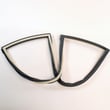
| Frost, sweating, warm spots near door | Refrigerator door gasket W10830162 | Prevents air leaks and moisture intrusion |
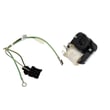
| Warm refrigerator section, noisy airflow | Refrigerator evaporator motor W11024089 | Moves cold air across the evaporator |
| Ice buildup on evaporator, warming over time | Refrigerator defrost heater WP12729128 | Clears frost so airflow stays strong |
Why it matters
A refrigerator that runs longer to hold temperature puts extra stress on the compressor, control board, and sealed system. Simple upkeep (especially coils and gaskets) reduces run time, improves food safety, and helps you get the full expected lifespan.
Last updated: February 2026
How to read Kenmore model numbers?
Kenmore model numbers are read in sections: the first 3 digits identify the manufacturer code, the middle digits identify the product platform/series, and the last digits identify feature or color variations. For your Kenmore bottom-mount refrigerator model 59672003016, the 596 prefix is the key manufacturer identifier; confirm the full model and serial on the rating label and in the 59672003016 owner's manual.
Where to find the model and serial label
On refrigerators like Kenmore 59672003016, the model and serial label is typically located:
- Inside the fresh food compartment on a side wall
- Near the ceiling of the refrigerator compartment
- Behind a crisper drawer or pantry drawer area
- On the cabinet frame near the door opening
- Occasionally on the back exterior panel
How to break down a Kenmore model number
Kenmore uses a structured format so we can match the correct parts (like a door gasket, control board, or ice maker) to your exact build.
- Prefix (first 3 digits): manufacturer code (example: 596)
- Core digits (middle): series/platform identifiers
- Suffix (last digits): revision, feature set, or color variation
- Full number matters: even one digit off can change compatible parts
Quick example
| Section | What it tells you | Example |
|---|---|---|
| First 3 digits | Manufacturer code | 596 |
| Middle digits | Series/platform | 72003 |
| Last digits | Variation/revision | 016 |
Why it matters when ordering parts
Using the complete model number helps us avoid mismatches in common refrigerator repairs, including:
- Water and ice issues (filter head, inlet valve, ice maker)
- Cooling problems (evaporator fan motor, compressor)
- Leaks and frost (drain tube kit, defrost heater)
If you are troubleshooting water or ice performance, the how to replace the water filter in a Kenmore refrigerator guide pairs well with the model label check because filter systems vary by series.
Last updated: February 2026
What are the common problems with Kenmore Elite refrigerators?
Common problems we see on Kenmore Elite refrigerators include warm temperatures from airflow or defrost issues, ice maker and water dispenser troubles, door seal leaks that cause moisture, and normal but surprising operating noises. For your Kenmore model 59672003016, the troubleshooting section in the 59672003016 owner's manual is the best starting point.
Most common symptoms and what usually causes them
- Not cooling or weak cooling: dirty condenser coils, blocked air vents, evaporator fan problem, or compressor/start device issues
- Frost buildup or warm freezer: defrost heater, defrost control, or airflow restriction behind the evaporator cover
- Ice maker not making ice: water supply issue, frozen fill tube, or a failing ice maker module
- Water dispenser slow or no water: clogged filter, air in the line after a filter change, or a water inlet valve problem
- Water puddles: defrost drain restriction; a drain tube kit is a common fix
- Door not sealing, moisture, or sweating: torn or warped door gasket, door alignment, or frequent door openings
Quick checks we recommend first (before replacing parts)
- Confirm the controls are turned on and set correctly (the manual notes that setting to coldest will not cool faster).
- After a new install or power interruption, allow 24 hours for temperatures to stabilize.
- Make sure vents inside the refrigerator and freezer are not blocked by food packages.
- Listen for normal sounds like buzzing (water valve filling ice maker) or pulsating (fans and compressor adjusting).
- Inspect door gaskets for gaps and clean the sealing surfaces.
Parts that commonly solve these problems on model 59672003016
| Symptom | Common part to check | Example part for this model |
|---|---|---|
| Ice maker not working | Ice maker assembly | Refrigerator ice maker assembly W10884390 |
| No water to ice maker/dispenser | Water inlet valve assembly | Refrigerator water inlet valve assembly WPW10420083 |
| Frost buildup, warm temps | Defrost heater | Refrigerator defrost heater WP12729128 |
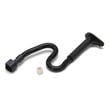
| Water under fridge | Drain tube kit | Refrigerator drain tube kit W10619951 |
Why it matters
Cooling, ice, and water problems often share the same root causes: restricted airflow, a weak defrost system, or inconsistent water supply. Doing the quick checks first helps you avoid replacing parts that are still good and gets your refrigerator back to stable temperatures faster.
Last updated: February 2026