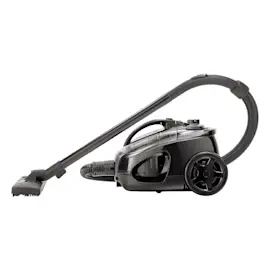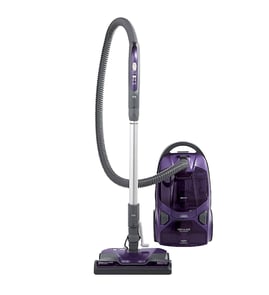



Where to find model number on Kenmore canister vacuum?
On Kenmore canister vacuum model 12521814610, the model number is typically printed on a model and serial number plate on the canister body. Check the underside or rear of the canister near the cord reel area, or inside the bag compartment behind the cover.
Common places to check on a Kenmore canister vacuum
- Bottom of the canister (flip the canister over and look for a sticker/plate)
- Rear of the canister near the power cord exit or cord rewind pedal
- Inside the bag door or dust compartment cover (around the bag support area)
- Near the hose connection port on the canister body
- Under a removable tool storage cover (if equipped)
What the label looks like (and what to write down)
Most Kenmore labels include:
- Model number (example format: 125.21814610 or 12521814610)
- Serial number
- Electrical rating information (volts/amps)
Write down the model number exactly as shown; punctuation (like a dot) can matter when matching parts.
Quick part-matching tip for model 12521814610
If the label is worn or missing, you can often confirm you are shopping the right parts by matching a distinctive part already on your vacuum.
| What you can match | Example part for this model | What it helps confirm |
|---|---|---|
| Filter style | Kenmore vacuum exhaust filter KC38KDWCZV07 | Correct exhaust filter fit and cover style |
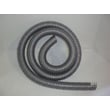
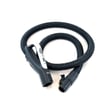
| Hose style | Kenmore vacuum hose 4369467 | Correct hose end connections and length |
| Wand style | Kenmore vacuum wand KC99PDPTZV06 | Correct wand locking and attachment fit |
Why it matters
Using the exact model number helps us show the correct Kenmore vacuum cleaner parts (filters, hose, wand, PowerMate components) so you avoid ordering a look-alike part that will not latch, seal, or connect properly.
Last updated: February 2026
How long do Kenmore canister vacuums last?
Most Kenmore canister vacuums, including model 12521814610, last 8 to 12 years with normal home use and routine maintenance. Keeping airflow strong (clean filters, clear clogs, replace worn attachments) is what most directly extends motor life and overall performance.
Typical lifespan and what affects it
A canister vacuum’s lifespan depends more on airflow and care than on hours alone.
- Bag and filter maintenance: full bags and dirty filters overheat the motor
- Clog prevention: hair and debris in the hose, wand, or nozzle reduce suction
- Floor type and frequency: heavy carpet use and daily cleaning shorten life
- Storage and handling: kinks in the hose and drops crack housings and latches
- Parts replacement: replacing wear items early prevents bigger failures
Maintenance schedule we recommend
Use this as a simple baseline for Kenmore canister vacuums.
| Task | How often | Why it matters |
|---|---|---|
| Replace exhaust filter | Every 6 to 12 months | Protects indoor air and keeps airflow steady |
| Replace motor safety filter | Every 3 to 6 months (or sooner if dusty) | Helps prevent motor overheating |
| Check hose and wand for clogs | Monthly | Restores suction and reduces strain |
| Inspect brush/nozzle for hair buildup | Monthly | Improves pickup and reduces belt/agitator stress |
Signs it is time to replace a part (not the whole vacuum)
If the vacuum still runs but performance is dropping, these are the most common fixes.
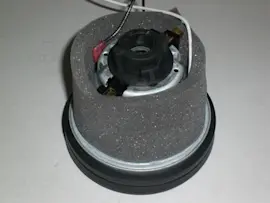
- Suction is weak even with a new bag: replace the motor safety filter (vacuum motor safety filter KC44KDXEZ000)
- Dusty smell or more dust in the room: replace the exhaust filter (Kenmore vacuum exhaust filter KC38KDWCZV07)
- Intermittent suction when you move the hose: inspect the hose ends and swivel (Kenmore vacuum hose swivel KC70SDWCZV06)
- Poor pickup at the floor head: check the nozzle and brush roll for wear and debris
Why it matters
A canister vacuum motor relies on moving air for cooling. When filters clog or airflow is restricted, the motor runs hotter and wears out faster. Replacing filters and clearing clogs is the most cost-effective way to get the full 8 to 12 years from a Kenmore canister.
Last updated: February 2026
What are the disadvantages of a canister vacuum?
Canister vacuums like the Kenmore 12521814610 clean well, but the main disadvantages are bulkier storage, more “pieces” to manage (hose, wand, floor nozzle), and more effort pulling the canister around furniture and thresholds; ongoing maintenance items like filters and bags can also add cost.
Common drawbacks you will notice day to day
- Harder to store: the canister body plus hose and wand take more closet space than many uprights.
- More to maneuver: the canister can bump baseboards, snag on corners, or tip when you tug the hose.
- Less convenient for quick pickups: setup and put-away can feel slower than grabbing a stick vac.
- More joints and connections: more chances for air leaks, clogs, or loose fittings over time.
- Maintenance costs: many canisters use bags and multiple filters that need regular replacement.
Maintenance-related disadvantages (and how to reduce them)
A lot of “poor suction” complaints come from normal maintenance needs, not a failed motor. We recommend keeping airflow open and filtration fresh.
- Replace or clean filters on schedule; a clogged exhaust filter can reduce airflow (see Kenmore vacuum exhaust filter KC38KDWCZV07).
- Keep the motor protection filter clean; it helps prevent fine dust from reaching the motor (see vacuum motor safety filter KC44KDXEZ000).
- Check the hose and wand for clogs, especially after vacuuming hair, carpet fuzz, or larger debris.
- If you use a power nozzle, remove wrapped hair and string from the brush roll to prevent drag.
Upright vs canister: quick comparison
| Feature | Canister vacuum (like 12521814610) | Upright vacuum |
|---|---|---|
| Storage footprint | Larger, multiple pieces | Often simpler, one-piece storage |
| Maneuvering | Pull-behind canister, great reach | Push-forward, can feel heavier in-hand |
| Attachments | Usually excellent for above-floor | Varies by model |
| Ongoing costs | Often bags plus filters | Often belts/filters; bagless varies |
Why it matters
Most “disadvantages” come down to convenience and upkeep. If you want strong cleaning with great above-floor reach, a canister is a solid choice; if you want fast grab-and-go cleaning and simpler storage, an upright or stick vacuum can feel easier.
Last updated: February 2026