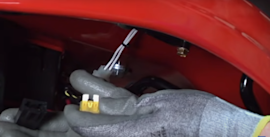
Installation guide
 Owner’s manual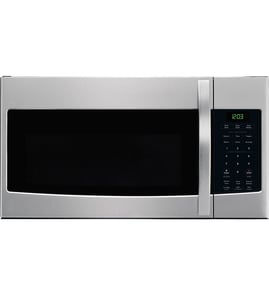


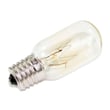
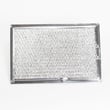
What causes Kenmore's microwave to stop working?
On Kenmore model 72185033111, a sudden “dead” microwave (no display, no response) is most often caused by a blown internal fuse, an open safety thermostat, or a door interlock switch problem. Less commonly, a wiring or control issue interrupts power to the unit.
- Confirm the outlet works by plugging in a small lamp.
- Check the home breaker or GFCI (if the microwave is on a protected circuit).
- Make sure the door closes firmly and isn’t sagging or rubbing.
- If it died right after pressing Start, suspect a door switch or fuse.
- If it died after heavy use or overheating, suspect a thermostat.
If basic outlet and breaker checks are good, these model-compatible parts are common culprits:
- Microwave fuse 3B74133Q
- Microwave thermostat 6930W1A003E
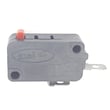
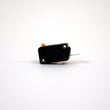
- Microwave door interlock switch 6600W1K001R
| What you notice | Most likely area | Notes |
|---|---|---|
| Completely dead, no display | Fuse or thermostat | Fuse often opens from a surge or switch fault |
| Dead right after closing door or pressing Start | Door interlock system | Switches can short and take out the fuse |
| Works sometimes, then goes dead when hot | Thermostat | Can open if airflow is restricted |
A microwave/hood combo like 72185033111 uses multiple safety devices (interlock switches and thermostats) to prevent unsafe operation. When one fails or detects an unsafe condition, it can cut power to protect you and the appliance.
Microwaves contain high-voltage components that can store a dangerous charge even when unplugged. For internal testing or replacement, we recommend using a qualified technician and following the safety guidance in the 72185033111 installation guide.
Last updated: January 2026
Can a Kenmore microwave be repaired?
Yes, a Kenmore microwave can often be repaired, and that includes the Kenmore 72185033111 microwave/hood combo. Many common problems (no heat, no power, door not latching, vent issues, lights out) are caused by serviceable parts, but high-voltage and door-safety repairs should be handled by a qualified technician; see the 72185033111 installation instructions.
Common repairable symptoms and likely areas to check:
- Not heating: high-voltage circuit components (service recommended)
- Dead or intermittent power: fuse, door interlock circuit, power cord
- Door won’t close or won’t start: latch and interlock switch system
- Vent fan airflow problems: vent grille, damper door, filters
- Cooktop light out: bulb or socket
If your symptom matches, these model-compatible parts are often involved:
| Symptom | Part to consider | Notes |
|---|---|---|
| Microwave runs but doesn’t heat | Microwave magnetron 2B71165R | High-voltage repair; technician recommended |
| No power or blows fuse | Microwave fuse 3B74133Q | Often related to door switch issues |
| Door won’t latch or unit won’t start | Microwave door interlock switch 6600W1K001R | Door-safety circuit; precise alignment matters |
| Poor venting or flap stuck | Microwave vent damper door 4900W1A001B | Can cause backdraft or rattling |
We recommend these safe, basic checks first:
- Confirm the outlet has power (try a small appliance in the same outlet)
- Make sure the door closes firmly and isn’t obstructed by debris
- Clean or replace the grease filter if airflow is weak
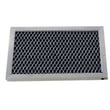
- If the unit is installed as recirculating, verify the charcoal filter is present and not clogged
- If you see arcing/burn marks, stop using the microwave until it’s inspected
Microwave/hood combos like the Kenmore 72185033111 combine cooking, lighting, and ventilation. Fixing the correct component restores safe operation and prevents repeat failures (especially in the door interlock and high-voltage circuits).
Last updated: January 2026
What are the requirements for a microwave vent?
For the Kenmore 72185033111 microwave/hood combo, the venting requirements depend on whether you install it as roof vented, wall vented, or room vented (recirculating). Our installation guidance focuses on correct duct type, duct length, and safe clearances rather than a specific CFM rating; see the 72185033111 installation guide.
This model supports three common configurations:
- Roof venting: ducts up through the cabinet and roof
- Wall venting: ducts straight out the back wall to an exterior wall cap
- Room venting (recirculating): no outside duct; air is filtered and returned to the kitchen
From the installation instructions for this model, key requirements include:
- Use standard ductwork sized for typical microwave hood installations (examples include 3-1/4" x 10" rectangular or 6" round)
- Keep duct runs as short as possible and minimize elbows
- Do not install two elbows together
- Seal duct joints with duct tape and seal exterior openings with caulk
- Keep total duct system length to 140 feet equivalent or less (including caps, elbows, transitions)
| Item | Typical equivalent length impact |
|---|---|
| Total system maximum | 140 ft equivalent |
| 3-1/4" x 10" 90° elbow | 25 ft |
| 6" round 90° elbow | 10 ft |
| 3-1/4" x 10" wall cap | 40 ft |
These requirements affect vent performance and safe mounting:
- Plan for a 30" minimum cabinet opening width
- Maintain 30" minimum from the bottom of the cabinet to the cooking surface
- Mount to a flat vertical wall with adequate structure; at least one lag screw must go into a wall stud
A vent system that is too long, poorly sealed, or packed with elbows can reduce airflow, increase noise, and let grease and moisture linger. Following the duct length and fitting guidance helps the fan move air as designed.
Last updated: January 2026