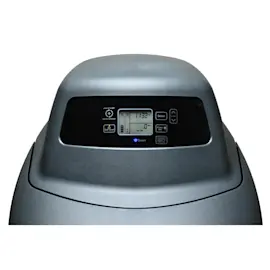
Installation guide
 Owner’s manual
 Error Codes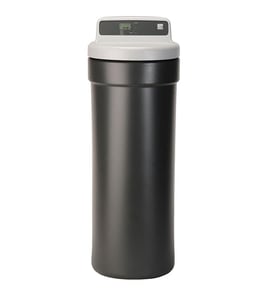



How often should I refill salt in a water softener?
For the Kenmore Elite 625385200 water softener, we recommend checking the salt level about once a month and refilling when the salt drops below about half full. Keep enough salt in the tank to make brine reliably, but avoid overfilling (especially in humid areas). See the 625385200 installation instructions for model-specific salt and setup notes.
A simple refill routine that works
- Check the salt tank every 3 to 4 weeks.
- Refill when the salt level is below 1/2 tank.
- In humid climates, keep the tank no more than 1/2 full to reduce salt bridging.
- Use pellet or nugget water softener salt.
- Avoid rock salt, which can contain dirt and sediment that can interfere with operation.
How much salt should you add?
The exact amount depends on your water hardness, household water use, and how your controller is programmed. For many homes, adding salt monthly is common, but your best indicator is the tank level.
| What you see in the salt tank | What to do | What it usually means |
|---|---|---|
| Salt below half full | Add salt | Normal refill timing |
| Tank kept very full and crusty | Add less at a time | Higher risk of bridging in humidity |
| Salt looks full but water feels hard | Break up salt and check for a bridge | Salt may not be dissolving into brine |
| Frequent refills | Verify hardness setting and usage | High hardness or high demand |
Why it matters
Salt is what allows the softener to regenerate and keep producing soft water. If the salt level gets too low (or the salt bridges), the unit can stop regenerating effectively, leading to hard water symptoms like spotting, scale, and reduced soap performance.
Tips if you suspect a salt bridge
- Tap the salt crust gently with a broom handle to see if it’s hollow underneath.
- Break up the bridge and remove chunks if needed.
- Refill with smaller amounts more often.
- If you are cleaning the tank or servicing internal seals, use water softener silicone grease 7123613 where appropriate for O-rings and sealing surfaces.
Last updated: January 2026
What is the average lifespan of a water softener?
A typical whole-home water softener lasts 10 to 15 years. For the Kenmore Elite 625385200, lifespan is most affected by water hardness, proper programming, and routine care (keeping salt in the tank and preventing clogs); see the 625385200 use & care manual for model-specific maintenance guidance.
Typical lifespan ranges
- Average: 10 to 15 years
- Well-maintained systems: 15 to 20 years
- Heavy-use or very hard water: closer to 8 to 12 years
- Key wear areas: valve seals, motor/gear drive, and resin performance
| What you notice | What it often points to | What to check first |
|---|---|---|
| Water feels hard again | Softener not regenerating correctly | Salt level, settings, power |
| Unit runs but does not soften | Valve not moving through cycles | Drive components, clogs |
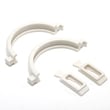
| Leaks at the valve area | Worn seals or O-rings | Seal surfaces, clips, O-rings |
Maintenance habits that extend life
- Keep the brine tank supplied with the correct salt type and avoid letting it run empty.
- Clean out the salt storage tank periodically to reduce salt mush and bridging.
- Verify the hardness setting and recharge schedule after power outages or plumbing changes.
- Keep the drain line clear and properly routed so regeneration can complete.
- If you have sediment or iron, use upstream filtration to reduce valve and resin fouling.
Parts that commonly wear first (and why)
Even when the tank lasts a long time, the moving and sealing components usually determine when performance drops.
- Kenmore water softener seal kit 7185487: seals that can wear and cause internal bypassing or leaks.
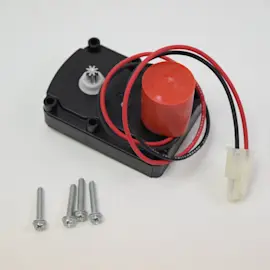
- Kenmore water softener valve motor 7286039: drives the valve through regeneration steps.
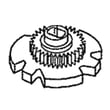
- Water softener cam and gear 7283489: mechanical timing/drive parts that can wear or strip.
- Water softener resin 0502272: the media that actually exchanges hardness minerals; performance can decline if fouled.
Why it matters
A softener that is near end-of-life can waste salt and water, regenerate more often than necessary, and still leave you with scale buildup on fixtures and inside appliances. Catching wear early often means a targeted repair instead of a full replacement.
Last updated: January 2026
Are water softener brine tanks universal?
Brine tanks are not truly universal, and we do not recommend assuming a “universal” brine tank will fit or function correctly on a Kenmore Elite 625385200 water softener. Tank size, brinewell/float layout, overflow hookup, and lid/rim fit vary by model, so matching by model is the safest approach.
What has to match on the Kenmore Elite 625385200
Even if a tank looks similar, these details often differ between brands and model families:
- Brinewell style and mounting (where the float assembly sits)
- Overflow port location and adapter type (hose routing and grommet fit)
- Lid and rim fit (diameter, hinge/retainer style)
- Brine line routing to the valve (length and connection style)
- Overall tank height/footprint (clearance and stability)
For model-specific installation and hose routing details, use the 625385200 installation guide.
When a “universal” brine tank can work (general guidance)
A generic brine tank is most likely to work when you can transfer your original Kenmore components into it and the connection points line up.
- You can reuse the brinewell and float assembly
- The overflow connection can be adapted without kinks or leaks
- The brine line connection seals properly
- The tank has enough capacity for your household’s salt usage
Quick compatibility checklist
Use this as a practical go/no-go check before buying:
| Check | What you want to confirm | Why it matters |
|---|---|---|
| Overflow hookup | Same port size/location or compatible adapter | Prevents overflow leaks |
| Brinewell/float | Fits securely and moves freely | Prevents overfilling |
| Lid/rim | Lid closes and seals reasonably | Keeps moisture out, reduces bridging |
| Brine line | Correct tubing size and leak-free connection | Ensures proper brine draw |
If you need to replace brine-tank components rather than the whole tank, common wear items include the brinewell and float parts such as the water softener brine well 7214375 and the water softener brine valve float and seal 7327568.
Why it matters
A mismatched brine tank can cause salt bridging, poor brine draw, nuisance overflows, or regeneration problems. Matching parts to the Kenmore Elite 625385200 helps ensure the softener regenerates correctly and protects your plumbing from leaks.
Last updated: January 2026
How much does it cost to replace resin beads in a water softener?
For a Kenmore Elite 625385200 water softener, the exact replacement cost for resin beads is not something we can identify from model-specific documentation because pricing depends on the resin quantity you buy and local labor rates. In most homes, plan on paying for resin plus any optional valve seals or service.
Typical cost ranges (what most customers see)
- Resin (parts only): about $100 to $300+ depending on how much resin your tank uses
- DIY supplies: about $10 to $50 (shop vac bags, buckets, cleaner, etc.)
- Professional labor: about $200 to $600+ depending on access, plumbing, and local rates
- Common total: $150 to $900+ depending on DIY vs. pro and whether additional parts are replaced
| Approach | What you pay for | Typical total |
|---|---|---|
| DIY resin change | Resin + basic supplies | $150 to $400+ |
| Pro resin change | Resin + labor | $350 to $900+ |
| Resin + valve refresh | Resin + seals/grease + labor | $400 to $1,000+ |
Model-relevant parts that can change the total
If you open the valve or disturb O-rings during service, replacing wear items can help prevent leaks after reassembly.
- Water softener resin 0502272
- Kenmore water softener seal kit 7185487
- Water softener silicone grease 7123613
What to check before you buy resin
Use the installation information for the Kenmore Elite 625385200 to confirm basic requirements and safe setup before servicing.
- Verify incoming water pressure is within the stated operating range
- Confirm you have a working bypass so the home can have water during service
- Plan for proper drain routing and an air gap
- Allow time to sanitize and flush after reassembly
See the 625385200 installation guide for pressure limits, drain hose guidance, and startup steps.
Why it matters
Old or fouled resin can cause hard-water symptoms even when the unit still regenerates. Replacing resin restores softening performance and can reduce strain on the valve and brine system.
Last updated: January 2026
Is it worth repairing a water softener?
Yes, repairing a Kenmore Elite 625385200 water softener is often worth it when the issue is limited to a serviceable valve or brine-system component and the tanks are not leaking; those repairs typically cost far less than replacing the whole unit.
When repair is usually the best value
We typically lean toward repair when the softener’s core tanks are sound and the symptoms point to a specific part.
- Water is hard but the unit still powers on and attempts to regenerate
- You see a leak around the valve area (often seals or O-rings)
- The valve stalls, hums, or won’t advance through positions
- Brine draw is weak or inconsistent (often a valve sealing or brine float issue)
- The unit was recently installed or moved and may have a bypass or drain setup issue
For model-specific setup checks (bypass position, drain hose air gap, startup regeneration), use the 625385200 installation guide.
When replacement makes more sense
Replacement is usually the better choice when the softener has multiple major problems at once or the resin bed is no longer performing even after correct programming and maintenance.
- Repeated failures in a short time (more than one major repair needed)
- Visible cracking or leaking of the resin tank or salt storage drum
- Heavy internal scaling or contamination that keeps returning
- Repair cost is close to the cost of a comparable new softener
Typical lifespan (what to expect)
A whole-home water softener typically lasts 10 to 15 years with normal water conditions and routine maintenance.
| Situation | Usually worth repairing? | Why |
|---|---|---|
| Single leak at valve seals | Yes | Targeted seal repair restores sealing and regeneration |
| Valve won’t index/advance | Often | Motor or gear repairs are common and contained |
| Tank or drum is leaking | Usually no | Tank replacement is a major cost and labor item |
Common repair paths for this model (examples)
If your symptoms match, these are common compatible parts for the Kenmore Elite 625385200.
- Valve sealing leaks or internal bypassing: Kenmore water softener seal kit 7185487
- Valve not moving through cycles: Kenmore water softener valve motor 7286039
- Clicking or slipping during regeneration: water softener cam and gear 7283489
Why it matters
A properly working softener helps reduce scale buildup in plumbing and appliances (water heater, dishwasher, washer); that can improve water flow, cleaning results, and efficiency.
Last updated: January 2026