Installation guide
 Owner’s manual


How many decibels is a KitchenAid kdte334gps0?
The KitchenAid KDTE334GPS0 dishwasher is rated at 39 dBA (A-weighted decibels), which is considered very quiet for a built-in dishwasher. Actual perceived noise can vary a bit based on installation, cabinet insulation, and how the load is arranged.
How to confirm the rating on your exact unit
We recommend verifying the full model number and serial tag inside the tub (near the door edge) and then cross-checking the specs.
- Look for the model/serial label inside the dishwasher tub near the door edge
- Use the model number KDTE334GPS0 (not just the series) when comparing specs
- Review the specifications and feature information in the KDTE334GPS0 user manual
- If you suspect installation is making it louder, review leveling and anchoring steps in the KDTE334GPS0 installation instructions
What 39 dBA sounds like in real use
A 39 dBA dishwasher is typically quiet enough that you may only notice it in a silent kitchen, especially during drain or fill.
| dBA rating | What you’ll usually notice | Typical sources of sound |
|---|---|---|
| 39 dBA | Very quiet background sound | light spray, occasional drain whoosh |
| 45–50 dBA | Clearly audible but not loud | stronger spray, more pump noise |
| 55+ dBA | Noticeable in nearby rooms | louder motor and water movement |
If your KDTE334GPS0 seems louder than expected
A “quiet-rated” dishwasher can still sound loud if something is off.
- Dishes or utensils are touching and rattling
- The unit is not level or is not secured tightly in the cabinet
- A spray arm is hitting a tall item
- Filters are dirty, causing unusual water flow sounds
- A worn seal can allow more sound to escape (and may contribute to leaks)
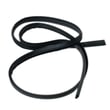
If you’re also seeing moisture or leaks around the door, inspect the door seal and tub opening; the tub gasket W11177741 is one of the sealing components used on this model.
Why it matters
Knowing the 39 dBA rating helps you set expectations for normal operating sounds and quickly spot when noise is being caused by loading, installation, or a developing part problem.
Last updated: January 2026
What are the different models of KitchenAid dishwashers?
KitchenAid offers many dishwasher models; for the KDTE334GPS0 family shown in our documentation, the related model numbers include KDTE334G, KDPE334G, KDTE234G, KDPE234G, KDTE204G, KDPE204G, and KDTE304G. For your exact KitchenAid KDTE334GPS0, confirm features in the KDTE334GPS0 user instructions manual.
Model numbers you may see related to KDTE334GPS0
These are model numbers explicitly referenced in the KDTE334GPS0 documentation (they are closely related, but not identical to KDTE334GPS0):
- KDTE334G
- KDPE334G
- KDTE234G
- KDPE234G
- KDTE204G
- KDPE204G
- KDTE304G
What those letters usually mean (general guidance)
KitchenAid model numbers often use letter patterns to indicate configuration. This helps when you are comparing models that look similar.
- KDTE vs KDPE: often indicates a different control/door configuration
- The 3-digit series (204, 234, 304, 334): typically groups feature packages
- The suffix (like GPS0): identifies a specific production/configuration version
Quick comparison table (how to compare models)
| Compare this | What it changes | Best place to verify |
|---|---|---|
| Cycle and option set | Cleaning, drying, run time | KDTE334GPS0 user instructions manual |
| Rack features | Capacity, adjustability | Manual feature section and parts list |
| Door and control layout | Fit and user interface | Model number label and manual |
| Service parts | What fits your unit | Parts list for KDTE334GPS0 |
Why it matters
Even small model-number changes can affect which racks, door parts, or wash components fit. When ordering parts for KDTE334GPS0, match the full model number from the tub label and use the model-specific documentation.
Last updated: January 2026
What is the most common problem with a KitchenAid dishwasher?
For the KitchenAid KDTE334GPS0 dishwasher, the most common day-to-day problems we see are poor cleaning (food left on dishes) and drain issues (water left in the tub). On this model, those complaints are often tied to filter maintenance, loading, detergent and rinse aid use, or a restriction in the drain path. See the troubleshooting section in the KDTE334GPS0 user instructions manual.
Most common symptoms and what to check first
- Food soils remain on dishes: clean and reinstall the filters; confirm spray arms can spin freely and aren’t blocked by tall items.
- Water remains in the tub: confirm the cycle finished; check for a kinked drain hose, disposer knockout plug (if connected), or a clog.
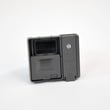
- Detergent remains in the dispenser: make sure cookie sheets and cutting boards aren’t blocking the dispenser door.
- Not drying well: use rinse aid and Heat Dry or ProDry; plastics may still need towel drying.
- Cycle seems too long: on KDTE334GPS0, efficient cycles can commonly run 2 to 5 hours per load, and options like heated drying can add time.
Quick “cause and fix” guide
| Symptom | Likely cause | Best first step |
|---|---|---|
| Dishes still dirty | Clogged filters or blocked spray | Clean filters; reload so arms aren’t blocked |
| Standing water | Drain restriction | Check drain hose routing and sink or disposer connection |
| Soap left in cup | Dispenser blocked | Reposition tall pans or boards away from dispenser |
| Poor drying | No rinse aid or dry option off | Fill rinse aid; enable Heat Dry or ProDry |
Parts that commonly relate to these problems
If basic checks do not solve the issue, these model-compatible parts are often involved:
- Filter cup a W10872845 (filter area component that helps keep soil out of the wash water)
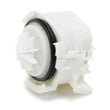
- Dishwasher drain pump WPW10531320 (moves water out during drain)
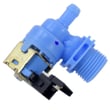
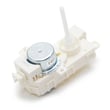
- Dishwasher water inlet valve W11175771 (controls water fill into the dishwasher)
Why it matters
KDTE334GPS0 uses a filtration system that needs regular cleaning. When filters are dirty or not seated correctly, wash pressure drops and soil can recirculate, which leads to “not cleaning” complaints and can also contribute to odors and draining problems.
Last updated: January 2026
Why won't the buttons work on my KitchenAid dishwasher?
On KitchenAid dishwasher model KDTE334GPS0, buttons can seem “dead” when the controls have gone inactive, the door is not fully latched, or the cycle was interrupted. Start by waking the controls and confirming the door is closing correctly before assuming a control failure.
Quick checks for KDTE334GPS0 (no tools)
- Open and close the door, then try selecting a cycle or option again (this can wake the controls after inactivity).
- If the Start/Resume light is blinking, press START/RESUME and close the door firmly within 4 seconds.
- Make sure nothing is preventing the door from latching (rack, tall item, or detergent door interference).
- Wipe the console area dry; moisture can interfere with touch controls.
- If the dishwasher is mid-cycle and you need to stop it, use CANCEL/DRAIN (this is for canceling a started cycle).
Reset the control (safe first step)
- Turn off power at the breaker (or unplug if accessible).
- Wait 5 minutes.
- Restore power and try starting a cycle.
What the indicators mean on this model
| What you notice | What it means on KDTE334GPS0 | What to do |
|---|---|---|
| Start/Resume light blinking | Door was not closed within 4 seconds after pressing Start/Resume | Press Start/Resume again, close door within 4 seconds |
| Lights blink and unit will not run | The dishwasher is indicating a condition that needs service | Try the power reset; if it returns, service is needed |
| Numeric display shows F2E2 | The manual directs you to call for service | Arrange service after confirming power and door latch |
For the exact KDTE334GPS0 control and troubleshooting steps, use the KDTE334GPS0 user manual.
When a part may be involved
If the dishwasher consistently acts like it is not “accepting” Start/Resume because the door is not registering as closed, inspect the latch area for looseness or damage. A compatible replacement is the dishwasher door latch WPW10653840.
Why it matters
If the controls are inactive or the door is not recognized as latched, the dishwasher may not start or resume, which can leave a cycle unfinished and water standing in the tub.
Last updated: January 2026