 Owner’s manual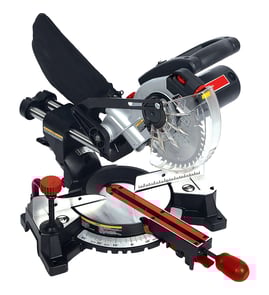

How to get a miter saw to lift up?
On the Craftsman 315212330 10-inch compound miter saw, the saw arm is held down by a lock pin. To lift it up, push the saw arm down slightly to take pressure off the pin, pull the lock pin out, then raise the arm to the full up position (see the steps in the owner's manual).
Quick steps to unlock and raise the saw arm
- Unplug the saw before you touch the lock mechanism.
- Push down on the saw arm (this removes tension on the lock pin).
- Pull the lock pin straight out to release the arm.
- Slowly raise the saw arm to its full raised position.
- Confirm the guard moves freely as the arm rises.
- Plug the saw back in only after the arm moves normally.
If it still will not lift: common causes and checks
A saw that will not lift is usually being held by the lock pin tension, a misadjusted depth stop, or binding at the pivot.
- Lock pin stuck: Push the arm down a bit more, then pull the pin again; the pin releases easiest with the arm slightly compressed.
- Depth stop set too low: If the blade is being held down by the depth stop, adjust the depth stop screw and lock nut (unplug first).
- Pivot binding or play: If movement is tight or sloppy at the pivot, service is needed before using the saw.
- Debris: Clean sawdust buildup around the lock pin area and pivot points.
What to expect (normal vs. not normal)
| What you feel | Usually means | What we do next |
|---|---|---|
| Pin will not pull out | Arm tension on pin | Push arm down slightly, then pull pin |
| Arm releases but will not rise | Binding or depth stop interference | Check depth stop setting; inspect pivot |
| Arm rises but feels rough | Dust buildup or wear | Clean pivot area; inspect for damage |
Why it matters
The lock pin is a safety and storage feature that keeps the saw arm secured in the down position. Releasing it correctly prevents sudden movement, reduces wear on the lock mechanism, and helps keep your miter and bevel settings stable.
Last updated: February 2026
What cut should you never do on a miter saw?
On the Craftsman 315212330 10" compound miter saw, never do freehand cuts or any cut where the workpiece is too small to clamp; those are the fastest ways to lose control and get kickback or pull your hand into the blade. We also avoid any operation that can bind the blade (such as trapping the offcut) because binding can stall the motor and kick the work back.
Cuts and setups we never recommend
- Freehand cutting (not against the fence and not secured).
- Cutting pieces too small to clamp or safely hold; small offcuts can get pulled into the blade path.
- Cutting more than one piece at a time (stacking workpieces).
- Using a length stop on the free scrap end of a clamped board, or holding the scrap end.
- Starting the saw with the blade touching the workpiece.
- Any cut with the miter table or bevel (saw arm) unlocked.
What this saw is designed to cut
The 315212330 is designed for crosscutting and angle cuts in common materials like wood and plastic.
| Operation | Good fit for this saw | Notes |
|---|---|---|
| Crosscut (straight) | Yes | Work against fence; clamp when possible |
| Miter crosscut | Yes | Lock miter table before cutting |
| Bevel cut | Yes | Lock bevel setting before cutting |
| Compound miter cut | Yes | Re-check both angles; settings interact |
| “Freehand” trimming | No | Always use fence and secure the work |
Safer ways to make the cut you want
- Clamp the workpiece whenever possible; keep one side of the blade free so the blade cannot bind.
- Support long boards so they do not pinch the blade or make the saw walk or slide.
- Let the blade reach full speed before lowering into the cut; wait for the blade to stop before lifting.
- Keep hands out of the cutting path; never reach behind, under, or close to the blade.
Why it matters
Most serious miter saw incidents come from loss of control: a small piece shifts, the blade binds, or the offcut gets trapped. Following the clamp, fence, and locking rules prevents binding, kickback, and sudden hand movement into the blade.
For model-specific safety rules and setup details, follow the owner's manual.
Last updated: February 2026
What is the 31.6 on a miter saw?
On the Craftsman 315212330 10-inch compound miter saw, 31.6° is a preset miter angle used for cutting standard crown molding flat on the table. It pairs with a 33.85° bevel to produce tight 90° inside and outside corner joints for common 52°/38° crown molding spring angles (per the owner's manual).
When you use 31.6° (and what to set)
For the “crown flat” method, the two settings work together:
- Set bevel to 33.85°
- Set miter to 31.62° left or right (often shown as 31.6°)
- Keep the crown molding flat on the miter table
- Position the molding edge against the fence as the cut type requires
- Test on scrap first; small changes in either angle affect the fit
Quick setup chart (standard 90° corners)
Use this as a practical reference for the common crown-molding cuts described for this saw.
| Corner type | Saw settings | Molding position against fence | Keep which end? |
|---|---|---|---|
| Left side, inside corner | Bevel 33.85°, miter right 31.62° | Top edge against fence | Save left end |
| Right side, inside corner | Bevel 33.85°, miter left 31.62° | Bottom edge against fence | Save left end |
| Left side, outside corner | Bevel 33.85°, miter left 31.62° | Bottom edge against fence | Save right end |
| Right side, outside corner | Bevel 33.85°, miter right 31.62° | Top edge against fence | Save right end |
Why it matters
Crown molding rarely meets at a perfect 90° in real rooms. The 31.6° miter detent helps you hit a repeatable starting point quickly, then fine-tune for wall and ceiling variations so corners close tightly.
Tips for better results
- Verify the saw is square to the fence and table before crown work
- Use a sharp 10-inch carbide-tipped blade for cleaner edges
- Clamp the molding to prevent shifting during the cut
- Make a labeled pair of test cuts for each corner type
- Recheck settings if you bump the bevel lock or miter lock
Last updated: February 2026
Will a 2000 watt generator run a miter saw?
Yes; a 2000-watt generator typically runs the Craftsman 315212330 10-inch compound miter saw as long as the generator can handle the saw’s startup surge and provides steady 120V power. This saw uses a 15-amp motor, so plan for higher watts at startup than while cutting. See the owner's manual for safety and operating requirements.
Power requirements to plan for
A 15-amp, 120V miter saw is about 1,800 running watts (15A × 120V). Startup (inrush) can be higher, so generator headroom matters.
- Running load: ~1,800 watts
- Startup surge: commonly 2,500 to 4,000 watts for a brief moment
- Best results: use a generator with a strong surge rating and stable voltage regulation
- Avoid: running the saw at the same time as other big loads (shop vac, compressor, heater)
Quick compatibility check
| Item | What to look for | Why it matters |
|---|---|---|
| Generator continuous rating | 2,000W or higher | Covers typical cutting load |
| Generator surge/starting rating | 2,500W+ preferred | Prevents bogging or stalling on startup |
| Output | 120V, 60Hz | Matches typical miter saw power |
| Extension cord | 12 AWG (short as practical) | Reduces voltage drop and overheating |
If the generator struggles
If the blade slows, lights flicker, or the saw trips the generator breaker:
- Plug the saw directly into the generator (no power strip)
- Use a heavier/shorter extension cord (12 AWG)
- Start the saw with no load; then begin the cut
- Remove other loads from the generator
- Check the blade condition; a dull blade increases amperage draw
Why it matters
Low voltage or insufficient surge power can cause hard starting, motor stalling, and overheating. With a compound miter saw, that also increases the chance of binding and kickback, so stable power and proper setup are part of safe operation.
Last updated: February 2026