Owner’s manual
 Error Codes



How to tell cubic feet of Kenmore refrigerator by model number?
For Kenmore Elite model 10641163310, the model number by itself usually does not reliably encode the refrigerator’s exact cubic-foot capacity. The most accurate way is to look up the capacity in the 10641163310 owner's manual or calculate it by measuring the usable interior space.
- Check the manual/specs: Capacity is typically listed in the specifications section of the 10641163310 owner's manual.
- Look for the rating label: Many refrigerators list capacity on the product information label inside the fresh food section.
- Measure and calculate: Measure the usable interior (not the outside cabinet) and convert cubic inches to cubic feet.
- Compare by size class: Most Kenmore side-by-side units fall in a common range; use this only as a rough estimate.
- Empty enough space to measure the usable interior.
- Measure interior height x width x depth (in inches) for:
- Fresh food compartment
- Freezer compartment
- Multiply each compartment’s measurements to get cubic inches.
- Add them together, then divide by 1,728.
| What you have | What to do | Result |
|---|---|---|
| Cubic inches | Divide by 1,728 | Cubic feet |
| Cubic feet | Multiply by 1,728 | Cubic inches |
Most full-size Kenmore side-by-side refrigerators are approximately:
- 22 to 26 cubic feet total
- About 60% fresh food / 40% freezer (varies by design)
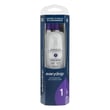
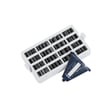
Knowing cubic feet helps us match the right door bins, gaskets, and airflow-related parts (like the refrigerator air filter W10311524) and it also helps when planning kitchen fit, food storage, and energy expectations.
Last updated: February 2026
How to tell if a Kenmore refrigerator compressor is bad?
A bad compressor on Kenmore Elite refrigerator model 10641163310 usually shows up as poor or no cooling even though the unit has power, along with repeated clicking (start attempts) or a compressor that runs hot and never stabilizes temperatures. Use the checks below, then confirm with electrical tests.
- Fresh food and freezer both warm, and temperatures keep rising
- Compressor area is very hot to the touch after running (normal is warm, not scorching)
- Repeated clicking every few minutes (start device trying and failing)
- Fridge runs constantly but never reaches set temperature
- No compressor sound or vibration even though interior lights work
- Frost pattern issues: little to no frost on the evaporator can point to sealed-system trouble
Many “bad compressor” complaints are caused by airflow, defrost, or control problems.
- Condenser coils and fan: Dirty coils or a stalled condenser fan can cause overheating and poor cooling.
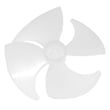
- Evaporator fan: If the freezer evaporator fan is not moving air, the refrigerator side warms up fast. If the blade is damaged, replace the refrigerator evaporator fan blade WP2169142.
- Defrost system: Heavy frost on the evaporator can block airflow and mimic compressor failure.
- Controls and sensors: A failed control can prevent proper compressor operation.
- Listen and feel: Place your hand on the compressor; a running compressor typically vibrates slightly.
- Check for click-then-silence: Clicking followed by silence often indicates a start problem or a locked compressor.
- Verify airflow: Make sure you feel warm air at the condenser area when the unit is running.
A technician typically uses these tests to confirm failure:
| Test | What it indicates | Typical outcome if compressor is bad |
|---|---|---|
| Amp draw at startup | Hard start or locked rotor | Very high draw then trip/click |
| Winding continuity | Internal electrical failure | Open winding or abnormal readings |
| Start device evaluation | Start relay/capacitor issue vs compressor | Start device tests good but compressor still won’t run |
Replacing a compressor is a sealed-system repair; it is higher cost and requires specialized tools. Ruling out airflow, defrost, and fan problems first prevents unnecessary parts and downtime.
For model-specific operating details and temperature settings, use the 10641163310 owner's manual.
Last updated: February 2026
What are the common problems with Kenmore Elite refrigerators?
Common problems on Kenmore Elite side-by-side refrigerators like model 10641163310 are weak or uneven cooling, ice maker or dispenser failures, water leaks, and excess frost. These issues usually trace back to airflow restrictions, a defrost problem, a failing fan motor, a worn door gasket, or a water inlet valve problem; start with basic checks before replacing parts.
- Fridge warm, freezer OK (or vice versa): blocked vents, iced evaporator, or an air damper issue
- No ice or small/hollow cubes: low water flow, clogged filter, or inlet valve trouble
- Water under the fridge or in fresh food section: clogged defrost drain or leaking water line/valve
- Loud buzzing or grinding: evaporator fan blade rubbing ice or a failing fan motor
- Frost buildup on freezer back wall: defrost system issue (heater, thermostat, control)
- Clean condenser coils and confirm the condenser fan area is clear.
- Verify door seals: close a dollar bill in the gasket; it should resist pulling out.
- Check airflow: do not block return vents with food packages.
- Listen for the evaporator fan in the freezer; it should run when the compressor is running.
- Confirm freezer temp is near 0°F; ice makers often stop making ice if temps rise.
| Problem area | Common suspect part | Example part for this model |
|---|---|---|
| Poor airflow, warm temps | Evaporator fan motor or blade | Refrigerator evaporator fan motor WP2315549, refrigerator evaporator fan blade WP2169142 |
| Frost buildup | Defrost thermostat (bi-metal) | Refrigerator defrost bi-metal WPW10225581 |
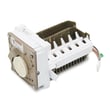
| No ice or dispenser issues | Ice maker or water inlet valve | Refrigerator ice maker assembly WPW10251076, refrigerator water inlet valve WPW10341320 |
| Odors | Air filter | Refrigerator air filter W10311524 |
Cooling, ice, and leak complaints are often connected. A single airflow or defrost failure can cause warm temperatures, frost buildup, fan noise, and even water puddles as ice melts. Fixing the root cause protects food, reduces energy use, and prevents repeat failures.
- Use the troubleshooting and component locations in the 10641163310 owner's manual.
- If the display shows an error, use the Kenmore 106 model refrigerator error codes guide to narrow the failure quickly.
Last updated: February 2026
What model is my Kenmore Elite refrigerator?
Your Kenmore Elite refrigerator’s model number is printed on the model and serial tag, usually inside the fresh food compartment or freezer. For Kenmore Elite model 10641163310, check common tag locations first, then confirm the full number and any revision digits in the 10641163310 owner's manual.
Check these spots in order (most common first):
- Inside the refrigerator section on a side wall near the top shelf
- On the inside wall behind the lower crisper drawers (you may need to pull drawers out)
- Inside the freezer section on a side wall
- Along the door frame (hinge side) when the door is open
- Behind the lower kick plate or toe grille (front bottom)
The tag typically includes both a model number and a serial number.
| Item on tag | Example format | Why you need it |
|---|---|---|
| Model number | 106.41163310 (may appear without the dot) | Ensures you get the correct Kenmore parts and diagrams |
| Serial number | Letters and numbers | Helps identify production range and compatible revisions |
| Type/engineering code (if shown) | Short code near model | Can affect part compatibility |
- Copy the model number exactly as shown (include all digits)
- If the tag shows a dot (106.41163310), also note the no-dot version (10641163310)
- Take a clear photo of the tag before you start shopping for parts
- Match parts by model first, then confirm by part ID when available
Kenmore Elite refrigerators share similar styling across many models, but parts like the ice maker, door gasket, or control board can vary by model series. Using the exact model number helps us match the right replacement parts the first time.
Last updated: February 2026
Where is the model number on a Kenmore Elite?
On Kenmore Elite model 10641163310, the model number label is typically inside the fresh food (refrigerator) compartment on a side wall near the crisper drawers, or on the cabinet frame behind the toe grille (kickplate). Use the label to match parts and the correct 10641163310 owner's manual.
- Inside the refrigerator section on the left or right interior wall, near the lower crisper drawers
- On the cabinet frame behind the toe grille (kickplate) at the bottom front
- Along the door frame (hinge side) when the refrigerator door is open
- On the back exterior panel (less common, but worth a quick look)
- Open the refrigerator door and pull out the lower crisper drawers.
- Look for a white or silver rating label on the side wall or cabinet frame.
- If you do not see it, remove the toe grille and check the frame behind it.
- Write down the full model number and the serial number exactly as shown.
| Label item | What it’s used for |
|---|---|
| Model number (example: 10641163310) | Ensures you get the right Kenmore parts and diagrams |
| Serial number | Helps identify production details for service and compatibility |
| Electrical ratings | Useful when troubleshooting power, lights, or control issues |
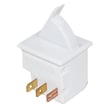
We use the model number to match the exact version of your Kenmore Elite refrigerator so parts like a door switch, evaporator fan motor, or control board fit and function correctly. It also helps when following troubleshooting steps in the manual.
Last updated: February 2026
Who makes Kenmore refrigerator model 10641163310?
Kenmore Elite refrigerator model 10641163310 is made by Whirlpool. Kenmore model numbers that start with the 106 prefix are Whirlpool-built units, even though the refrigerator is branded Kenmore.
You can verify the manufacturer code by checking the model and serial tag and matching the prefix.
- Look for the model number on the inside wall of the fresh food compartment (or near the crisper area)
- Confirm the model begins with 106
- Use the wiring diagram and identification details in the 10641163310 owner's manual to match your exact configuration
- When ordering parts, always use the full model number 10641163310 (not just “106”) to avoid fit issues
Kenmore is a brand label; the 3-digit prefix identifies the company that built the appliance. For model 10641163310, that prefix points to Whirlpool, which helps when you are:
- Looking up compatible replacement parts (ice maker, door gasket, control board)
- Comparing troubleshooting steps across similar Whirlpool-built side-by-side designs
- Identifying common systems like the evaporator fan, defrost circuit, and water inlet valve
| Kenmore prefix | Typical manufacturer |
|---|---|
| 106 | Whirlpool |
| 110 | Whirlpool |
| 665 | Whirlpool |
If you are troubleshooting cooling, ice, or airflow issues on this Whirlpool-built Kenmore Elite design, these resources and parts are commonly relevant:
- Kenmore 106 model refrigerator error codes
- How to fix your evaporator cooling fan
- Common airflow-related parts include the refrigerator evaporator fan motor WP2315549 and refrigerator air filter W10311524
Knowing Whirlpool built model 10641163310 helps you use the right diagnostic approach and order the correct Kenmore Elite refrigerator parts the first time.
Last updated: February 2026
Why is my Kenmore Elite ice maker not making ice?
If your Kenmore Elite 10641163310 side-by-side refrigerator ice maker is not making ice, the cause is almost always freezer temperature, a water supply restriction, or an ice maker that is not cycling. Start by confirming the ice maker is ON and the freezer is at 0°F to 5°F.
- Confirm the ice maker switch or shutoff arm is in the ON position.
- Set the freezer to 0°F to 5°F; warmer temps stop ice production.
- Make sure the ice bin is fully seated; dump clumped or jammed ice.
- Check the fill tube for an ice plug where water enters the ice maker.
- Verify the shutoff valve is fully open and the supply line is not kinked.
Weak or no water to the ice maker points to the home supply, a clogged filter, or a failing inlet valve.
- If the dispenser flow is weak (if equipped), fix the supply restriction first.
- If the valve hums but doesn’t fill, or it drips and freezes the fill tube, replace the valve.
Model-matched valve options:
If water supply is good but cubes never harvest, the ice maker assembly or freezer airflow is the usual culprit.
| What you see | Most likely cause | Example model-matched part |
|---|---|---|
| No fill, no ice | Inlet valve or supply issue | WPW10341320 or WPW10238100 |
| Fills but won’t dump cubes | Ice maker not cycling | WPW10251076 |
If the freezer is warming or airflow seems weak, check the evaporator fan motor: refrigerator evaporator fan motor WP2315549.
Ice makers need steady water fill and a consistently cold freezer. Fixing the underlying restriction or failed component prevents repeat problems like hollow cubes, frozen fill tubes, and intermittent ice.
For model-specific control settings and diagnostics, use the 10641163310 owner's manual.
Last updated: February 2026
Why is my Kenmore Elite refrigerator not cooling or freezing?
If your Kenmore Elite refrigerator model 10641163310 is not cooling or freezing, the problem is usually airflow, defrost failure, or a sealed-system/control issue. Start with simple checks (power, settings, vents, condenser cleaning), then move to evaporator fan, defrost components, and the control board.
- Confirm the refrigerator is getting power and the interior lights turn on.
- Verify temperature settings were not accidentally changed; see the 10641163310 owner's manual.
- Make sure food packages are not blocking air vents in the fresh food or freezer sections.
- Clean the condenser coils and make sure the condenser fan area is not packed with dust.
- Check that both doors close fully and gaskets seal all the way around.
| What you notice | Most likely area to check | What it means |
|---|---|---|
| Freezer cold, fridge warm | Airflow/damper | Cold air is not moving into the refrigerator section |
| Both sections warm, compressor running | Sealed system or airflow | Cooling is not being produced or not being circulated |
| Frost/ice buildup on freezer back wall | Defrost system | Evaporator is icing over and blocking airflow |
| No fan sound from freezer | Evaporator fan | Cold air cannot circulate |
These are frequent culprits when cooling drops off:
- Evaporator fan motor (if the fan is not running): refrigerator evaporator fan motor WP2315549
- Defrost failure (heavy frost on evaporator): refrigerator defrost bi-metal WPW10225581
- Control not powering loads correctly (fans/defrost): refrigerator electronic control board W10898445
A refrigerator that is not cooling often starts as an airflow or defrost issue; if you keep running it warm, food safety becomes a concern and the compressor can be forced to run longer than normal. Catching a failed fan motor, iced evaporator, or control problem early usually prevents bigger repairs.
Last updated: February 2026