Owner’s manual
 View engine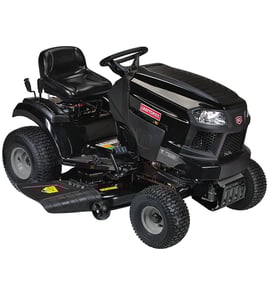


How many hours should a Craftsman riding mower last?
Most Craftsman riding mowers like model 917287380 typically last 500 to 700 engine hours with normal residential use and routine maintenance; a well-maintained tractor can reach around 1,000 hours before major wear items and drivetrain components start needing more frequent repairs.
What affects mower life the most
- Maintenance schedule: oil changes, lubrication, blade and belt inspections
- Operating habits: avoiding impacts, not overspeeding, and not towing beyond capacity
- Storage and fuel care: using fresh fuel and storing the tractor clean and dry
- Deck cleanliness: keeping grass and debris off hot engine and exhaust areas
- Wear parts condition: belts, pulleys, blades, and mandrel components
Use the hour meter to plan service
Your tractor has a service reminder/hour meter that shows total engine run time and flashes when service is due. For accurate hours, keep the key in STOP when the engine is off; the meter runs whenever the key is not in STOP. See the maintenance section in the 917287380 owner's manual.
Quick service planning guide
| Hour range | What to focus on | Common outcomes |
|---|---|---|
| 0 to 100 | Break-in checks, oil level, fastener re-check | Prevents early wear |
| 100 to 300 | Regular oil service, deck cleaning, belt checks | Keeps cut quality and drive consistent |
| 300 to 700 | More frequent belt, blade, and pulley inspections | Reduces downtime mid-season |
| 700 to 1,000 | Expect larger repairs as needed | Extends life vs. replacement |
Parts that commonly drive “end of life” decisions
If performance drops, these are typical wear points to inspect and replace as needed:
- Deck drive belt (cracking, glazing, slipping)
- Blades (bent, dull, uneven cut)
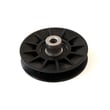
- Mandrel and pulley wear (noise, wobble, vibration)
- Battery and starting circuit components
If you are chasing deck vibration or poor cutting, the lawn tractor mandrel housing 587819701 is a common deck component to check along with blades and pulleys.
Why it matters
Engine hours are the best way to compare mower life because they reflect actual run time, not calendar age. Following the manual’s maintenance schedule and using the hour meter to time service is the most reliable way to reach the upper end of the 700 to 1,000 hour range.
Last updated: February 2026
Is it worth replacing a lawn mower engine?
Replacing the engine on your Craftsman 917287380 front-engine lawn tractor is worth it when the tractor is otherwise in solid shape and the total repair cost stays well below the price of a comparable replacement tractor. If the engine failure is paired with major drive or deck problems, replacement usually makes more sense.
Quick decision checklist
- The tractor frame, steering, and deck are not rusted through or cracked
- The transmission still drives smoothly (no slipping or loss of drive)
- You can confirm the engine failure is internal (not battery, wiring, or fuel)
- You plan to keep the tractor for multiple seasons
- You can do some DIY work (or have affordable labor)
Cost and condition guide
Use this as a practical way to decide.
| Situation | Usually the better choice | Why |
|---|---|---|
| Engine is seized or has low compression, but everything else is solid | Replace engine | Restores full usefulness without buying a whole tractor |
| Engine issue plus recurring belt, spindle, or deck problems | Replace tractor | Multiple systems add up fast |
| Starting issue is electrical (clicking, no crank) | Repair, not engine | Often battery, cables, or solenoid |
| Poor cut quality only | Repair deck components | Blades, belt, leveling, and mandrels are common causes |
Rule of thumb we use
If the engine replacement (engine + any required brackets, wiring, pulleys, labor) is more than about 50% of what you would spend on a comparable replacement tractor, put that money toward a replacement instead.
Before you blame the engine
Many “bad engine” symptoms are caused by service items or safety circuits. The manual also stresses safe service practices: never adjust or repair with the engine running, keep hardware tight, and keep the machine clear of debris and fuel spills. Use the 917287380 owner's manual to follow the correct checks.
- Verify battery and cable connections are clean and tight
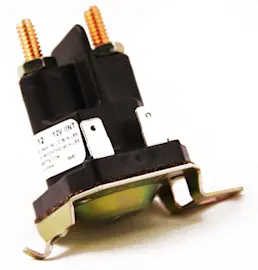
- Check the starter circuit; a failed solenoid is common (see lawn tractor starter solenoid 582042802)
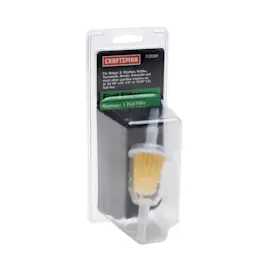
- Confirm fuel flow; the in-line fuel filter is typically replaced once each season
- Inspect cooling fins and shrouds; blocked cooling can cause overheating and engine damage
- If the tractor cuts poorly, check blades, belt wear, and grass buildup under the deck
Why it matters
An engine swap is a big investment. Doing a quick condition and cost check first prevents spending engine money on a tractor that also needs a transmission, deck rebuild, or major electrical work.
Last updated: February 2026
What are the common problems with Craftsman lawn mowers?
Common problems on the Craftsman 917287380 front-engine lawn tractor are usually starting or charging issues, mower blades not rotating, and poor or uneven cutting. Most fixes start with basic checks (battery, belts, blades, deck level, and tire pressure) using the procedures in the 917287380 owner's manual.
Most common symptoms and what they usually mean
- Blades will not rotate: obstruction in the clutch area, belt off or worn, frozen idler pulley, or a seized mandrel.
- Poor grass discharge or clumping: mowing wet grass, traveling too fast, engine not at full throttle, deck not level, or buildup under the deck.
- Uneven cut: tire pressure mismatch, deck out of level, bent or loose blade.
- Battery will not charge: weak battery cells, corroded/loose cables, or a charging-system problem.
- Headlights not working (if equipped): switch off, burned bulb, wiring issue, or blown fuse.
Quick checks we recommend (fast, high-impact)
- Set throttle to FAST when mowing; slow ground speed if the cut looks ragged.
- Avoid mowing wet grass; it plugs the deck and leaves clumps.
- Check tire pressure on all tires; uneven PSI makes the deck look “out of adjustment.”
- Inspect under the mower deck for packed grass and debris; clean the underside.
- If blades will not spin, inspect the belt routing and pulleys; a frozen pulley or mandrel is a common cause.
Parts that commonly solve mowing and blade-rotation problems
| Symptom | Common cause | Part to inspect/replace (if worn) |
|---|---|---|
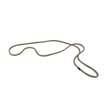
| Blades will not rotate | Worn or damaged deck belt | Lawn tractor ground drive or blade drive belt, 1/2 x 92-2/5-in 592855201 |
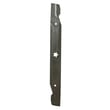
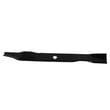
| Vibration, poor cut | Bent, dull, or incorrect blade | Lawn tractor 42-in deck high-lift blade 532138971 or husqvarna lawn tractor mulching blade, 21-in 532134149 |
| Belt keeps slipping, noise | Mandrel or pulley binding | Lawn tractor mandrel housing 587819701 or mandrel pulley 532195945 |
Why it matters
Most “Craftsman mower problems” trace back to airflow and deck mechanics: correct engine speed, a clean deck, sharp blades, and a level deck prevent clumping, reduce belt wear, and protect mandrels and pulleys from overheating and failure.
Last updated: February 2026
What are the parts of a lawn mower engine?
On the Craftsman riding tractor model 917287380, the engine system is made up of fuel, air, ignition, and mechanical components that work together to start, run smoothly, and deliver power to the drive and mower deck. For your exact layout and service points, use the 917287380 owner's manual.
Main engine systems and what they do
Most riding mower engines (including the type used on model 917287380) group into these core systems:
- Fuel system: fuel tank, fuel lines, fuel filter, carburetor (or fuel injection on some models)
- Air intake: air filter, intake housing, engine air screen/fins (cooling airflow)
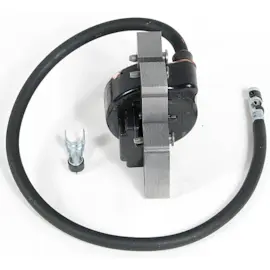
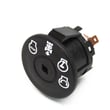
- Ignition system: ignition switch, ignition coil, spark plug, spark plug wire
- Starting/charging: battery, starter motor, starter solenoid, alternator/regulator (if equipped), fuse and wiring
- Engine internals: crankcase, crankshaft, piston, valves, flywheel, lubrication components
- Exhaust: muffler and exhaust path
Parts you will commonly service first
When a tractor loses power, runs rough, or will not start, these are the first engine-related items we check because they cause the most common symptoms:
- Battery condition and cable connections
- Fuse and wiring connections
- Spark plug and spark plug wire connection
- Air filter condition (dirty filters reduce power)
- Fuel quality (stale fuel and water in fuel are common)
- Fuel filter condition
Quick troubleshooting map (symptom to likely engine area)
| Symptom | Most likely engine area | What to check first |
|---|---|---|
| Engine cranks but will not start | Fuel or ignition | Fresh fuel, spark plug, wiring |
| Loss of power under load | Air, fuel, or maintenance | Air filter, fuel filter, oil level |
| Excessive vibration | Blade/mandrel (not engine internals) | Blade condition, mandrel straightness |
| Battery will not charge | Charging system | Battery cells, cable connections, regulator/alternator |
If you are diagnosing a no-crank condition, the starter circuit is a frequent culprit; the lawn tractor starter solenoid 582042802 is one of the key components in that path.
Why it matters
Knowing which system a part belongs to helps you troubleshoot faster and replace the right component the first time. The manual’s troubleshooting chart also ties symptoms like “loss of power” to items such as the spark plug, fuel filter, stale fuel, dirty air screen/fins, and clogged muffler.
Last updated: February 2026
What kind of engine does a Craftsman riding lawn mower have?
The Craftsman riding lawn mower model 917287380 is equipped with a low-emission gasoline engine (the manual notes it operates differently than older designs). For the exact engine make, model, and service specs used on your tractor, we recommend checking the 917287380 owner's manual.
What we can confirm for model 917287380
From the operator’s manual for this tractor, we can rely on these model-specific details:
- It is a Craftsman lawn tractor (model family 917.28738 / 917287380).
- It uses a low-emission engine design.
- It is an electric-start tractor.
- It uses an automatic transmission.
- The mower deck referenced in the manual is a 42-inch mower.
Where to find the exact engine brand and model
Engine identification is typically listed on the engine itself and in the specifications section of the manual.
- Look for an engine ID label on the blower housing, valve cover, or near the starter.
- Record the engine model, type, and code (common on Briggs & Stratton engines).
- Match those numbers to the Product specifications section in the 917287380 owner's manual.
Quick checklist (before ordering engine parts)
- Confirm the tractor model number: 917287380
- Confirm the engine model/type/code from the engine label
- Confirm whether you need tune-up parts (spark plug, air filter, fuel filter) or starting parts
- If the engine cranks slowly or clicks, check battery cables and the starter circuit
Why it matters
Craftsman tractors in the 917.28738 family were built with different engine suppliers and emissions versions over time. The engine brand and exact model determine the correct tune-up parts, carburetor, starter, and charging components, so verifying the engine ID prevents wrong-part returns.
Common symptoms and likely engine-related areas
| Symptom | Most common area to check | Typical next step |
|---|---|---|
| Clicks but won’t crank | Battery, cables, solenoid | Test battery and connections; inspect solenoid |
| Cranks but won’t start | Fuel, spark, air | Check fuel freshness, spark plug, air filter |
| Runs rough or lacks power | Air filter, fuel delivery | Clean/replace filter; inspect fuel flow |
If you’re troubleshooting a no-crank condition, the lawn tractor starter solenoid 582042802 is one of the model-matched parts commonly involved in the starting circuit.
Last updated: February 2026
What kind of oil do you use in a Craftsman lawn tractor?
For the Craftsman lawn tractor model 917287380, use SAE 30 engine oil when operating above 32°F, and SAE 5W30 when operating below 32°F; the manual also specifies oil meeting API service classification SG-SL. See the 917287380 owner's manual for the oil viscosity chart and maintenance schedule.
Oil type and capacity for model 917287380
The manual lists these engine oil specs:
- Oil type (above 32°F): SAE 30
- Oil type (below 32°F): SAE 5W30
- Oil capacity with filter: 64 oz
- Oil capacity without filter: 60 oz
- Oil standard: API SG-SL
| Operating temperature | Recommended oil | Why this oil is used |
|---|---|---|
| Above 32°F | SAE 30 | Helps maintain proper viscosity in warmer weather |
| Below 32°F | SAE 5W30 | Improves cold-weather starting and lubrication |
How we recommend checking and changing oil
Following the manual’s routine prevents low-oil damage and hard starting.
- Check oil on level ground before starting.
- Remove the dipstick, wipe it clean, reinstall fully, then recheck.
- Add oil only to the FULL mark; do not overfill.
- Change oil every 50 hours or at least once a year.
- Check the oil level after each 8 hours of operation.
Why it matters
Using the correct viscosity (SAE 30 vs. SAE 5W30) keeps the engine properly lubricated across temperature changes, which reduces wear and helps the tractor run cooler and more reliably during mowing season.
Last updated: February 2026
What model number is the Craftsman 42 riding mower?
For the Craftsman front-engine lawn tractor on this page, the model number is 917287380 (often shown in the manual as 917.28738). You can confirm it on the product ID label and in the 917287380 owner's manual.
Where to find the model number on the mower
We recommend checking the mower’s product ID label first, then matching it to the manual.
- Look under the seat pan area (common location on many Craftsman riders)
- Check the frame near the rear wheels or hitch plate
- Look under the hood near the engine compartment
- Match the label to the manual format (for example, 917.28738 vs 917287380)
- Write down the full model number before ordering belts, blades, or electrical parts
917.28738 vs 917287380: are they the same?
Yes. Craftsman manuals and decals sometimes include a dot in the model number; Sears PartsDirect listings typically show the same number without punctuation.
| You might see it as | What it means | Use it for |
|---|---|---|
| 917.28738 | Manual/label formatting | Confirming the operator’s manual matches your tractor |
| 917287380 | Sears PartsDirect model format | Ordering parts and looking up diagrams |
Why it matters
Using the exact model number ensures you get the correct 42-in deck parts and drivetrain components for your specific tractor, such as the correct blade style and belt length.
If you are shopping for common wear items for this model, examples include the lawn tractor ground drive or blade drive belt, 1/2 x 92-2/5-in 592855201 and the lawn tractor 42-in deck high-lift blade 532138971.
Last updated: February 2026
What year is a Craftsman 917287380?
The Craftsman lawn tractor model 917.287380 is not tied to one single “model year” like a car; it was produced across a range of years. The most reliable way to pin down the exact build date for your specific tractor is to match the product identification numbers shown in the 917287380 owner's manual to the ID tag on your machine.
How to identify the exact year on your tractor
We use the tractor’s identification tag (not the deck size or horsepower) to determine when it was built.
- Locate the product ID tag (commonly under the seat, on the frame rail, or near the engine area)
- Write down the model number and any serial number or product number shown
- Compare the format and ID information to the identification guidance in the 917287380 owner's manual
- If the tag is missing or unreadable, check paperwork from purchase or prior service
- Use the model number to ensure you are ordering the correct Craftsman parts for 917.287380
What “917” means (and why it matters)
On many Craftsman riding mowers, the 917 prefix is a Sears model-number family identifier. It helps us route you to the right parts diagrams, but it does not by itself confirm a specific year.
Why it matters
Knowing the correct build date (or at least the correct serial range) prevents mismatched parts, especially for items that change mid-production like belts, blades, and electrical components.
Quick parts examples that can vary by production run
If you are confirming fitment while you identify the year, these are common “year-sensitive” areas:
| System | Examples of parts that may differ | Example part for this model |
|---|---|---|
| Mower deck drive | Belt length, idlers, mandrel parts | Lawn tractor ground drive or blade drive belt, 1/2 x 92-2/5-in 592855201 |
| Cutting system | Blade style and lift | Lawn tractor 42-in deck high-lift blade 532138971 |
| Starting circuit | Solenoid and wiring | Lawn tractor starter solenoid 582042802 |
If you need a fast “best match” approach
- Match your deck size (the manual references a 42-inch mower deck for model 917.28738)
- Match your engine and transmission type listed on the ID tag
- Then confirm the belt routing and blade style before ordering
Last updated: February 2026