Installation guide
 Owner’s manual


How do I tell what model my Kenmore dryer is?
Your Kenmore dryer’s model number is printed on the model and serial number label. For Kenmore model 11074932200, that label is located at the top inside the dryer door well; open the door and look along the inside frame near the top.
Where to look on Kenmore 11074932200
Check these common label locations in this order:
- Top inside the dryer door well (most common on this model)
- Inside the door opening on the cabinet frame
- Rear panel near the top (some installations)
- On the side panel near the back edge (less common)
What the label looks like
The label typically includes both identifiers you may need for parts and service.
| What you’ll see | Why it’s useful |
|---|---|
| Model number (example: 11074932200) | Matches the correct parts diagrams and replacement parts |
| Serial number | Helps identify production series and compatible revisions |
| Gas and BTU information (on gas models) | Confirms fuel type and installation requirements |
Tips to record it correctly
To avoid ordering the wrong part, we recommend:
- Copy the full model number exactly as printed (all digits)
- Write down the serial number too
- Take a clear photo of the label before it fades
- Use the model number when checking procedures in the 11074932200 owner’s manual
Why it matters
Kenmore model numbers can look similar, but parts like the door switch, belt, timer, and gas ignition components vary by model series. Using the exact model number keeps your repair accurate and prevents returns.
Last updated: February 2026
How to open Kenmore dryer control panel?
On Kenmore gas dryer model 11074932200, the control panel typically opens by removing the rear mounting screws, then lifting the panel up and sliding it slightly to release the tabs. Always disconnect power first so you can access the console safely and avoid damaging the wiring.
Before you start (safety and prep)
- Unplug the dryer (or switch off the breaker) before touching the console
- Turn the gas supply valve off if you will be moving the dryer or opening the cabinet
- Use a small container for screws so none fall into the cabinet
- Protect the top with a towel to prevent scratches
Steps to open the control panel
- Disconnect power to the dryer.
- Access the console fasteners:
- On many Kenmore 110-style consoles, the screws are at the back edge of the control panel (or under end caps, depending on the console style).
- Remove the console mounting screws (commonly 1/4-in hex-head screws).
- Lift the back of the control panel up, then slide it back about 1 inch to disengage the front tabs.
- Tilt the panel forward and support it so the wire harnesses are not strained.
- If you need deeper access, follow the console removal details in the 11074932200 installation guide.
What you will see inside (and what not to pull)
| Item | What it does | Handling tip |
|---|---|---|
| Timer/control components | Runs cycles and sends power to loads | Do not force knobs or shafts |
| Wire harness connectors | Carries power/signals to switches and motor | Pull on connector bodies, not wires |
| Console bracket | Supports the control components | Keep screws matched to holes |
If the dryer will not start after reassembly
A loose console connector can cause a no-start condition. Confirm these basics from the owner's manual:
- Door is fully closed and latching
- Cycle selector is not set to OFF
- Power supply is correct (some homes have 2 breakers/fuses for the dryer)
Why it matters
Opening the control panel the right way prevents broken plastic tabs, pinched harnesses, and intermittent issues like a dead console or a dryer that will not run.
Last updated: February 2026
How much to repair a Kenmore dryer?
For a Kenmore gas dryer like model 11074932200, most repairs typically run $150 to $400 when you include labor plus common replacement parts; complex electrical or gas-heat problems can cost more. We recommend using the troubleshooting steps in the 11074932200 owner's manual to narrow the issue before pricing parts or service.
What drives the repair cost
- What failed (no-heat, no-start, noisy drum, poor drying)
- Labor time (simple access vs. full cabinet tear-down)
- Parts needed (single part vs. multiple wear items)
- Vent condition (restricted venting can cause overheating symptoms)
- Whether it is gas-heat related (extra diagnostic steps)
Common repairs and typical parts involved
| Symptom | Common cause | Example part for this model |
|---|---|---|
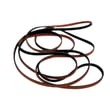
| Drum not turning, motor runs | Worn/broken belt or idler issue | Dryer drum belt 341241 |
| Dryer will not run | Door switch not closing circuit | Dryer door switch WP3406107 |
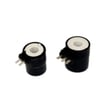
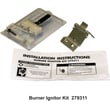
| No heat or heat cuts in and out | Gas valve coils failing | Dryer gas valve coil kit 279834 |
| Overheats, shuts off, long dry times | Airflow restriction or thermal safety issue | Dryer thermal cut-off kit W11050897 |
Quick checks that can save a service call
We use these same basics when diagnosing a “won’t run” or “won’t dry” complaint:
- Confirm the door closes firmly and the latch engages.
- Verify power: a dryer can have two fuses/breakers; make sure both are on.
- Clean the lint screen every load (do not wash it; wet lint is harder to remove).
- Check the exhaust path; lint buildup inside the cabinet and vent should be cleaned about every 2 years (more often with heavy use).
- If you smell gas or suspect a gas supply issue, stop and have a qualified technician check it.
Why it matters
Dryer problems often look like “bad heat” or “bad motor” when the real cause is airflow, a door switch, or a worn belt. A few targeted checks can keep you from paying for unnecessary parts and labor.
Last updated: February 2026
How to replace a Kenmore dryer thermistor?
On the Kenmore gas dryer model 11074932200, replacing the thermistor means disconnecting power, opening the cabinet to reach the sensor on the blower housing or exhaust area, swapping the part, then reassembling and test-running a heat cycle. Use the 11074932200 installation guide for safe access and reassembly steps.
Before you start (safety and prep)
- Unplug the dryer (or switch off the breaker) before removing any panels.
- Shut off the gas supply valve if you will be working near the burner area.
- Let the dryer cool completely.
- Have a nut driver, Phillips screwdriver, and needle-nose pliers ready.
- Take a quick photo of wire locations before disconnecting anything.
Replacement steps (typical Kenmore gas dryer process)
- Disconnect power.
- Remove the rear panel (or the front/lower access panel, depending on cabinet design).
- Locate the thermistor (commonly mounted on the blower housing or exhaust duct inside the cabinet).
- Pull off the wire connector(s) from the thermistor terminals.
- Remove the mounting screw(s) and take out the thermistor.
- Install the new thermistor, secure it, and reconnect the wires.
- Reinstall panels, restore gas (if shut off), and restore power.
- Run a timed, high-heat cycle for 5 to 10 minutes and confirm the dryer heats and cycles normally.
Quick checks if drying is still slow after replacement
- Clean the lint screen (every load) and confirm it seats fully.
- Check the vent path for kinks, crushing, or heavy lint buildup.
- Verify strong airflow at the outside vent hood.
- Avoid overloading; heavy loads can mimic a heat or sensor problem.
Thermistor vs. other heat-control parts (what to consider)
| Symptom | More likely cause | Notes |
|---|---|---|
| Heat is erratic, temps swing wildly | Thermistor | Sensor feedback to temperature control is unstable. |
| Dryer runs but never heats | Ignition or gas valve circuit | Often points to coils, igniter, or flame sensing. |
| Overheats, then shuts down | Restricted venting or thermal safety | Fix airflow first to prevent repeat failures. |
Why it matters
A working thermistor helps the dryer regulate drum temperature. When it reads wrong, the dryer can under-dry, overheat, or cycle heat unpredictably, which increases dry times and stress on thermostats and thermal cutoffs.
Last updated: February 2026
What are common problems with Kenmore dryers?
Common problems we see with the Kenmore 11074932200 gas dryer include not starting, no heat, long dry times, unusual noises, and the door not latching. Many issues trace back to airflow restrictions, power supply/door switch problems, or worn drive parts.
Most common symptoms and what they usually mean
- Dryer will not run: power supply issue, door not fully closed, failed door switch, or start/cycle selection problem
- No heat (gas dryer): gas supply valve closed, ignition system problem, or a safety device opened due to overheating
- Long dry times: clogged lint screen, crushed/blocked vent, or weak airflow from a damaged blower wheel
- Squealing, thumping, or grinding: worn belt, idler pulley, drum support components, or motor strain
- Door will not close/latch: worn catch or misaligned door strike
Quick checks we recommend first (safe, no tools)
- Clean the lint screen and confirm strong airflow at the outside vent hood.
- Verify the dryer is on a grounded 3-prong outlet and the breaker is not tripped (some homes use two fuses/breakers for laundry circuits).
- Confirm the door closes firmly; a bad door switch can prevent the dryer from running.
- For gas heat complaints, confirm the gas shutoff valve on the supply line is fully open.
- Make sure the dryer is level; an uneven dryer can affect tumbling and sensor cycles (setup details are in the installation guide).
Parts that commonly fix these problems
| Symptom | Common part involved | Example part for this model |
|---|---|---|
| Won’t start when door closes | Door switch | Dryer door switch WP3406107 |
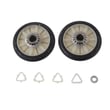
| Drum won’t turn or squeals | Belt or idler pulley | Dryer drum belt 341241, idler pulley WP691366 |
| Runs but won’t heat (gas) | Ignition/valve components | Dryer gas valve coil kit 279834 |
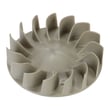
| Poor airflow, rumbling | Blower wheel | Dryer blower wheel WP694089 |
Why it matters
A restricted vent or lint buildup can cause overheating, shut the burner off, and dramatically increase drying time. Keeping airflow strong also reduces wear on the motor, belt, and idler pulley.
For operating tips, cleaning, and troubleshooting steps specific to this dryer, use the 11074932200 owner’s manual.
Last updated: February 2026