

How do I know if my Kenmore dryer thermal fuse is blown?
If your Kenmore electric dryer model 11096573230 suddenly will not run (no motor sound) even though it has power, a blown thermal fuse is a top suspect. We confirm it by testing the fuse for continuity with a multimeter; a blown fuse reads “open” (no continuity).
Common symptoms of a blown thermal fuse
- Dryer will not start; the drum does not turn
- Controls light up but nothing happens when you press Start
- Dryer stopped mid-cycle and will not restart
- You recently noticed poor airflow or very long dry times
- Lint screen area or cabinet felt unusually hot
How we test it (quick, reliable check)
- Unplug the dryer (or switch off the breaker) before opening any panels.
- Access the thermal fuse (location varies by design; often on the blower housing).
- Remove at least one wire from the fuse terminal.
- Measure continuity across the fuse terminals.
- Good fuse: continuity (near 0 ohms)
- Blown fuse: open circuit (no continuity)
What usually causes the fuse to blow
A thermal fuse typically opens because the dryer overheated from restricted airflow.
| Likely cause | What to check | Fix |
|---|---|---|
| Clogged venting | Vent hose, wall duct, outside hood | Clean/shorten vent run |
| Blocked lint path | Lint screen chute, blower area | Vacuum lint buildup |
| Weak airflow | Crushed/kinked vent hose | Re-route/replace vent hose |
| Failed airflow parts | Blower wheel not moving air | Inspect/replace blower wheel |
Parts that are often involved
If airflow is poor, we commonly inspect the blower and heat circuit parts used on this model:
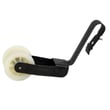
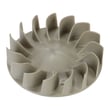
- Dryer blower wheel WP694089 (moves air through the drum and vent)
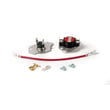
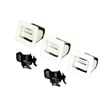
- Cut-off kit 279816 (overheat protection parts that can open during overheating)
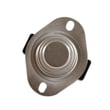
- Dryer operating thermostat WP3387134 (helps regulate temperature)
Why it matters
A thermal fuse is a one-time safety device; replacing it without fixing the airflow problem often leads to another blown fuse and continued overheating, longer dry times, and higher energy use.
Last updated: February 2026
How do I tell if my dryer heating element is bad?
If your Kenmore electric dryer model 11096573230 runs but does not heat (or heats inconsistently), the heating element is a top suspect. We confirm it by checking for visible coil damage and testing the element for continuity with a multimeter after unplugging the dryer.
Common signs the heating element is failing
- Dryer tumbles normally but clothes stay cold and damp
- Heat comes and goes during the cycle
- Burning smell or a hot-metal odor (stop using the dryer and inspect)
- Breaker trips when heat should turn on
- You see a broken coil or a coil touching the metal housing (short)
Quick checks you can do first (before testing parts)
- Verify power: Electric dryers need 240V to heat. If one leg of power is lost, the dryer can run on 120V but not heat.
- Check airflow: A crushed vent hose or clogged vent can overheat the heater area and cause heat failures.
- Clean lint path: Clean the lint screen and inspect the lint chute area.
How we test the heating element (basic method)
Safety first: Unplug the dryer (or switch off the breaker) before opening panels.
- Access the heater terminals and remove at least one wire from the element.
- Set a multimeter to ohms (Ω) and test across the element terminals.
- Typical result: Most dryer heating elements read roughly 8 to 15 Ω.
- Bad result: OL/infinite resistance (open element) or a reading that indicates a short to the metal housing.
| Test result | What it usually means | What to do next |
|---|---|---|
| OL / no continuity | Element coil is broken | Replace the element |
| Normal Ω reading but no heat | Element may be OK | Check thermal cut-off, thermostat, wiring, power |
| Continuity to metal housing | Element is shorted | Replace the element and inspect wiring |
Parts that commonly fail with (or instead of) the element
If the element tests good, these are the next most common heat-related failures on electric dryers:
- Cut-off kit 279816 (thermal cut-off and high-limit components)
- Dryer operating thermostat WP3387134
- Loose/burned heater wiring; consider dryer heating element wire kit 279457 if terminals are heat-damaged
Why it matters
A weak or shorted heating element can cause long dry times, tripped breakers, or overheating. Confirming the element with a continuity test helps you avoid replacing the wrong part and restores safe, efficient drying.
Last updated: February 2026
Is it worth replacing the heating element in a dryer?
Yes, it’s usually worth replacing the heating element in a Kenmore electric dryer like model 11096573230 when the dryer tumbles but won’t heat, because the part cost is typically far less than replacing the entire dryer and the repair restores normal drying performance.
When replacing the heating element makes sense
Replace the heater when the dryer runs but clothes stay cold or take much longer to dry, and airflow is good.
- The drum turns normally but there’s no heat
- You have proper 240V power at the outlet (electric dryers can run on 120V and still not heat)
- The vent is clear and airflow is strong
- The heater shows visible damage (broken coil) or fails a continuity test
- You’re already opening the cabinet for related service (thermal cut-off, wiring)
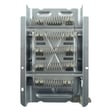
A common replacement for this model is the element 279838.
When it’s not the best first step
If the dryer is overheating, shutting off, or repeatedly blowing a thermal fuse, replacing only the heater can waste time and money.
- Poor airflow from a crushed/blocked vent
- Failed safety parts (thermal cut-off, thermostat)
- Burned heater terminals or loose connections
- Timer/control or motor centrifugal switch issues (less common)
For heat-related fault patterns and what they mean, use our Kenmore 110 series electronic control model dryer error codes guide.
Quick cost and outcome comparison
| Option | Typical result | Best for |
|---|---|---|
| Replace heating element | Restores heat when the coil is open | “Runs but won’t heat” symptoms |
| Replace thermal cut-off kit too | Prevents repeat no-heat from a tripped safety | Overheat history or no continuity |
| Clean/repair venting | Fixes long dry times and overheating | Weak airflow, hot cabinet |
If you’re replacing heat parts, the cut-off kit 279816 is often paired with a heater repair when overheating has occurred.
Why it matters
A dryer needs both heat and airflow. A new heating element can’t dry clothes efficiently if lint buildup or a restricted vent is causing high temperatures, nuisance shutdowns, or repeated part failures.
Last updated: February 2026
What if I can't find my part on Sears PartsDirect?
If you cannot find a part for your Kenmore electric dryer model 11096573230, we recommend confirming the model number from the dryer’s ID tag, then searching by the part name or symptom. If it still does not appear, our parts specialists can match the correct replacement.
Quick checks that usually solve it
- Recheck the full model number: 11096573230 (all digits, no spaces)
- Try a different keyword: “belt”, “heating element”, “door switch”, “timer”, “blower wheel”
- Search by symptom: “won’t start”, “no heat”, “squealing”, “not drying”
- Look for alternate part names: “thermal cut-off” vs “cut-off kit”, “idler” vs “idler pulley”
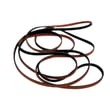
- Compare to a known common part for this model, such as the drum belt 341241
Common parts customers look for on this model
| Symptom | Part to check first | What it affects |
|---|---|---|
| Dryer tumbles but no heat | Element 279838 | Heating performance |
| Dryer overheats or shuts off | Cut-off kit 279816 | Safety temperature protection |
| Loud squeal or thump | Dryer idler pulley WP691366 | Belt tension and drum support |
| Runs but poor airflow | Dryer blower wheel WP694089 | Air movement through drum |
When to contact us for a match
Contact Sears PartsDirect support when:
- The part is discontinued and you need an approved substitute
- You only have the old part number and it is not returning results
- You are unsure which version of a part fits (common with thermostats, switches, and timers)
Why it matters
Ordering by the exact model number and the correct part identifier helps prevent returns and downtime. On dryers, small differences in electrical parts (like thermostats and switches) can change fit and wiring.
Last updated: February 2026
What is the lifespan of a Kenmore dryer?
A Kenmore dryer typically lasts 13 years with normal household use and basic maintenance. For your Kenmore 11096573230 electric dryer, keeping airflow strong and fixing wear items early (like a belt or thermostat) is what most directly protects lifespan.
Typical lifespan and what affects it
Most dryers reach their full service life when heat and airflow stay in balance and the drum drive system stays tight.
- Heavy weekly loads shorten life faster than light use
- Restricted venting overheats components and increases failures
- Worn drum support parts can strain the drive motor
- Power issues (loose cord, weak outlet) can damage controls
- Preventive cleaning reduces lint buildup and heat stress
Maintenance that extends dryer life
These are the highest-impact habits for a Kenmore electric dryer:
- Clean the lint screen every load
- Check and clean the vent path regularly (dryer outlet to exterior hood)
- Avoid overloading; it stretches the belt and stresses rollers
- Stop using the dryer if you smell burning or notice weak airflow
- Address squealing, thumping, or long dry times promptly
Common “wear parts” that often decide whether you repair or replace
If the dryer still heats and tumbles well, replacing a wear part is usually the simplest way to keep it going.
| Symptom | Likely wear area | Example part for model 11096573230 |
|---|---|---|
| Drum not turning, motor runs | Belt or idler system | Drum belt 341241 |
| Long dry times, hot cabinet | Airflow or cycling control | Dryer operating thermostat WP3387134 |
| No heat (electric) | Heating circuit | Element 279838 |
Why it matters
A dryer that runs hot or takes too long to dry uses more electricity and wears out safety devices faster. Keeping airflow clear and replacing a failing belt, thermostat, or heating element early helps your 11096573230 reach the typical 13-year lifespan.
Last updated: February 2026
Where is the part number on a Kenmore dryer?
On Kenmore electric dryer model 11096573230, the model and serial information label (often called the ID tag) is typically found on the dryer cabinet just inside the door opening. That label is where you will find the numbers you need to identify the correct replacement parts.
Where to look first (fastest checks)
- Open the dryer door and inspect the door opening frame (cabinet front) on the left or right side.
- Check the back side of the door itself for a sticker or metal tag.
- Look along the front panel edge near the lint screen housing (some designs place the label nearby).
- If the label is worn, use a flashlight and look for faint stamped or printed characters.
What you are actually looking for
Most Kenmore dryers do not print a single “part number” on the machine. Instead, the label shows:
| Label item | What it’s used for | Example for this dryer |
|---|---|---|
| Model number | Identifies the exact dryer design | 11096573230 |
| Serial number | Production code for the unit | Varies by unit |
| Electrical rating | Confirms power requirements | Varies by unit |
Why it matters
Using the model number is the most reliable way to match parts to your exact Kenmore dryer configuration. For example, common wear items like the drum belt 341241 can look similar across models, but the correct fit depends on the model-specific parts list.
Tips if the label is missing or unreadable
- Check for a duplicate label inside the door opening and on the door.
- Look for the model number on purchase paperwork or service receipts.
- If you are troubleshooting an issue, match symptoms to likely parts (belt, heating element, door switch) and then confirm compatibility by model.
Last updated: February 2026