Installation guide
 Owner’s manual
 Error Codes


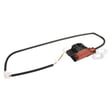
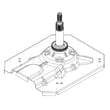

What are the common problems with direct drive washers?
Direct-drive top-load washers like the Admiral ATW4676BQ0 most often have drain and spin complaints, loud noises, and vibration caused by installation issues, unbalanced loads, or wear in the drive and suspension system. Many “won’t run” symptoms also trace back to power supply or a lid not fully closed (a required safety condition).
Most common symptoms and what they usually point to
- Won’t run or won’t fill: lid not closed, power issue, or water supply problem (faucets off, kinked hoses, clogged inlet screens).
- Won’t drain or spin, clothes still wet: load too tight or unbalanced, small items caught in the drain path, or a failing drain pump.
- Clicking or metallic noise: objects caught in the drain system or something contacting the basket.
- Humming or gurgling during drain/spin: normal sounds as water is pumped out and sensing spins occur.
- Excessive vibration or walking: washer not level, feet not firmly on the floor, or suspension wear.
Quick checks we recommend before replacing parts
- Confirm safe power: use a grounded 3-prong outlet; avoid adapters and extension cords.
- Verify the lid is fully closed: the washer will not run with the lid open.
- Check water supply: hot and cold faucets on, hoses not kinked, inlet screens clear.
- Fix loading issues: load dry items in loose heaps around the basket wall; avoid tight packing.
- Level the washer: all feet firmly on the floor; add a 3/4-inch plywood panel under the washer if the floor flexes.
Parts that commonly relate to these problems (when checks don’t solve it)
| Symptom | Commonly involved area | Example part for ATW4676BQ0 |
|---|---|---|
| Won’t drain or spins poorly | Drain system | Washer drain pump assembly WPW10276397 |
| Won’t start or stops mid-cycle | Lid safety circuit | Washer lid lock assembly W10404050 |
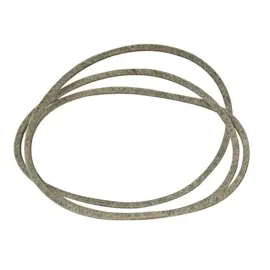
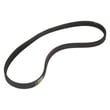
| No/weak agitation or spin | Drive system | Washer drive belt WPW10006384 |
| Excessive vibration | Suspension | Washer damper W10780045 |
Why it matters
Catching the simple causes first (leveling, loading, water supply, lid closure) prevents unnecessary part replacement and helps protect the gear case, belt, and tub from damage caused by repeated off-balance spinning.
For model-specific operating and troubleshooting steps, follow the ATW4676BQ0 owner’s manual.
Last updated: February 2026
How much does it cost to replace a drive motor in a washing machine?
For an Admiral washer model ATW4676BQ0, replacing the drive motor typically costs $100 to $400 for the motor part, plus labor if you hire service (often 1 to 2 hours). Total installed cost commonly lands in the $250 to $700 range.
What changes the price the most
- Motor type and availability for your exact washer model
- Service call and labor rate in your area
- Extra parts needed during the repair (belt, cam, actuator, gear case)
- Diagnosis time if the symptom is intermittent
- Access and condition (rusted fasteners, seized pulley, damaged wiring)
Quick cost breakdown (typical ranges)
| Cost item | Typical range | Notes |
|---|---|---|
| Drive motor (part only) | $100 to $400 | Price varies by model and supplier |
| Labor | $150 to $300 | Often 1 to 2 hours plus trip/diagnostic |
| “While you’re in there” parts | $0 to $150 | Only if worn or damaged |
Before you buy a motor: fast checks that often save money
We recommend ruling out common non-motor causes first, especially if the washer will not agitate or spin.
- Confirm the washer is plugged into a grounded 3-prong outlet and the breaker is not tripped (no extension cord)
- Make sure the lid is fully closed; many cycles will not run with the lid open
- If the washer will not spin, inspect the drive belt for glazing, cracks, or slipping: washer drive belt WPW10006384
- If the washer fills but will not shift properly between agitate and spin, the shift mechanism can be involved: washer actuator WPW10006355
- Use the model documentation for safe access steps and electrical guidance: ATW4676BQ0 owner’s manual
Why it matters
A motor is one of the higher-cost washer repairs. Confirming the real failure (motor vs. belt, lid lock, actuator, or gear case) helps you avoid replacing an expensive part that will not fix the problem.
Last updated: February 2026
Is 4.7 cubic feet a large washer?
Yes. A 4.7 cu. ft. washer is considered large capacity for a top-load washer like the Admiral ATW4676BQ0; it’s sized to handle bulky items (such as a comforter) and bigger family loads in fewer cycles. For loading and cycle tips specific to your washer, use the ATW4676BQ0 owner’s manual.
What “large capacity” means in real laundry terms
Most large-capacity washers start around 4.5 cu. ft., so 4.7 cu. ft. sits solidly in the large range.
Typical examples of what fits (varies by fabric and how tightly items pack):
- A king or queen comforter (check care label and don’t overpack)
- 11 to 21 bath towels
- A full bedding set plus a few small items
- Larger mixed loads for families
How to load a large-capacity top-load washer (best results)
Overloading is the most common reason large tubs still clean poorly or spin out badly.
- Load dry items in loose heaps around the basket wall, not packed down
- Keep bulky items balanced (for example, comforter corners spread around the tub)
- Avoid washing a single heavy item by itself when possible
- Use the correct load size and cycle for bulky, non-absorbent items
- If the washer vibrates or bangs in spin, pause and redistribute the load
Quick comparison: 4.7 cu. ft. vs other common sizes
| Washer capacity | Common label | Best for |
|---|---|---|
| 3.5 to 4.4 cu. ft. | Medium | Couples, smaller loads |
| 4.5 to 5.3+ cu. ft. | Large | Families, towels, bedding |
| 5.4+ cu. ft. | Extra-large | Frequent bulky loads |
Why it matters
A large-capacity tub can reduce the number of loads you run each week, but only if you load it correctly. Proper loading also helps prevent out-of-balance spinning, excess vibration, and wear on suspension and drive components.
Last updated: February 2026