


How big of a bar can you put on a Homelite XL?
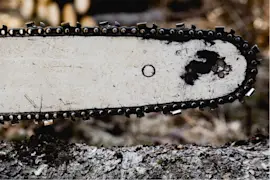
For the Homelite XL gas chainsaw, bar length depends on the bar mount pattern and the chain pitch, gauge, and drive-link count that match your saw’s clutch/sprocket and oiler. Most homeowner saws in this class commonly run 14 to 18 inch bars; choose the longest bar only after confirming fit.
Bar length alone does not guarantee compatibility; these specs decide whether it fits and runs safely.
- Bar mount pattern (stud spacing and tensioner hole location)
- Chain pitch (must match the drive sprocket and bar)
- Chain gauge (must match the bar groove)
- Drive link count (must match the bar length and mount)
- Oiler output and bar oil hole alignment (ensures proper lubrication)
- Engine power and clutch condition (longer bars increase load and heat)
| Spec to match | Where you check it | If it’s wrong |
|---|---|---|
| Mount pattern | Existing bar and crankcase studs | Bar will not mount or won’t tension |
| Pitch | Chain stamp, sprocket, bar spec | Rough running, derailment risk |
| Gauge | Chain stamp, bar groove spec | Binding or loose fit in groove |
| Drive links | Chain count or bar spec | Chain too short or too long |
Use your current bar as the baseline. If you want a longer bar, keep the same mount, pitch, and gauge, then select the correct drive-link count for that length. If the saw bogs, overheats the clutch, or oils poorly, step back to a shorter bar.
An oversized or mismatched bar and chain reduces chain speed, increases kickback risk, and can overheat the clutch and sprocket. Correct matching protects the engine and keeps cutting performance consistent.
While you’re verifying fit and performance, these model-listed parts commonly affect starting and power:
- Spark plug 79252 (helps restore ignition and power)
- Filter 49422 (helps protect the engine from dirt)
- Clutch spder 79221 (affects how power transfers to the chain)
You can order replacement parts for your Homelite XL from the parts list for this model, or search by model on Sears PartsDirect.
Last updated: February 2026
How many cc's is a Homelite XL?
The engine size (cc) for a Homelite XL chainsaw depends on the exact XL version and engine configuration; the “XL” name was used across multiple Homelite models over time. For the most accurate match, use the model and serial information on your saw and compare it to the parts breakdown on this page or search by model on Sears PartsDirect.
We recommend confirming the exact variant first; once you have it, the cc spec is straightforward to match.
- Find the model tag on the starter housing, rear handle, or crankcase area
- Record the full model marking and serial number (not just “XL”)
- Check whether your saw is labeled XL, Super XL, XL-12, or similar
- Compare your saw’s intake and cylinder layout to the parts list
- If the saw has low compression or scoring, inspect the cylinder and piston before chasing carb settings
While parts do not directly state cc, they help confirm which engine family you have and help restore power and starting.
| What you’re checking | What it can indicate | Example part on this model page |
|---|---|---|
| Spark and ignition health | Misfire vs. fuel issue | Spark plug 79252 |
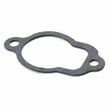
| Air/fuel sealing at intake | Lean running, hard starting | Intake gasket 02453 |
| Top-end condition | Compression and scoring | Cylinder 04328 |
CC affects bar length recommendations, cutting load, and tuning expectations. If you assume the wrong displacement, you can overtune the carburetor, run lean, and accelerate wear on the cylinder, gasket surfaces, and fuel system.
If your Homelite XL is hard to start, focus first on fresh fuel mix, spark, and air leaks at the intake; our tips for a hard to start chainsaw guide walks through the fastest checks in order.
Last updated: February 2026
What year was the Homelite XL made?
Homelite produced the XL-SERIES gas chainsaws primarily in the vintage era, with many XL-FAMILY saws commonly dating from the mid-1960s into the late-1980s or early-1990s depending on the exact XL variant. For the most accurate year, match your saw’s ID tag details to the correct XL version and parts breakdown.
Because “XL” was used across multiple versions, the build year is best identified by the specific variant and the information stamped on the saw.
- Check the ID tag or stamping on the starter housing, crankcase, or handle area
- Look for any serial number, production code, or revision marking
- Compare your saw’s features (chain brake style, handle shape, air filter cover) to the illustrated parts breakdown
- Confirm whether yours is an XL, Super XL, XL-12, or another XL-FAMILY model
- Use the parts list to verify key engine and intake components (for example, gasket and cylinder style)
Some parts are more “identity-specific” than basic hardware. If your saw matches these components, it helps confirm you are looking at the right XL-FAMILY configuration.
| What you check | What it tells you | Example from this model’s parts list |
|---|---|---|
| Engine top end | Helps confirm engine family and revision | Cylinder 04328 |
| Intake sealing | Helps confirm carb/intake layout | Intake gasket 02453 |
| Ignition tune-up part | Helps confirm common service configuration | Spark plug 79252 |
Getting the year and exact XL variant right helps you order the correct Homelite chainsaw parts (especially engine, fuel, and ignition parts) and avoid mismatches that can cause hard starting, poor idle, or air leaks.
If your XL is hard to start or inconsistent, use our DIY guidance to narrow down fuel and ignition issues before buying parts.
- Start with fresh fuel mix and a clean air filter
- Inspect fuel lines and the fuel pickup in the tank
- Check spark and replace the plug if it is fouled
- Watch for intake air leaks (gasket condition matters)
- Use a symptom-based checklist for faster diagnosis
For step-by-step diagnosis tips, see tips for a hard to start chainsaw. If you need to order parts beyond what’s listed for this model page, search by model on Sears PartsDirect.
Last updated: February 2026