Owner’s manual
 Error Codes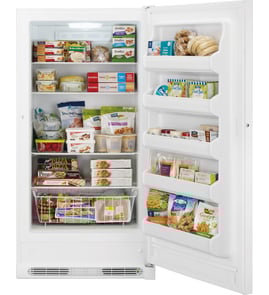






How good is a Whirlpool upright freezer?
Whirlpool upright freezers like model WZF79R20DW00 are a strong choice for dependable long-term freezing, straightforward controls, and serviceable design. For day-to-day performance, the biggest “good vs. not so good” factors are correct setup, steady temperatures, and keeping airflow and door sealing in top shape (see the WZF79R20DW00 user guide).
What “good” looks like in real use
A good upright freezer holds a consistent temperature, runs with a steady hum (not constant loud cycling), and stays mostly frost-free on interior surfaces.
Common signs your freezer is performing well:
- Food stays solidly frozen with minimal freezer burn
- Door closes easily and seals all the way around
- Interior temperature stays stable after door openings
- No heavy frost buildup on the back wall or around shelves
- Compressor cycles on and off normally (not running nonstop)
Quick checks that improve performance
These steps make the biggest difference on Whirlpool uprights, including WZF79R20DW00:
- Set the freezer to a typical target of 0°F for safe long-term storage
- Leave space around packages so cold air can circulate
- Keep the door gasket clean and fully seated
- Avoid frequent long door openings
- Defrost and clean if you see heavy frost or airflow restriction
Parts that affect “how good it feels”
If cooling is uneven, noisy, or slow to recover after opening the door, these parts are common contributors:
| Symptom | Common cause | Example part for this model |
|---|---|---|
| Warm spots or slow cooling | Temperature sensing issue | Refrigerator thermistor WPW10383615 |
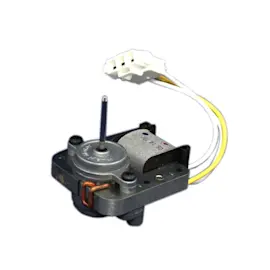
| Loud airflow noise or weak circulation | Fan blade or motor issue | Refrigerator evaporator fan blade WP2169142 or evaporator motor WPW10359880 |
| Frost buildup and poor cooling | Defrost heat problem | Refrigerator defrost heater WPW10316428 |
Why it matters
A “good” upright freezer is really about temperature stability and airflow. When the evaporator fan, defrost system, and temperature sensing are working correctly, the freezer stays efficient, protects food quality, and avoids nuisance frost and noise.
Last updated: February 2026
What is the average lifespan of an upright freezer?
Most upright freezers last about 16 years on average, with a typical real-world range of 12 to 20 years. For your Whirlpool WZF79R20DW00 upright freezer, good airflow, correct temperature settings, and clean door sealing are the biggest factors in reaching the high end of that range (see the WZF79R20DW00 user guide).
What affects lifespan the most
- Room conditions: Hot garages and tight enclosures make the compressor work harder.
- Air circulation: Keep vents clear and allow space around the cabinet.
- Door sealing: A leaking gasket forces longer run times and adds frost.
- Defrost system health: A failing defrost heater or sensor can cause heavy frost and poor cooling.
- Electrical stability: Frequent power interruptions and surges add wear.
Quick checklist to help your freezer last longer
- Set and maintain a steady temperature (most households target 0°F).
- Keep the door closed as much as possible; avoid “browsing” with the door open.
- Clean dust from the lower front and rear areas a few times per year.
- Confirm the door closes and seals evenly; replace a worn gasket when needed.
- If you see heavy frost or warming, troubleshoot early instead of running it that way.
Common “end-of-life” symptoms vs. fixable issues
| Symptom | Often caused by | Typical next step |
|---|---|---|
| Runs constantly, temps drift warm | Door leak, airflow issue, sensor problem | Check gasket, clear vents, test temperature sensing |
| Heavy frost buildup | Defrost system issue, door not sealing | Inspect defrost components and door seal |
| Loud fan noise | Fan blade or motor wear | Inspect/replace fan parts |
| No cooling at all | Sealed system or compressor issue | Professional diagnosis recommended |
Why it matters
A freezer that is running longer than normal uses more electricity, struggles to hold safe food temperatures, and can shorten the life of major components like the compressor and evaporator fan.
Last updated: February 2026
What is the most common problem with whirlpool refrigerators?
Cooling problems are the most common issue we see on Whirlpool refrigeration products, including the Whirlpool WZF79R20DW00 upright freezer. The usual causes are restricted airflow from frost buildup, a dirty condenser area, or a failed temperature-sensing or fan component that prevents steady, safe temperatures.
Most common symptoms customers notice
- Freezer not cold enough or temperature swings
- Frost or ice buildup on the back wall or around the evaporator cover
- Fan noise, rattling, or no airflow from vents
- Ice clumping in the bin (often from melting and refreezing)
- Water or ice around the bottom (often tied to defrost drainage or door sealing)
Quick checks we recommend first (no parts swapping)
Use the steps in the WZF79R20DW00 owner's manual as your baseline, then:
- Confirm the control is set correctly and the door closes tightly
- Keep vents clear; do not pack food tightly against the back wall
- Check for heavy frost; if present, a defrost system issue is likely
- If you have an ice maker, keep the ice bin clean and break up clumps; clumps form when ice melts and refreezes
- Clean dust from the condenser area (restricted heat release causes warm temps)
Parts that commonly cause cooling complaints on this model
When the freezer runs but temperatures are unstable, these parts are frequent suspects:
| Symptom | Common cause | Example part for WZF79R20DW00 |
|---|---|---|
| Warm temps, little airflow | Evaporator fan not moving air | Evaporator motor WPW10359880 |
| Temps swing, unit overcools or undercools | Temperature sensor reading wrong | Refrigerator thermistor WPW10383615 |
| Heavy frost, poor cooling | Defrost heat not clearing ice | Refrigerator defrost heater WPW10316428 |
Why it matters
A freezer that cannot hold a steady temperature works harder, wastes energy, and can lead to ice clumping and frost buildup that blocks airflow. Fixing the airflow or sensing problem early helps protect food quality and reduces strain on the compressor.
For step-by-step repair help, use how to replace a freezer evaporator fan when airflow is the issue.
Last updated: February 2026