Owner’s manual



Is a Samsung washing machine a good washing machine?
Samsung washers like model WF45H6300AG are a solid choice when they’re installed correctly, used with the right detergent amount, and maintained regularly. In our experience, most “good vs. bad” outcomes come down to load size, leveling, cleaning habits, and replacing wear parts when symptoms start.
A good front-load washer delivers consistent cleaning, stable high-speed spin, and low odor. For the WF45H6300AG, focus on these basics:
- Keep loads balanced; avoid washing single heavy items alone
- Use HE detergent and measure carefully (too much causes residue and odors)
- Leave the door slightly open between loads to dry the door boot area
- Clean the drain pump filter and check pockets to prevent drain issues
- Level the washer firmly to reduce vibration and noise
Many complaints are really fixable setup or maintenance problems.
| Symptom | Most common cause | What we recommend first |
|---|---|---|
| Excess vibration or “walking” | Not level, overloaded, worn suspension | Re-level, reduce load size; inspect shocks |
| Won’t drain or drains slowly | Clogged filter, pump issue, kinked hose | Clean filter; check drain path |
| Musty smell | Moisture trapped in door boot, excess detergent | Run cleaning cycle; improve drying habits |
| Door won’t lock/start | Door lock or latch alignment | Check door closure; test lock |
If you’re seeing out-of-balance or vibration problems, our Samsung front load washer dc error code guide is a fast way to narrow down the cause.
Front-load washers are “good” long-term when wear items are replaced before they cause secondary damage.
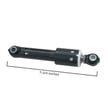
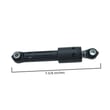
- Shock absorbers (help control tub movement during spin)
- Door boot and clamps (prevent leaks and reduce odor traps)
- Drain pump motor (moves water out during drain)
- Water inlet valve (controls fill)
- Door lock (prevents operation with the door open)
A front-load washer’s performance depends heavily on stability and airflow. When the washer is level and the door boot area stays clean and dry, you get better spin performance, fewer odors, and fewer nuisance error codes. For model-specific use and care steps, follow the WF45H6300AG owner's manual.
Last updated: February 2026
Is the Samsung Model WF45H6300AG stackable?
Yes. The Samsung WF45H6300AG front-load washer is designed to be stackable when it’s paired with the correct Samsung stacking kit and a compatible Samsung dryer; stacking is not universal, so the kit and dryer model must match the washer.
Use the WF45H6300AG manual to verify the approved stacking method and any model-specific notes (clearances, venting, and electrical requirements for the dryer).
Before you buy a kit or start installation, check these items:
- Dryer compatibility: confirm your dryer model is approved to stack with this washer
- Correct stacking kit: use the kit specified for your washer and dryer pairing
- Space and clearances: allow room for door swing, hoses, and airflow
- Floor strength and level: stacking requires a solid, level surface to control vibration
- Hose and cord routing: make sure nothing gets pinched behind the units
Stackable means the washer can safely support a dryer above it when secured with the proper kit. It does not mean you can place a dryer on top without brackets.
| Setup | Recommended? | Why |
|---|---|---|
| Washer + dryer with the correct Samsung stacking kit | Yes | Secures the dryer and manages vibration movement |
| Dryer sitting on washer with no kit | No | Tip and vibration risk; can damage cabinets and controls |
| Side-by-side installation | Yes | Simplest access and service clearance |
A front-load washer like the WF45H6300AG can produce significant movement during high-speed spin. Using the correct stacking kit helps keep the dryer stable, reduces noise, and prevents cabinet damage over time.
Last updated: February 2026
What is the most common problem with Samsung washing machines?
For Samsung front-load washers like model WF45H6300AG, the most common problems we see are drain and spin issues: the washer will not drain fully, will not spin up to speed, or stops with water still in the tub. These symptoms are often tied to load balance, drainage restrictions, or door-lock sensing.
- Won’t drain or drains slowly: clogged pump filter, blocked drain hose, or a failing drain pump
- Won’t spin or stops mid-cycle: unbalanced load, drainage problem, or door lock not engaging
- Vibrates or bangs during spin: out-of-level washer, overloaded drum, or worn suspension
- Shows a drain-related error: restriction in the drain path or pump problem
- Door won’t lock or unlocks unexpectedly: door lock or wiring issue
- Redistribute the load (heavy items can clump and trigger out-of-balance protection).
- Confirm the washer is level (front-loaders are sensitive to leveling).
- Check the drain hose for kinks and make sure it is not shoved too far down the standpipe.
- Clean the drain pump filter if your model has one; follow the steps in the WF45H6300AG owner’s manual.
- If an error code appears, match it to the symptom using Samsung front load washer error codes.
If the basic checks above do not fix it, these are frequent repair paths for this model family:
| Symptom | Common cause | Example part for this model page |
|---|---|---|
| Won’t drain / ND-type behavior | Pump motor/impeller failing or jammed | Washer drain pump motor and impeller DC31-00178A |
| Won’t fill correctly / NF-type behavior | Water inlet valve issue or screen blockage | Washer water inlet valve DC62-30314K |
| Excessive shaking during spin | Worn suspension | Samsung washer shock absorber DC66-00470A |
| Won’t start spin because door won’t lock | Door lock not latching/sensing | Washer door lock DC64-00519B |
Drain and spin problems can look like a “bad motor,” but they are often simple restrictions or safety interlocks (drain path, door lock, or load balance). Fixing the root cause prevents repeat stoppages, leaks, and excessive vibration wear.
Last updated: February 2026
What size is the WF45H6300AG?
The Samsung WF45H6300AG is a 27-inch class front-load washer with a 4.5 cu. ft. capacity. For the exact cabinet dimensions (width, height, depth, and depth with door open) for your specific installation, use the specs section in the WF45H6300AG owner's manual.
When customers ask for washer size, it typically refers to one or more of these:
- Width (most front-loaders are about 27 inches wide)
- Capacity (this model is 4.5 cu. ft.)
- Overall depth (important for closets and tight laundry rooms)
- Height (important under countertops)
- Depth with door open (important for clearance in front)
We use these common planning ranges for 27-inch class front-load washers; confirm the exact numbers for WF45H6300AG in the manual before you commit to a closet buildout.
| Measurement | Typical range for 27-inch class front-load washers | Why you care |
|---|---|---|
| Width | ~27 in. | Fit between cabinets/walls |
| Height | ~38 to 39 in. | Under counters/shelves |
| Depth | ~31 to 34 in. | Closet and hallway clearance |
| Depth (door open) | often 50+ in. | Walkway and door swing space |
Getting the “size” right prevents installation headaches like a washer that will not clear a doorway, a closet door that will not close, or hoses that kink because the unit is pushed too tight to the wall.
- Measure the narrowest doorway the washer must pass through
- Confirm closet depth and allow space for hoses and venting clearance behind the unit
- Plan for door swing clearance in front of the washer
- Verify your floor is level to reduce vibration during spin
- Keep a little extra space for service access
Last updated: February 2026
Why is my Samsung WF45H6300AG not filling with water?
Your Samsung WF45H6300AG usually won’t fill when the water supply is restricted (closed valve, kinked hose, clogged inlet screens) or when the washer can’t energize the fill system (failed inlet valve, door lock issue, or control problem). Start with the supply checks, then move to parts testing.
- Confirm both hot and cold shutoff valves are fully open.
- Straighten any kinked inlet hoses; replace hoses that are swollen or collapsing.
- Remove hoses and clean the small screen filters at the washer’s inlet ports.
- Make sure the door closes firmly; a door that does not lock can prevent filling.
- Power reset: unplug for 2 minutes, then retry a normal cycle.
If the supply is good and screens are clean, these are the most common culprits:
| Symptom | Most likely cause | What to check next |
|---|---|---|
| No water at all | Failed inlet valve | Test valve coils for continuity; replace if open |
| Fills very slowly | Clogged inlet screens or weak valve | Recheck screens; verify strong household water pressure |
| Door clicks but won’t lock | Door lock problem | Inspect latch alignment; replace lock if it won’t engage |
| Intermittent fill | Control or wiring issue | Check harness connections to valve and control |
Model-matched parts we often use for this issue include the washer water inlet valve DC62-30314K and the washer door lock DC64-00519B.
A washer that can’t fill will stall the cycle, leave detergent undissolved, and can trigger fill-related error codes. Fixing the root restriction or failed component prevents repeat shutdowns and protects the electronic control board from repeated start-stop stress.
Use the WF45H6300AG owner’s manual for your exact cycle behavior, error-code meanings, and any model-specific fill troubleshooting.
Last updated: February 2026