Owner’s manual
 Error Codes


Why is my refrigerator not getting cold at the bottom?
If your Kenmore refrigerator model 79578302802 is warmer at the bottom, the most common causes are restricted airflow (blocked vents or overpacked shelves), incorrect temperature control settings, or poor heat removal from dirty condenser coils. Start with airflow and settings, then clean and inspect.
Quick checks that fix most “warm bottom” complaints
- Make sure food packages are not blocking the cool air vents; blocked vents interrupt airflow and can create warm zones.
- Set controls to a stable baseline and wait a full 24 hours between changes.
- Confirm both doors close fully; warm air leaks reduce cooling efficiency.
- Clean dust and pet hair from the condenser coil area (often underneath, behind the base grille).
- Allow time after loading groceries; new food temporarily raises temperatures.
Airflow and settings for this model
This model circulates cold air from the freezer into the refrigerator; air enters the refrigerator through the top vent and returns at the bottom. When that circulation is restricted, the lower area can warm up.
Use these control ranges as your guide (then fine-tune):
| Control | Normal target | What happens if you go colder | What happens if you go warmer |
|---|---|---|---|
| Refrigerator control | 37°F (3°C) recommended | Longer compressor run, colder fresh food | Shorter run, warmer fresh food |
| Freezer control | 0°F (-18°C) recommended | Freezer colder, refrigerator can warm (less air sent up) | Freezer warmer, refrigerator can cool more |
For model-specific diagrams and vent locations, follow the 79578302802 owner’s manual.
When to suspect a part problem
If airflow is clear and temperatures still drift warm at the bottom, we focus on components that affect cooling and air movement.
Common suspects include:
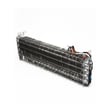
- A failed defrost sensor causing frost buildup that blocks airflow (see refrigerator defrost sensor assembly 6615JB2005C).
- A sticking air damper that limits cold air entering the refrigerator section.
- A condenser fan issue that reduces heat removal at the back/bottom.
Why it matters
A warm lower section is usually an airflow problem, not a “low refrigerant” problem. Fixing vent blockage, door sealing, and condenser cleanliness restores normal circulation and prevents food spoilage.
Last updated: January 2026
How do I know which Kenmore refrigerator filter to buy?
For Kenmore refrigerator model 79578302802, the most reliable way to choose the correct water filter is to match the filter part number listed for your exact model, then confirm it fits your refrigerator’s filter housing and water line setup. Start with the 79578302802 owner's manual.
Fast ways to identify the right filter
- Check the water filter section in the 79578302802 owner's manual for the filter type and replacement guidance.
- Look at the existing filter for a printed part number and match it exactly.
- Confirm whether your refrigerator is configured “with a water filter” because the manual notes different required water pressure ranges for filtered vs. non-filtered setups.
- If your unit does not have a built-in filter, use an inline filter approach (installed in the water line near the refrigerator) as commonly recommended when water contains sand or particles.
- Use your model number (79578302802) when shopping so you do not accidentally buy a Kenmore filter made for a different style.
What to check before you buy
| What to verify | Why it matters | Where to find it |
|---|---|---|
| Model number: 79578302802 | Filters vary by model | Rating label inside the fresh food section |
| Filter part number | Ensures correct fit and sealing | Printed on the old filter or listed in the manual |
| Water pressure requirement | Prevents weak flow and ice maker issues | Manual water line specs |
Why it matters
A mismatched filter can cause leaks, low dispenser flow, slow ice production, or no water at all. Matching the correct filter for 79578302802 also helps keep the water valve screen from clogging and keeps the water system operating normally.
Related help
Last updated: January 2026
Why is my Kenmore refrigerator leaking underneath?
Water under a Kenmore 79578302802 bottom-mount refrigerator is most often caused by defrost water not draining correctly (a clogged or frozen drain) or by a water supply connection issue for the ice maker. Start by checking the defrost drain path and the drain pan, then inspect the water line and inlet valve.
Quick checks that fix most leaks
- Look for ice or debris blocking the defrost drain opening inside the fresh food section.
- Flush the drain with warm water (a turkey baster works well) until it flows freely.
- Check the drain pan underneath for cracks, misalignment, or overflow.
- Inspect the water supply line fitting for drips (especially after the refrigerator is moved).
- If the unit has an ice maker, confirm the water line is connected to cold water only.
Most common causes and what to do
| What you see | Likely cause | What we recommend |
|---|---|---|
| Puddle after a defrost cycle | Clogged or frozen defrost drain | Clear the drain and confirm water runs to the pan |
| Water near the back/bottom by the wall | Water line or fitting seepage | Tighten fittings; replace damaged tubing |
| Slow drip that worsens during ice making | Inlet valve leaking or not closing | Test and replace the valve if it seeps |
| Water only after doors are open a lot | Excess frost melt overwhelming drain | Improve door sealing and clear the drain |
Parts that commonly relate to this symptom
If you find the leak is coming from the drain outlet area or the water supply components, these model-matched parts are common fixes:
- Refrigerator drain tube 5251JA3003D (helps route defrost water to the drain pan)
- Refrigerator water valve AJU55759303 (controls water flow to the ice maker and dispenser)
Why it matters
Leaks underneath can lead to floor damage and can also indicate airflow or defrost issues that eventually cause warm temperatures or heavy frost. Clearing the drain and correcting water line problems restores normal defrost drainage and prevents repeat puddles.
Safety and reference
Unplug the refrigerator before cleaning or servicing, and follow the water line guidance in the 79578302802 owner's manual (it covers water line connection precautions and minimizing water damage risk).
Last updated: January 2026