Owner’s manual
 Error Codes


What is the average lifespan of a Kenmore washer?
Most Kenmore washers last 10 to 15 years with normal household use and basic maintenance. For the Kenmore Elite washer 11027062604, regular cleaning, correct loading, and keeping the washer level are the biggest factors in reaching the high end of that range; see the owner's manual for model-specific care steps.
What affects washer lifespan the most
- Load size and frequency: frequent heavy loads shorten life faster than moderate use.
- Leveling and vibration: an unlevel washer increases wear on suspension and drive components.
- Water quality: hard water can speed up buildup and valve issues.
- Drain performance: slow draining strains the drain pump and can leave residue behind.
- Routine care: periodic cleaning reduces odor, buildup, and component stress.
Maintenance that helps you get the full 10 to 15 years
Use these habits to reduce wear on key parts like the suspension, lid lock, and drain system:
- Run periodic cleaning cycles and wipe down the tub and lid area.
- Avoid overloading; bulky loads should move freely.
- Use the right detergent amount (too much can cause excess suds and residue).
- Check and replace aging inlet hoses before they leak.
- Keep the washer level to prevent out-of-balance spinning.
Common wear items and what symptoms look like
| Symptom | Often related to | Example part for this model |
|---|---|---|
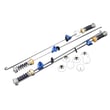
| Banging, walking, frequent out-of-balance | Suspension wear or leveling | Washer suspension W10820048 |
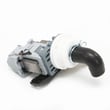
| Won’t drain or drains slowly | Drain pump restriction or failure | Pump-water W10536347 |
| Lid won’t lock or cycle won’t start/spin | Lid lock issue | Washer lid lock WPW10619844 |
Why it matters
A washer that is kept clean, level, and not overloaded runs with less vibration and less strain on the motor, pump, and suspension. That directly improves reliability and helps your Kenmore Elite washer maintain performance for years.
Last updated: February 2026
How to force a Kenmore Elite washer to drain?
To force a drain on your Kenmore Elite washer model 11027062604, cancel the cycle and run the built-in Drain & Spin option. This commands the control to pump water out safely and unlock the lid when the spin finishes (if the washer can drain normally). See the steps in the owner's manual.
Fast steps to manually drain (control-panel method)
- Press STOP twice to cancel the cycle and start draining.
- Press POWER.
- Select DRAIN & SPIN.
- Press START.
When the spin is complete, the lid unlocks so you can remove items.
If it still will not drain
A washer that will not drain usually has a restriction in the drain path or a drain pump problem.
Check these common causes:
- Drain hose kinked, crushed, or pushed too far into the standpipe (can block flow)
- Standpipe or laundry tub backing up (house drain issue)
- Small items (coins, socks) restricting the pump or hose
- Failed drain pump motor or jammed impeller (common drain failure point)
- Lid not locking properly, which can prevent drain/spin on some cycles (see washer lid lock WPW10619844)
What to inspect (quick checklist)
- Verify the drain hose has an air gap at the standpipe; it should be secure but not airtight.
- Make sure the hose is not forced down into the drain; avoid stuffing excess hose into the standpipe.
- Straighten the hose and remove any kinks behind the cabinet.
- If the washer hums but does not move water, plan to inspect the pump (see pump-water W10536347).
Parts that commonly fix a no-drain condition
| Symptom | Most likely area | Part on this model page |
|---|---|---|
| Hums, no water movement | Drain pump jammed or failed | Pump-water W10536347 |
| Stops before spin, lid stays locked | Lid lock not engaging | Washer lid lock WPW10619844 |
| Slow drain, intermittent drain | Hose routing or restriction | Check drain hose setup in the owner's manual |
Why it matters
Forcing a drain the correct way protects the control, reduces overflow risk, and helps you confirm whether the issue is a simple hose setup problem or a failed drain component.
Last updated: February 2026
Does my Kenmore Elite washing machine have a filter?
Yes. Your Kenmore Elite washer model 11027062604 uses an internal force filter wash/rinse system that filters the wash and rinse water as the washer runs; it traps sand and dirt and flushes it down the drain, so there is not a typical user-cleanable lint filter to remove and rinse. See the owner's manual for the cleaning and care steps for this model.
What “filter” means on this washer
This model’s filtration is built into the recirculation and drain design, so maintenance is different than on washers with a removable filter cap.
- The washer filters 100% of wash and rinse water during operation.
- Debris is flushed out through the drain, not collected in a cup-style filter.
- Most “filter” complaints are actually drain, hose, or pump restrictions.
- Regular washer care helps prevent odor and residue that can be mistaken for “lint buildup.”
When you should check for a drain restriction
If you see slow draining, standing water, or poor spin, focus on the drain path.
| Symptom | Most likely area to inspect | Common next step |
|---|---|---|
| Water left in tub | Drain hose, pump | Check hose for kinks; inspect pump inlet |
| Humming but no drain | Pump jam | Clear obstruction; replace pump if seized |
| Intermittent drain | Hose routing, small blockage | Re-route hose; check for coins, lint, socks |
A failed or blocked drain pump is a common cause; the replacement part for this model is the pump-water W10536347.
Cleaning and care that helps filtration work correctly
Good maintenance keeps the internal filter system effective and reduces residue.
- Run the washer’s Clean Washer cycle as directed.
- Use the correct detergent amount; excess suds can worsen draining and rinsing.
- Check and replace aging fill hoses if they are bulging or leaking.
- Avoid washing small items loose; use a mesh bag to reduce drain-path debris.
Why it matters
Because the filter is internal, a “dirty filter” symptom usually points to a drain flow problem (hose, pump, or obstruction). Fixing the drain path restores proper water removal and helps the washer balance and spin normally.
Last updated: February 2026
Is it worth repairing a Kenmore washing machine?
Yes, repairing a Kenmore Elite washer like model 11027062604 is usually worth it when the fix restores reliable operation for less than the cost of replacing the washer, especially for common wear items (lid lock, drain pump, suspension) that can be replaced without rebuilding the entire machine.
How we decide if repair makes sense
Use these practical checkpoints before spending money on parts or labor:
- Age and condition: If the cabinet, tub, and wiring are in good shape, repairs tend to pay off.
- Type of failure: Single-part failures (no drain, won’t start, out-of-balance) are often cost-effective.
- Repeat symptoms: Frequent repeat breakdowns point to deeper issues (bearing, drive system, control).
- DIY vs. service: DIY repairs can make a borderline repair clearly worthwhile.
- Downtime: If you need a fast fix, replacing a common part can be quicker than shopping for a new washer.
Common repairs that are often worth doing on this model
These are typical “high-impact” fixes for a Kenmore top-load platform like the 110 series:
| Symptom | Often-related part | Example part on this model page |
|---|---|---|
| Won’t lock or start | Lid lock assembly | Washer lid lock WPW10619844 |
| Won’t drain / water left in tub | Drain pump | Pump-water W10536347 |
| Shakes, bangs, off-balance | Suspension components | Washer suspension W10820048 |
When replacement is the better call
Replacement usually makes more sense when the washer needs major teardown work or multiple expensive assemblies at once.
- Loud roaring or grinding that points to a tub bearing/drive shaft issue
- Water leaks from the tub area plus corrosion or multiple damaged hoses/clamps
- Electrical damage (burnt connectors, repeated tripping) across multiple circuits
Why it matters
A targeted repair can extend the life of your Kenmore Elite washer and avoid the cost and hassle of replacing a full-size appliance. Your owner's manual also includes troubleshooting and maintenance sections that help you confirm the failure before ordering parts.
Last updated: February 2026
How many cubic feet is my Kenmore Elite washer?
Your Kenmore Elite washer model 11027062604 is a large-capacity top-load design; most Kenmore Elite washers in this platform are about 4.0 to 4.6 cu. ft. For the exact listed capacity for your specific unit, confirm it in the specifications section of the 11027062604 owner's manual.
How to find the exact capacity for model 11027062604
Capacity is usually shown as “capacity”, “tub volume”, or “cu. ft.” in the product specifications.
- Check the Specifications or Features pages in the manual
- Look for cu. ft. or tub volume wording
- Use the full model number 11027062604 when comparing specs or ordering parts
- If you only see dimensions, use them for fit and installation planning (not for calculating tub volume)
Quick capacity guide (what it means for laundry loads)
Capacity affects how much you can wash comfortably without overloading.
| Capacity (cu. ft.) | Typical load examples | What to avoid |
|---|---|---|
| 3.5 to 3.9 | Mixed everyday loads | Bulky items plus extra towels in one cycle |
| 4.0 to 4.6 | Larger mixed loads, many bulky items | Packing the tub tight to the top |
| 4.7+ | Extra-large loads | Overfilling still reduces cleaning and spin-out |
Why it matters
Knowing the correct cubic feet helps you set realistic load sizes and cycle choices; it also helps when comparing washer families and planning laundry room space.
When “capacity problems” are really a performance issue
If the washer struggles with larger loads (poor spin-out, out-of-balance, or not draining), the issue is usually suspension or draining, not tub size.
- Worn suspension can cause excessive tub movement: washer suspension W10820048
- A weak or clogged drain pump can leave water in the tub: pump-water W10536347
- A failing lid lock can prevent high-speed spin: washer lid lock WPW10619844
Last updated: February 2026