Installation guide
 Owner’s manual
 Error Codes


How to open Kenmore dryer control panel?
On Kenmore electric dryer model 11063032102, the control panel (console) typically lifts up and slides back after you remove the mounting screws. Always unplug the dryer first, then follow the console access steps in the 11063032102 installation guide so you do not damage the wiring or console tabs.
- Unplug the dryer (or switch off the breaker) before removing any console screws
- Pull the dryer forward enough to work behind the console
- Keep a small container for screws so none fall into the cabinet
- Take a quick photo of wire connections before unplugging anything
- Disconnect power.
- Remove the screws that secure the console to the top or rear panel (often 1/4-in hex-head screws).
- Lift the back edge of the console up.
- Slide the console back about 1 inch to release the front tabs.
- Lift the console off and set it on the top (or support it) so the harness is not strained.
| Area | What it does | What to watch for |
|---|---|---|
| Timer/control area | Runs cycles and sends power to components | Do not pull on wires; release connectors by the locking tab |
| Console harness plugs | Connects switches and indicators | Match connectors by shape; avoid forcing |
| Console mounting tabs | Holds the console to the top | Tabs can snap if you pry instead of sliding |
- Check for hidden screws at the back corners or under end caps (if equipped)
- Make sure you are lifting from the rear edge, not prying the front lip
- If the dryer has been moved recently, confirm the rear panel is not bent and binding the console
- If you are opening the console to diagnose a no-start issue, also check the door switch circuit; a failed dryer door switch WP3406107 can prevent the dryer from running
Opening the console the right way protects the plastic mounting tabs and prevents loose connections that can cause intermittent power, no-start symptoms, or control issues.
Last updated: February 2026
How do I tell what model my Kenmore dryer is?
Your Kenmore dryer’s model number is printed on the model and serial number label; on model 11063032102, that label is located at the top inside the dryer door well. Write down the full model number and serial number exactly as shown so you can match the correct parts and instructions.
Check these common label locations in this order:
- Top inside the dryer door well (most common on this Kenmore model)
- Inside the door opening on the cabinet frame
- Back of the dryer near the top (less common, but worth checking)
- On the side panel near the door opening (occasionally)
For a diagram and wording used for this model, see the 11063032102 owner's manual.
Record the information exactly as it appears:
- Model number (example format: 110.XXXXXXXX)
- Serial number (used to identify production range)
- Purchase date (helpful for service history)
Kenmore 110-series dryers can look similar across years, but parts like a dryer heating element, dryer timer, or dryer door switch can vary by model and serial range. Using the exact model number helps us show the right diagrams and compatible replacements.
| Item on label | What it tells us | Used for |
|---|---|---|
| Model number | Exact dryer design family | Parts lookup, manuals, wiring info |
| Serial number | When and where it was built | Version changes, service identification |
- Wipe the label gently with a damp cloth and dry it
- Use a flashlight at an angle to make faint printing stand out
- Take a close-up photo and zoom in
- Avoid scraping; the ink can lift off
Last updated: February 2026
Is it worth repairing an old Kenmore dryer?
For a Kenmore electric dryer model 11063032102, repair is worth it when the problem is a common wear item (heat, drum support, belt drive, door switch) and the cabinet and drum are in good shape. If repairs are frequent or the dryer has major damage, replacement is the better value.
- The dryer runs but has no heat: often a heating or thermostat issue.
- The dryer is noisy or thumping: commonly drum support or idler pulley wear.
- The dryer will not start: often door switch, power supply, or timer related.
- The drum and cabinet are solid (no severe rust, cracks, or heavy dents).
- You can complete basic maintenance (lint screen and venting) consistently.
These are typical, high-impact fixes on this style of Kenmore dryer:
| Symptom | Likely area | Example part for this model |
|---|---|---|
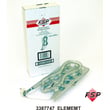
| No heat but drum turns | Heating circuit | Dryer heating element WP3387747 |
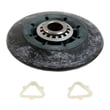
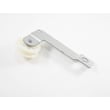
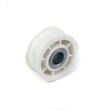
| Squealing, grinding, thumping | Drum support and belt drive | Support WPW10314173 or dryer idler pulley 279640 |
| Won’t start when door closes | Door interlock | Dryer door switch WP3406107 |
Replacement is typically the better choice when you see any of the following:
- Multiple failures in a short period (for example, heat issue plus drive issue plus electrical issue)
- Burnt wiring, repeated breaker trips, or signs of overheating that return after repair
- Major drum or cabinet damage that affects safe operation
- You need a large, expensive part and the dryer also has other unresolved problems
A dryer that is not venting well can overheat, blow thermal protection devices, and dry slowly. The manual also calls out routine care like cleaning the lint screen each load and keeping the exhaust area clear; that maintenance directly affects repair frequency and operating cost. Use the 11063032102 owner’s manual to match symptoms to the troubleshooting steps before buying parts.
Last updated: February 2026