Owner’s manual
What is the average lifespan of an air compressor?
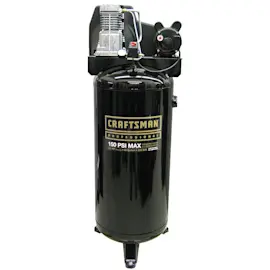
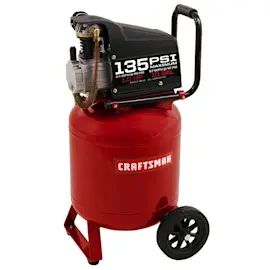
Most portable air compressors like the Craftsman 919167312 typically last about 5 to 15 years in homeowner use, but lifespan varies widely based on duty cycle, moisture control, and operating temperature. Following the maintenance schedule in the Craftsman 919167312 owner’s manual is the best way to maximize service life.
What affects lifespan the most
The compressor itself may keep running for years, but certain conditions shorten life quickly:
- Moisture left in the tank (internal rust is a common end-of-life driver)
- High duty cycle (running too long, too often without cool-down)
- Restricted airflow (dirty intake filter, blocked ventilation openings)
- Frequent overheating (hot ambient temps, poor ventilation, long run times)
- Air leaks that force the pump to cycle more than necessary
Model-specific habits that help the 919167312 last longer
Your Craftsman 919167312 manual calls out several routine items that directly impact longevity:
- Drain the tank daily or after each use
- Check the safety valve before use
- Keep the air filter clean (clean or replace when dirty)
- Maintain a 50% to 75% average duty cycle (avoid continuous run time when possible)
- Store in a clean, dry location after bleeding pressure and draining water
Quick lifespan expectations by use level
| Use pattern | Typical lifespan range | What usually ends it first |
|---|---|---|
| Occasional DIY (light tools, short cycles) | 10-15 years | Tank corrosion, switch wear |
| Regular garage use (frequent cycling) | 5-10 years | Pump wear, overheating, leaks |
| Heavy or near-continuous use | 3-7 years | Pump wear, motor/capacitor issues |
Why it matters
Air compressor “lifespan” is often limited by tank condition and heat management, not just the motor. Draining condensation and avoiding excessive run time reduces rust, cycling, and overheating, which helps protect the pump, pressure switch, and air tank.
Last updated: January 2026
Are air compressor connectors universal?
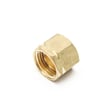
Most air compressor connectors are not truly universal; for the Craftsman 919167312, you can often interchange fittings, but you must match the coupler and plug style, body size, and thread type to avoid leaks, restricted airflow, or a connection that will not lock. For model-specific operating and safety guidance, use the 919167312 owner's manual.
What “universal” usually means (and what it does not)
Many quick-connect sets are marketed as “universal” because they accept more than one plug profile, but that does not guarantee every plug will fit every coupler.
Common compatibility factors include:
- Plug/coupler profile (industrial, automotive, ARO, etc.)
- Body size (for example, 1/4-inch body vs larger high-flow styles)
- Thread type and size (NPT sizes such as 1/4-inch NPT are common, but not automatic)
- Airflow demand (SCFM needs of your tool vs what the fitting can pass)
- Seal condition (worn O-rings or damaged seats cause leaks even when “compatible”)
Best practice for Craftsman 919167312 connections
We recommend treating the connector system as a matched set: coupler style plus matching plug style.
Before buying or swapping connectors:
- Confirm whether your outlet uses a quick connect or a threaded fitting
- Match the plug style to the coupler style already on your hose or compressor
- Choose a fitting size that supports your tool’s airflow needs (high-demand tools may need higher-flow fittings)
- Use thread sealant appropriate for air fittings and check for leaks with soapy water
Quick compatibility checklist
| What to match | Why it matters | What you may notice if it’s wrong |
|---|---|---|
| Plug/coupler style | Ensures it locks and seals | Won’t click in, pops out, constant leak |
| Body size/flow | Prevents pressure drop under load | Tool feels weak, regulator pressure drops fast |
| Thread size/type | Prevents leaks and damage | Cross-threading, hissing at threads |
Why it matters
A small mismatch can reduce performance and create persistent air leaks; leaks make the 919167312 run longer, build more heat, and increase wear on components like the regulator and check valve.
Optional deeper DIY reading: air compressor common questions.
Last updated: January 2026
Can an air compressor be repaired?
Yes. A Craftsman air compressor like model 919167312 can often be repaired when the issue is in serviceable components such as the pressure switch, regulator, check valve, fittings, or air filter. We recommend using the troubleshooting and safety guidance in the 919167312 owner’s manual before deciding whether to repair or replace.
What we check first on model 919167312
These are the most common repairable causes behind “won’t start,” “won’t build pressure,” or “leaks air” symptoms:
- Air leaks at fittings, hose connections, quick connect, or the drain valve
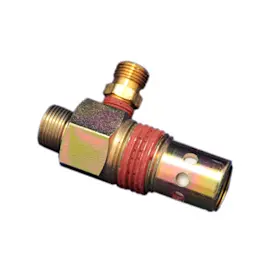
- Check valve leaking back toward the pump after shutoff
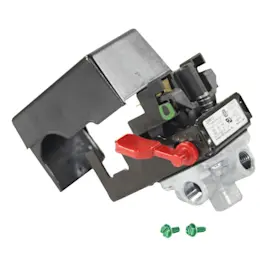
- Pressure switch not starting at cut-in or not stopping at cut-out
- Regulator that will not adjust outlet pressure or leaks continuously
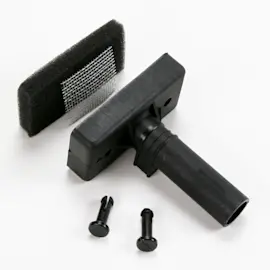
- Dirty or restricted air intake filter reducing airflow
Repair vs. replace: quick decision guide
| Situation | Usually repairable? | Typical next step |
|---|---|---|
| Compressor runs but leaks air | Yes | Locate leak with soapy water; tighten or replace the leaking part |
| Won’t start or trips breaker | Often | Verify power, cord, pressure switch operation, and check valve |
| Won’t build tank pressure | Often | Check intake filter, check valve, and pump/valve plate condition |
| Air tank is leaking | No (do not attempt tank repair) | Replace the tank or the entire compressor |
Why it matters
On the 919167312, the pressure switch and safety valve work together to control high tank pressure. Fixing leaks and faulty control parts helps maintain safe operation, prevents overheating, and restores steady air delivery.
Helpful DIY resources
These step-by-step resources can help you pinpoint the failure faster:
Last updated: January 2026