Owner’s manual
 Error Codes


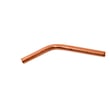
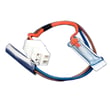
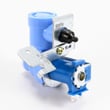
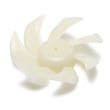
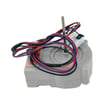
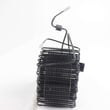
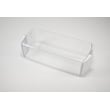
What model is my Kenmore 79578762800 Elite refrigerator?
Your Kenmore Elite refrigerator model is 795.78762800 (often shown as the 795.7876* family on the ID label). We find the exact model and serial number on the identification label inside the fresh food (refrigerator) compartment.
Where to find the model number label
Check these common label locations on Kenmore Elite bottom-mount refrigerators:
- Right-hand side wall inside the refrigerator compartment (most common for this model family)
- Inside the refrigerator section near the crisper drawer area
- On an inside wall of the freezer compartment
- Behind the base cover (kick plate) on some installations
For diagrams and the exact wording used on the label, use the owner's manual.
What the model number should look like
On the label, you may see the model written in one of these formats:
| How it may appear | What it means |
|---|---|
| 795.78762800 | Your full model number |
| 795.7876* | Model family; the * represents a color/finish code |
Quick tip
If the label shows 795.7876 plus extra digits or a color code, match the full number on the label to ensure you get the correct Kenmore parts (door switch, water inlet valve, evaporator fan motor, etc.).
Why it matters
We use the exact model number to match the correct parts and instructions for your refrigerator. Even small differences in the last digits can change fitment for items like the water line, door switch, or ice maker kit.
Last updated: February 2026
What is the average lifespan of a Kenmore 79578762800 Elite refrigerator?
A Kenmore Elite refrigerator like model 79578762800 typically lasts 10 to 15 years. Regular maintenance (especially cleaning condenser coils and keeping door gaskets sealing) helps you reach the high end of that range and reduces the chance of expensive sealed-system repairs.
Typical lifespan and what affects it
Most bottom-mount refrigerators fall into a similar life-expectancy range, but real-world lifespan depends heavily on operating conditions and upkeep.
- Condenser coil cleanliness (dirty coils raise compressor run time and heat)
- Door gasket seal quality (air leaks cause longer run times and frost)
- Room temperature and ventilation around the cabinet
- Door-opening frequency and warm food loads
- Water and ice system condition (valves, tubing, ice maker)
Maintenance that extends life
Use the care and cleaning guidance in the owner's manual and focus on the items that most directly reduce compressor workload.
- Vacuum or brush condenser coils on a regular schedule
- Keep door gaskets clean and check for gaps or tearing
- Confirm doors close fully and bins are not blocking closure
- Maintain steady temps (about 37°F fresh food, 0°F freezer)
- Address water leaks quickly to prevent corrosion and icing
Quick “what to do” table
| What you notice | What it usually means | What we recommend |
|---|---|---|
| Compressor runs a lot | Heat load is high (warm room, dirty coils, frequent openings) | Clean coils, improve airflow, reduce door-open time |
| Temps drift warmer | Airflow or defrost issue | Check vents for blockage; inspect for frost buildup |
| Water under fridge | Drain or tubing issue | Inspect drain path and water line connections |
Why it matters
A refrigerator that runs hot or runs constantly wears the compressor and sealed system faster. The manual notes that at normal room temperatures, compressor run time can be roughly 40% to 80%, and it increases in warmer conditions or with frequent door openings; keeping the system clean and sealed helps control that workload.
Last updated: February 2026
How to adjust door height on Kenmore 79578762800 Elite refrigerator?
To adjust door height on your Kenmore Elite 79578762800 bottom-mount refrigerator, level the cabinet first using the front leveling legs, then fine-tune door alignment by adding snap rings at the middle hinge to raise the low door until the gap between doors is even. See the owner's manual.
Step-by-step: level the refrigerator first
A door that looks “low” is often caused by the cabinet leaning. Leveling also helps the doors close more easily.
- Unplug or keep hands clear of moving parts while working near hinges and the base area.
- Open the freezer drawer and remove the base cover (screws are accessible with the drawer open).
- Use an 11/32-inch (8 mm) wrench or a flat-blade screwdriver to turn the front leveling legs.
- Turn the leveling leg clockwise to raise that side; turn counterclockwise to lower it.
- Adjust both legs evenly to tilt the refrigerator slightly back (front slightly higher than the back).
- Recheck door closing, then reinstall the base cover.
Step-by-step: raise a door using snap rings (door alignment)
If the space between the two fresh food doors is uneven after leveling, use the hinge shims (snap rings) provided with the refrigerator.
- Identify which door needs to be raised.
- With one hand, lift up the door at the middle hinge.
- With the other hand, use pliers to insert a snap ring onto the hinge pin (as shown in the manual).
- Add additional snap rings until the doors align (up to the provided quantity).
Quick comparison: leveling legs vs. snap rings
| Adjustment method | What it changes | Best for |
|---|---|---|
| Front leveling legs | Cabinet tilt (side-to-side and front-to-back) | Doors not closing well, refrigerator feels unsteady |
| Snap rings at middle hinge | Door height relative to the other door | Uneven gap between the two fresh food doors |
Why it matters
Proper leveling and door alignment help the door gaskets seal evenly, which stabilizes temperatures (fresh food and freezer), reduces frost and moisture issues, and prevents the doors from popping open or needing extra force to close.
Last updated: February 2026
What are the common problems with Kenmore 79578762800 Elite refrigerators?
Common problems we see with the Kenmore Elite 79578762800 bottom-mount refrigerator include warm temperatures from airflow or defrost issues, water leaks (often tied to drainage or water supply components), ice maker and dispenser troubles, lights not working, and normal-to-concerning noises. The owner's manual troubleshooting guide helps you match symptoms to the right checks.
Most common symptoms and what usually causes them
- Refrigerator or freezer too warm: blocked air vents, frequent door openings, controls not set correctly, or a fan/defrost problem.
- Water puddles or leaks: a clogged or misrouted drain, or a leaking water line or inlet valve.
- Ice maker issues (slow ice, bad taste/odor): heavy usage, warm freezer temps, old ice, or water quality and filter maintenance.
- No lights when door opens: burned-out light, loose connection, or a failed door switch.
- Noisy operation: condenser fan airflow, defrost sizzling, popping from expansion, or vibration from leveling.
Quick checks we recommend first (before replacing parts)
- Check airflow: make sure packages are not blocking vents; poor circulation can warm both sections.
- Adjust controls correctly: change one setting at a time and wait 24 hours between adjustments.
- Confirm doors seal and close: clean gaskets and the mating surface; sticking gaskets can be treated with a thin coat of paraffin wax after cleaning.
- Level the refrigerator: wobble and vibration often come from leveling legs needing adjustment.
- After a power interruption: allow the unit time to stabilize; some symptoms clear after temperatures recover.
Parts that commonly solve these problems (when diagnosis points there)
| Symptom | Common part to check | Example part for this model |
|---|---|---|
| Lights do not work when door opens | Door switch | Refrigerator door switch 6600JB1010A |
| Warm temps, weak airflow, fan noise | Evaporator fan motor | Refrigerator evaporator fan motor 4681JB1027C |
| Water leaking under/inside unit | Drain tube | Refrigerator drain tube 5251JA3003D |
| No water to dispenser or ice maker | Water inlet valve | Refrigerator water inlet valve MJX41178908 |
| Frost buildup, warming, defrost issues | Defrost sensor or heater | Refrigerator defrost sensor assembly 6615JB2005H and lg refrigerator defrost heater 5300JK1005D |
Why it matters
Warm temperatures, leaks, and airflow problems can quickly lead to food spoilage, ice buildup, and repeat service calls. Starting with venting, control settings, door sealing, and leveling helps you avoid unnecessary part replacement and narrows the diagnosis fast.
Last updated: February 2026
Why is my Kenmore 79578762800 Elite refrigerator leaking water out of the bottom?
Water leaking from the bottom of your Kenmore Elite 79578762800 is typically caused by a clogged or frozen defrost drain that overflows into the base, or a water supply leak at the inlet valve or tubing connections. Use the owner's manual for safe access and water line connection checks.
Most common causes (what to check first)
- Defrost drain clogged or iced: Defrost water backs up and spills into the cabinet bottom.
- Water line fitting dripping: A loose compression nut or ferrule can drip down the back.
- Cracked or pinched water tubing: Leaks often show only when the dispenser or ice maker runs.
- Water inlet valve seeping: The valve can leak at the body or fittings.
- Drain pan out of position: Defrost water misses the pan and ends up on the floor.
Quick diagnostic steps (10 to 20 minutes)
- Unplug the refrigerator before inspecting the bottom area.
- Pull the unit out and look for water trails from the rear down to the floor.
- Check the water line connection at the back; tighten any fitting that drips.
- Inspect tubing for kinks, rub marks, or splits.
- Look for ice or sludge at the freezer drain area (often shows as water under crispers).
Parts that commonly fix bottom leaks
- Refrigerator water inlet valve MJX41178908 (leaking valve or fittings)
- Refrigerator water tubing MJU62070602 (cracked or damaged line)
- Refrigerator drain tube 5251JA3003D (restricted drain path or damaged tube)
Symptom-to-cause guide
| What you notice | Most likely cause | Best next step |
|---|---|---|
| Water appears after defrost, even with water off | Clogged/frozen defrost drain | Clear the drain and confirm it flows to the pan |
| Water appears only when dispensing or making ice | Tubing or inlet valve leak | Inspect fittings and replace leaking part |
| Puddle near front center | Drain overflow into base | Check drain tube and drain pan alignment |
Why it matters
Bottom leaks can lead to ice buildup, odors, and repeated dripping during defrost cycles. Fixing the drain path or a small water line seep early helps protect flooring and the machine compartment.
Last updated: February 2026