Owner’s manual
 View engine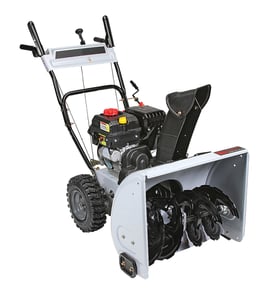




How to get rid of an old snowblower?
If you are getting rid of an old Craftsman snow thrower like model 536881950, the best option is usually metal recycling or a municipal bulky-item program; first make it safe by running the fuel out and draining any remaining gasoline so it can be handled legally and cleanly.
Safe prep before disposal (do this first)
- Run the engine until it stops to empty the fuel tank as much as possible.
- Let the engine cool completely.
- Remove the safety key and disconnect the spark plug wire.
- Drain any remaining gasoline into an approved fuel container.
- Wipe up spills and let fumes dissipate before transporting.
Best disposal options (most common)
- Scrap metal recycler or recycling center: Most snowblowers are primarily steel and aluminum.
- City or county bulky-item pickup: Many municipalities accept outdoor power equipment with fluids removed.
- Donation or resale (only if it runs): Local charities, community groups, or resale marketplaces.
- Junk removal service: Convenient if you cannot transport it.
What to do with old fuel and oil
| Item | What to do | What not to do |
|---|---|---|
| Gasoline | Take to a household hazardous waste site | Do not pour into drains or onto soil |
| Engine oil | Take to an oil recycling drop-off | Do not mix with gasoline |
| Spark plug | Recycle if accepted locally | Do not toss if your area treats it as hazardous |
Why it matters
Old fuel can leak and create fire risk during storage and transport. The 536881950 owner guidance also emphasizes not storing the snow thrower indoors with gasoline in the tank, which is the same safety principle you want to follow when disposing of it. Use the 536881950 owner's manual for fuel-handling and storage safety details.
Last updated: January 2026
How do I tell what year my snowblower is?
On a Craftsman snow thrower model 536881950, the most reliable way to determine the year is to read the engine’s manufacture date code (often stamped on the engine shroud, valve cover, or blower housing). That code decodes to a specific build date, which closely matches the snowblower’s production timeframe.
Where to look for the date information
Check these common locations first (engine off and cool):
- Engine shroud or recoil starter housing near the pull cord
- Valve cover area (overhead valve engines)
- Blower housing or muffler shield area
- A metal tag or stamped pad on the engine block
- The snowblower ID label (model and serial) on the frame or rear of the housing
For diagrams and label locations used on this unit, use the 536881950 owner's manual.
How to decode the engine code (quick guide)
Many small-engine date codes are numeric and start with the year. For example, a code like 99011556 is typically read as:
- 99 = year
- 01 = month
- 15 = day
- Remaining digits = plant/sequence information
Example decode table
| Example code | Interpreted date | What it tells you |
|---|---|---|
| 99011556 | Jan 15, 1999 | Engine build date |
| YYMMDDxx | Month/day in year YY | Engine build date format |
Why it matters
Knowing the year helps us match the correct carburetor parts, belts, friction wheel components, and ignition parts because snowblower designs and engine variants can change across production runs.
If you cannot find a readable engine code
Use these practical next steps to narrow it down:
- Compare your snowblower’s engine model/type to the engine parts listing in the manual
- Use the snowblower serial number (if present) to estimate production range
- Match wear items by exact fit; for example, confirm belt routing and size before ordering a replacement like the snowblower drive belt 1733324SM
Last updated: January 2026
Is it cheaper to repair or replace a snowblower?
For the Craftsman 536881950 9.5-hp snow thrower, it’s usually cheaper to repair when the problem is a normal wear item (belts, cables, shear pins, fasteners). Replacing the whole unit makes more sense when repair costs approach about half the price of a comparable new snowblower, or when major drivetrain or engine issues stack up.
Quick decision checklist
- Repair when the machine starts and runs well, but performance is slipping (poor drive, weak auger engagement).
- Repair when the fix is a common maintenance item you can service regularly.
- Replace when the engine has low compression, heavy oil burning, or repeated no-start issues after proper tune-up.
- Replace when the drive system has multiple expensive failures (friction wheel, bearings, shafts) at the same time.
- Replace when the housing, auger area, or key structural components are badly rusted or bent.
Typical repair costs vs. value (what we see most often)
Many “won’t move” or “won’t throw snow” complaints on this style of Craftsman snowblower come down to belts, cable adjustment, or shear pins, which are usually cost-effective repairs.
| Situation | Most common fix | Usually cheaper option |
|---|---|---|
| Auger won’t throw snow | Replace/adjust auger belt and linkage | Repair |
| Unit won’t drive forward | Friction wheel adjustment or replacement | Repair (unless multiple drivetrain parts are worn) |
| Frequent breakdowns season after season | Multiple systems worn (engine + drive + auger) | Replace |
Parts that often make repair the smart move
If your 536881950 is otherwise in good shape, these common parts are typically worth replacing:
- Snowblower drive belt 1733324SM (ground drive issues)
- Snowblower gas belt 585416MA (auger not engaging or not throwing snow)
- Kit shearbol 1501227MA (auger stops after hitting ice, gravel, or debris)
- Auger cable adjustment and inspection (often restores engagement without major cost)
Why it matters
A well-maintained snowblower lasts longer and performs better. Your manual calls out regular checks like tightening fasteners, checking/adjusting the auger control cable, and inspecting belts; it also stresses safe shutdown steps (stop engine, disconnect spark plug wire) before inspections or repairs. Use the 536881950 owner’s manual to match symptoms to the correct adjustment or replacement procedure.
Last updated: January 2026
What is the most common problem with snow blowers?
The most common problem we see with snow blowers like the Craftsman 536881950 is a clogged discharge chute, followed closely by no-start conditions from fuel and ignition issues. The owner’s guide also highlights chute clogs as a frequent hazard, so safe clearing and basic maintenance prevent many repeat problems.
Most common issues (and what usually causes them)
- Clogged discharge chute or auger housing: wet, heavy snow; throwing too fast; chute packed with ice.
- Won’t start: old fuel, dirty carburetor, fouled spark plug, or incorrect choke/throttle settings.
- Auger not turning: broken shear pins/bolts after hitting a hidden object.
- Poor drive or no forward movement: worn or stretched drive belt, idler pulley issues, or friction drive wear.
- Excessive vibration: damaged auger/impeller, loose fasteners, or debris caught in rotating parts.
Safe way to clear a clogged chute (model-recommended)
The Craftsman 536881950 guide is clear that hand contact with the impeller inside the chute is a leading injury cause. Use the steps in the 536881950 owner’s manual.
- Shut off the engine
- Wait 10 seconds for the impeller to stop
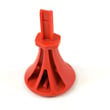
- Use a clean-out tool, not your hands
- Release the auger drive lever and remove the safety key
- Disconnect the spark plug wire before reaching near the auger or chute
Quick troubleshooting: symptom-to-fix table
| Symptom | Most likely cause | First thing we do |
|---|---|---|
| Chute plugs repeatedly | Wet snow, speed too fast, chute icing | Slow ground speed; clear with tool; let machine acclimate to outdoor temp |
| Engine starts then dies | Fuel/carburetor issue | Drain old fuel; clean carburetor bowl/jet; check spark plug |
| Auger stops when snow loads up | Shear pins/bolts broken | Inspect and replace shear pins/bolts; check for bent auger |
| Wheels don’t pull | Drive belt worn/slipping | Inspect/replace snowblower drive belt 1733324SM and check idler alignment |
Why it matters
A chute clog is more than an inconvenience; it increases strain on the auger/impeller and tempts unsafe clearing. No-start and drive issues usually trace back to storage and wear items (fuel, belts, cables), so preseason checks save time during the first storm.
Last updated: January 2026