Installation guide
 Owner’s manual


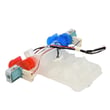
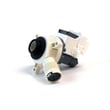
How to hard reset a Kenmore Elite washer?
A hard reset for a Kenmore washer like model 11020222510 is done by fully removing power long enough to clear the control, then restoring power and restarting a cycle. If the washer is mid-cycle, use START/PAUSE/Unlock Lid so the lid unlocks only after movement stops.
Hard reset steps (power reset)
- Press POWER/CANCEL to stop the cycle.
- Press START/PAUSE/Unlock Lid and wait for the basket to stop so the lid can unlock.
- Unplug the washer (or switch the breaker OFF).
- Wait 2 to 5 minutes.
- Restore power.
- Select a cycle and press START/PAUSE/Unlock Lid to run the washer.
If the lid stays locked after a reset
The lid can stay locked for several minutes after spinning at high speed. This is normal; the control waits for the basket to stop before unlocking.
- Wait a few minutes after pressing START/PAUSE/Unlock Lid
- Avoid opening the lid during sensing (it restarts the sensing process)
- Confirm the lid closes firmly and the strike lines up
Common part-related causes (when it will not lock or unlock)
| Symptom | Most likely area | What to check first |
|---|---|---|
| Won’t start, lid won’t lock | Lid lock system | Washer lid lock W11307244 |
| Stops and will not resume after opening | Lid not fully closed | Lid strike alignment |
| Random pauses during cycle | Normal operation | Status lights and cycle phase |
Why it matters
A true power reset clears temporary control glitches, but it will not fix a mechanical issue like a failing lid lock, a loose lid strike, or a wiring problem. Using the correct stop and unlock sequence also prevents forcing the lid while the basket is still moving.
Reference for your exact controls
Use the 11020222510 owner's manual for the correct button names, status lights (Lid Locked, Cycle Complete), and the proper START/PAUSE/Unlock Lid behavior.
Last updated: February 2026
Does my Kenmore top load washer have a filter?
Yes, the Kenmore 11020222510 top-load washer has places where debris can be trapped, but it typically does not use a simple, user-cleanable “lint filter” like some older washers. Most routine “filter” maintenance is cleaning the drain path and keeping the tub fresh using the steps in the 11020222510 owner's manual.
Where “filters” usually are on this washer
On this style of Kenmore top-load washer, the most common debris collection points are:
- The drain system (items can get caught and cause gurgling, humming, or draining issues)
- The inlet valve screens (tiny screens where the fill hoses connect)
- The wash basket and tub area (residue buildup that can cause odor)
If you are chasing a drain-related clog or slow drain, the washer drain hose W11244231 is a key part of the drain path to inspect for kinks, restrictions, or blockage.
Quick checks you can do safely
Before taking anything apart, we recommend these basics:
- Unplug the washer before any inspection behind or underneath it
- Confirm the drain hose is not kinked or crushed behind the washer
- Run water at the standpipe or laundry sink to confirm the household drain is not slow
- Check that both hot and cold faucets are fully on
- Inspect the inlet hose connections for sediment at the valve screens
Symptoms and the most likely “filter” area
| Symptom | Most likely area to check | What it points to |
|---|---|---|
| Washer won’t fill or fills slowly | Inlet valve screens | Sediment clogging screens or a supply issue |
| Gurgling or humming during drain | Drain system | Partial restriction or normal draining sound |
| Odor or residue | Tub and basket | Detergent and soil buildup |
| Clicking or metallic noise | Drain system or basket | Small objects caught in the drain path |
Why it matters
A clogged drain path can leave water in the tub and trigger noise or performance problems, and restricted inlet screens can cause long fill times. Regular washer-care cleaning also helps prevent odor-causing residue buildup.
Last updated: February 2026
How many cubic feet is a Kenmore Model 11020222510 washer?
The Kenmore washer model 11020222510 is typically about 3.2 cu. ft. in capacity. That is the common tub size for many Kenmore 110-series top-load washers; for the exact rated capacity for your specific unit, check the specifications section in the 11020222510 owner's manual.
How to confirm the capacity on your exact washer
We recommend verifying capacity using the model-specific literature because Kenmore 110-series washers can vary by revision and feature set.
- Look for “Capacity”, “Washer capacity”, or “Tub volume” in the specs pages
- Match the model number 11020222510 exactly (all digits)
- If the manual lists multiple similar models, confirm you are on the correct line
- If you have the serial tag, keep it handy for cross-checking
Why capacity matters (and what it affects)
Capacity impacts how much laundry you can wash effectively and how the washer performs.
- Load size guidance (avoids overfilling and poor cleaning)
- Spin performance and out-of-balance risk
- Water usage and cycle time
- Detergent amount (especially HE detergent)
Typical capacity reference (quick guide)
These are common ranges for top-load washers like Kenmore 110-series models.
| Washer type | Typical capacity range | What it usually means |
|---|---|---|
| Standard top-load | 2.9 to 3.5 cu. ft. | Good for everyday mixed loads |
| Large-capacity top-load | 3.6 to 4.3 cu. ft. | Better for bulky items |
| Extra-large top-load | 4.4 cu. ft. and up | Comforters and big family loads |
If your washer seems “small” or “large” for 3.2 cu. ft.
A few real-world factors can make the washer feel different than the published number.
- Agitator style and basket shape reduce usable space
- Bulky items trap air and take up more room
- Overloading can cause poor turnover and rinsing
- A worn drive system can reduce agitation strength (for example, a slipping washer drive belt WPW10006384)
Last updated: February 2026
What is the average lifespan of a Kenmore washer?
Most Kenmore washers last 10 to 15 years with normal household use. For Kenmore model 11020222510, consistent maintenance, correct loading, and fixing small issues early (like draining or spinning problems) are the biggest factors that help you reach the high end of that range; see the 11020222510 owner's manual.
Typical lifespan and what affects it
A washer’s service life depends more on use and care than the brand name on the lid.
- Loads per week: more cycles equals more wear on the drive system and suspension
- Overloading: strains the basket, gear case, and drive belt
- Detergent habits: too much detergent can cause residue and odor issues
- Water quality: hard water can increase buildup and valve issues
- Early repairs: replacing a worn belt or lid lock can prevent bigger failures
Common “wear items” vs. major repairs
These parts often wear before the washer is truly “done.” Replacing them can extend life.
| What you notice | Common wear item | Example part for 11020222510 |
|---|---|---|
| Slipping, weak spin, burning rubber smell | Drive belt | Washer drive belt WPW10006384 |
| Won’t start or stops when lid is opened/closed | Lid lock | Washer lid lock W11307244 |
| Slow fill, no fill, or fill errors | Water inlet valve | Washer water inlet valve W11210459 |
Signs it’s nearing end of life
If several of these show up together, replacement becomes more cost-effective.
- Repeated no-spin or no-drain symptoms after repairs
- Loud grinding or persistent oil/grease smell from the drive area
- Frequent leaks from the tub area
- Control problems that return after resets
- Repair cost approaching a large share of a new washer
Why it matters
Knowing the 10 to 15 year average helps you decide whether to invest in a repair (belt, lid lock, valve) or plan for replacement if the washer is already near the end of its typical service life.
Last updated: February 2026
Is it worth repairing a Kenmore washing machine?
Yes, it’s usually worth repairing a Kenmore washer like model 11020222510 when the fix restores reliable washing and spinning for less than the cost of replacement. Wear items (like belts) and common mechanical parts are often cost-effective repairs, especially when the tub and cabinet are in good shape.
Quick way to decide (repair vs. replace)
We use these checkpoints to make a clear call:
- Total repair cost vs. replacement cost: if the repair is well under a comparable new washer, repair wins.
- What failed: a belt, pulley, lid lock, or inlet valve is typically a straightforward repair.
- How the washer behaves now: no-spin, squealing, or slipping often points to drive components.
- Overall condition: heavy rust, repeated leaks, or severe vibration pushes toward replacement.
- Downtime and effort: if you need a fast fix, start with the most likely wear parts.
Common repairs that are typically “worth it”
These are frequent, practical fixes on washers in this design family:
| Symptom | Likely area | Example part for 11020222510 |
|---|---|---|
| Won’t spin or slips under load | Drive system | Washer drive belt WPW10006384 |
| Loud squeal or burning rubber smell | Pulley/belt path | Whirlpool washer drive pulley W10721967 |
| Won’t start or lid won’t lock/unlock normally | Lid lock system | Washer lid lock W11307244 |
| Won’t fill or fills slowly | Water inlet | Washer water inlet valve W11210459 |
What to check first (saves time and money)
Before buying parts, we recommend these basic checks:
- Confirm the lid is fully closed; many cycles will not start or fill with the lid open.
- If the washer is stuck locked, wait for the basket to stop spinning; unlocking can take several minutes with heavy loads.
- Look for belt dust, glazing, or cracking under the washer.
- Listen for squeal/whine during agitation or spin (often belt or pulley related).
- Verify hot and cold supply valves are fully open and inlet screens are not clogged.
Why it matters
A targeted repair keeps your Kenmore 11020222510 running safely and predictably, and it avoids replacing a whole washer for a single worn component. The best value comes from diagnosing the failure first, then replacing only the part that caused the symptom.
For model-specific operating and safety guidance, follow the 11020222510 owner's manual.
Last updated: February 2026
How to identify a Kenmore washer model?
To identify your Kenmore washer model, we look for the model and serial tag on the washer cabinet or around the lid and control panel area. For Kenmore model 11020222510, the tag is typically on the top, behind the control panel, or on the cabinet near the bottom.
Where to find the model number tag
Check these common locations first (top-load and front-load placements vary):
- Top-load washers: under the lid on the rim, or on the main cabinet near the bottom edge
- Behind the control panel: on the back of the console or rear panel area
- Front-load washers: inside the door opening, on the door jamb, or behind the door
- Rear of the washer: on the back panel near the power cord or water connections
- Installation notes: the installer may have written the model and serial in the paperwork section of the installation guide
What to write down (and why)
Record the information exactly as shown on the tag.
| What to capture | Example | Why it matters |
|---|---|---|
| Model number | 11020222510 | Ensures we match the correct parts list and diagrams |
| Serial number | (varies) | Helps confirm production run and compatible revisions |
| Brand | Kenmore | Narrows down manuals, troubleshooting, and parts |
Tips to avoid common mix-ups
These quick checks prevent ordering the wrong washer parts:
- Copy the model number character-for-character (including any leading zeros)
- Use the model number, not numbers from the lid, knobs, or cycle chart
- If the tag is worn, take a clear photo and zoom in to confirm digits
- Keep the model number handy when using the owner's manual for cycle and care guidance
Why it matters
Kenmore washers often share similar cabinets and control panels across multiple series, but parts like a lid lock, water inlet valve, or drive belt can differ by model. Using the exact model number helps us match the right Kenmore washer parts the first time.
Last updated: February 2026