


Do you use 40 1 or 50 1 gas in a chainsaw?
For a Homelite UT10947 16" gas chainsaw, we use the 2-cycle fuel mix ratio specified for the engine; most modern 2-cycle chainsaws run 50:1 (gasoline to 2-cycle oil), while some older or high-hour saws may call for 40:1. Use the ratio your saw is set up for every time to prevent hard starting, poor power, and piston damage.
Quick rule to choose 40:1 vs 50:1
- Use 50:1 if your chainsaw is designed for 50:1 (common on many newer 2-cycle engines).
- Use 40:1 only if your specific engine labeling or prior setup calls for it.
- Do not “split the difference”; mixing ratios inconsistently can cause running problems.
- If the saw has been running 50:1 reliably, stay with 50:1.
How to mix 50:1 and 40:1 (common batch sizes)
| Mix ratio | 1 gallon gas | 2.5 gallons gas | 5 gallons gas |
|---|---|---|---|
| 50:1 | 2.6 oz oil | 6.4 oz oil | 12.8 oz oil |
| 40:1 | 3.2 oz oil | 8.0 oz oil | 16.0 oz oil |
Symptoms of the wrong mix
- Too little oil (too lean): surging, overheating smell, loss of power, scoring risk
- Too much oil (too rich): smoky exhaust, fouled plug, carbon buildup, bogging
- Old fuel: hard starting, stalling, poor throttle response
If you are chasing a no-start or misfire after a fuel change, a fresh plug is a smart first step; the spark plug 870174002 is a common tune-up item for this model.
Why it matters
The correct oil-to-gas ratio lubricates the crankshaft bearings, piston, and cylinder in a 2-cycle engine. Running the wrong mix is one of the fastest ways to create starting issues and shorten engine life.
Last updated: February 2026
How to tell the year of a Homelite chainsaw?
You can tell the build year of a Homelite chainsaw by finding its serial number and decoding the date code embedded in it. On many Homelite saws, the serial number includes a Julian day (001 to 365) plus a year indicator; converting that day to a calendar date gives you the approximate build date.
Where to find the serial number on a Homelite UT10947
Check these common locations on a Homelite UT10947 16-inch gas chainsaw:
- On a label or stamping on the crankcase near the starter housing
- On the chassis or rear handle area
- Near the bar mount area (side cover removed)
- On the underside of the saw body
If the label is missing or unreadable, cleaning the area and using a flashlight at an angle often makes stamped numbers easier to see.
How to decode the date (common Homelite format)
A common Homelite-style date code uses:
- Julian day: 001 to 365 (day of the year)
- Year digit(s): often one digit (for the year within a decade) or two digits
Quick example
If you see something like:
| Code piece | What it means | Example value |
|---|---|---|
| Julian day | Day of the year | 152 |
| Year indicator | Year within a decade (varies by era) | 5 |
Julian day 152 converts to June 1 in a non-leap year (or May 31 in a leap year). The year digit 5 then needs to be matched to the correct decade based on the saw’s design and features.
How to choose the correct decade
Because a single year digit can repeat every 10 years, we use these checks to pin it down:
- Compare the saw’s styling, safety labels, and emissions markings
- Look for a primer bulb and modern warning decals (typically newer)
- Check whether the carburetor has limiter caps (common on later emissions-era saws)
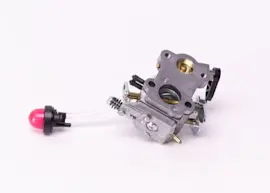
- Match major assemblies to the UT10947 parts list (for example, the carburetor 000998271)
Why it matters
Knowing the build year helps you match the correct parts and revisions for your UT10947, especially for fuel system and ignition items that change over production runs (fuel line routing, carburetor versions, and spark plug specs).
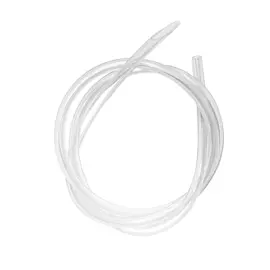
If you are already troubleshooting a no-start or poor-running condition, we typically start with ignition and fuel delivery basics such as the spark plug 870174002 and the fuel line 0745416.
Last updated: February 2026
Can you still get parts for Homelite chainsaws?
Yes. We still offer replacement parts for the Homelite UT10947 16" gas chainsaw, and you can match parts by model number so you get the right fit for your saw. Common maintenance items like ignition and fuel-system parts are typically the easiest to source.
Parts you can still get for Homelite UT10947
For this model, we commonly see customers replacing wear items and small hardware first. Examples available for UT10947 include:
- Spark plug 870174002 for ignition and starting
- Fuel line 0745416 for fuel delivery (cracks and leaks are common over time)
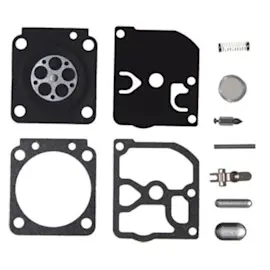
- Carburetor 000998271 when the saw won’t idle or won’t stay running
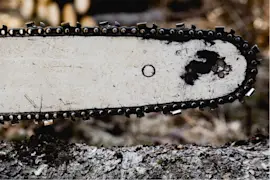
- Guide bar PA01222 if the bar is worn, bent, or the rails are damaged
- Hand guard UP06568A if the chain brake area is damaged or missing
How to make sure you order the correct part
Homelite chainsaws often have similar-looking parts across models, so we recommend confirming fit by model number and part ID.
- Use the exact model number: UT10947
- Compare the part name and part ID (not just a photo)
- Replace related wear items together (example: fuel line plus fresh fuel filter if applicable)
- Inspect mounting hardware and fasteners during reassembly
- Keep note of how hoses route before removal
Quick fit-check guide
| What you’re replacing | What to match | Example from this model |
|---|---|---|
| Ignition tune-up | Part ID and plug type | Spark plug 870174002 |
| Fuel delivery issue | Hose size and routing | Fuel line 0745416 |
| Running/idle problems | Correct carburetor assembly | Carburetor 000998271 |
Why it matters
Using the correct UT10947-SPECIFIC part helps prevent air leaks, fuel leaks, hard starting, and poor cutting performance. It also reduces the chance of repeat repairs caused by mismatched fuel lines, incorrect carburetor fitment, or the wrong bar setup.
Last updated: February 2026