Installation guide
 Owner’s manual


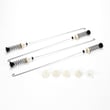
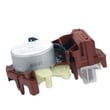
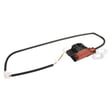
What is the life expectancy of a Kenmore washer?
Most Kenmore washers, including model 11021102010, typically last 10 to 15 years with normal household use; regular maintenance and timely replacement of wear parts can push lifespan toward the high end of that range.
- Load size and frequency: daily heavy loads shorten life faster than moderate weekly use.
- Overloading: strains the drive system, basket, and gear case.
- Drain performance: slow draining makes the pump work harder and can leave water behind.
- Lid lock and control issues: repeated cycle interruptions add wear and can lead to no-spin complaints.
- Maintenance habits: cleaning residue and keeping the washer level reduces vibration and stress.
Use these habits for Kenmore top-load washers like 11021102010:
- Keep loads balanced; mix items to prevent off-balance spinning.
- Use the right amount of HE detergent to reduce buildup.
- Check pockets; coins and screws can damage the pump and tub.
- Inspect hoses periodically and replace if bulging or cracking.
- If you notice slow draining or standing water, address it early (pump and hose issues tend to cascade).
Replacing a failed wear part is often more cost-effective than replacing the washer.
| Symptom | Common wear area | Example part for 11021102010 |
|---|---|---|
| Won’t spin or weak agitation | Drive system | Washer drive belt WPW10006384 |
| Won’t drain or drains slowly | Drain system | Washer drain pump assembly WPW10276397 |
| Won’t start or stops mid-cycle | Lid safety system | Washer lid lock assembly W10404050 |
A washer that is maintained and repaired early usually avoids secondary damage (for example, a slipping belt can increase heat and wear in the drive system). That is the difference between a simple part replacement and a major repair.
For model-specific care, cleaning, and operating tips, follow the schedule in the 11021102010 owner's manual.
Last updated: January 2026
How to hard reset kenmore washer?
To hard reset your Kenmore washer model 11021102010, unplug it (or switch off the breaker) for 2 minutes, then restore power and run a quick cycle to confirm the control board rebooted and the washer responds normally. For model-specific reset and diagnostic steps, use the 11021102010 user manual.
- Press Power/Cancel to stop the cycle.
- Unplug the washer (or turn the breaker off).
- Wait 2 minutes (this lets the control fully discharge).
- Restore power.
- Select Rinse/Spin (or a short cycle) and press Start.
- If the washer still will not start, confirm the lid is fully closed and latched.
These checks fix the most common causes that look like a control problem.
- Lid not locking: If the washer will not spin or start, the lid lock may not be engaging. Inspect the strike area for detergent buildup and test operation; replace the washer lid lock assembly W10404050 if it will not lock consistently.
- Drain problem: If the tub will not drain, the control may pause the cycle. Check for a kinked drain hose and clear pump obstructions; replace the washer drain pump assembly WPW10276397 if it hums but will not pump.
- Drive system issue: If the motor runs but agitation or spin is weak, check the belt and drive components; a worn washer drive belt WPW10006384 can mimic a “reset needed” symptom.
| Action | What it helps | What it won’t fix |
|---|---|---|
| Power reset (unplug 2 minutes) | Clears temporary control glitches, restores normal response | Broken lid lock, failed drain pump, worn belt, damaged wiring |
| Running a test cycle after reset | Confirms the washer can fill, agitate, drain, and spin | Underlying mechanical failures |
A hard reset is the fastest way to clear a temporary control board lockup, but repeated “needs a reset” behavior usually points to a lid lock, draining, or drive problem that needs a part replacement or repair procedure from the 11021102010 user manual.
Last updated: January 2026
How to unclog drain hose on Kenmore washer?
For Kenmore washer model 11021102010, we unclog the drain hose by safely draining any standing water, removing the hose, clearing the blockage, then reinstalling it with no kinks and a secure connection. Use the steps and diagrams in the 11021102010 installation guide to confirm hose routing and drain-standpipe setup.
- Unplug the washer (or switch off the breaker).
- Turn off both water supply valves.
- Protect the floor with towels; keep a shallow pan nearby.
- If the tub is full, bail water out first or drain into a bucket as you loosen the hose.
- Access the drain hose: Pull the washer forward and locate the hose at the back where it connects to the household drain/standpipe.
- Remove the hose: Loosen the clamp and carefully pull the hose free. Expect water to spill.
- Check the easy blockage points:
- The hose end at the standpipe
- The hose end at the washer outlet
- Any sharp bends or crushed sections
- Clear the obstruction:
- Flush the hose with hot tap water (not boiling).
- Use a flexible brush or a small drain snake; avoid sharp tools that can puncture the hose.
- If you find cracks, soft spots, or permanent kinks, replace the hose.
- Reinstall and test: Reattach the hose, tighten the clamp, restore power, then run a Drain/Spin cycle and watch for leaks.
- A clogged or failing pump (common symptom: humming but no water movement); consider the washer drain pump assembly WPW10276397.
- A kinked or restricted hose; consider the washer drain hose W11244231.
- A lid lock issue preventing spin/drain on some cycles; consider the washer lid lock assembly W10404050.
| Symptom | Most likely cause | Best next step |
|---|---|---|
| Slow drain, gurgling | Partial hose clog or standpipe restriction | Flush hose; check standpipe for buildup |
| Pump hums, no drain | Pump jammed or failed | Inspect pump inlet; replace pump if needed |
| Drains sometimes, not always | Intermittent kink or loose clamp | Re-route hose; secure clamp; verify height |
A restricted drain hose can cause poor draining, long cycle times, and spin problems. Clearing the hose and confirming correct routing helps protect the drain pump and reduces leak risk.
Last updated: January 2026
How many cubic feet is a Kenmore Model 11021102010 washer?
Kenmore washer model 11021102010 has a 3.5 cu. ft. capacity. Use the 11021102010 owner's manual to verify the specification wording used for your unit (capacity, basket volume, or tub volume) and to match it to your exact configuration.
- Check the model and serial tag under the lid or around the tub opening to confirm 11021102010
- Look in the 11021102010 owner's manual for Specifications, Features, or Capacity
- If capacity is listed in liters, convert using 1 cu. ft. = 28.3 L
- Match your washer style (agitator vs. impeller) to the feature list so you are reading the correct spec
- If you are planning an install space, use the 11021102010 installation guide for clearance and dimension details
| Capacity | Typical loads that fit well | Loading tip |
|---|---|---|
| 3.5 cu. ft. | Mixed weekly laundry, towels, jeans | Load loosely; keep items below the top rim |
Using the correct capacity helps prevent overloading, which reduces cleaning performance and can contribute to out-of-balance spinning and extra wear on drive components.
Last updated: January 2026