Owner’s manual
 Error Codes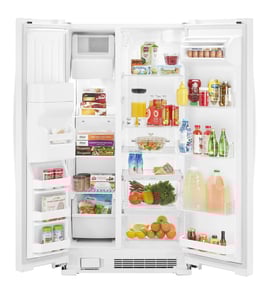


What's the average lifespan of a Whirlpool refrigerator?
Most Whirlpool refrigerators, including the Whirlpool ED5VHEXVQ04 side-by-side, typically last 12 to 15 years with normal household use. Consistent cleaning, good airflow around the cabinet, and fixing small cooling or water issues early are what most often push lifespan toward the high end.
Typical lifespan ranges (what to expect)
Refrigerator life varies most by usage, maintenance, and whether the sealed system and controls stay healthy.
| Condition | Typical lifespan | What usually shortens it |
|---|---|---|
| Normal use, basic maintenance | 12 to 15 years | Dirty condenser, poor ventilation |
| Well maintained, light-to-moderate use | 15 to 18 years | Door seal leaks, ice buildup |
| Heavy use or neglected maintenance | 8 to 12 years | Overworked compressor, fan failures |
What helps your ED5VHEXVQ04 last longer
- Keep condenser coils clean so the compressor runs cooler and less often.
- Maintain airflow: leave space behind the refrigerator and avoid blocking vents inside.
- Keep doors sealing tightly; warm air leaks force longer run times.
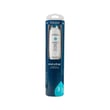
- Replace the water filter on schedule to protect the dispenser and ice maker.
- Address puddles, frost, or temperature swings quickly before they strain major components.
Quick “is it near end-of-life?” checklist
If you see several of these at once, repairs become more frequent:
- Food temperatures drift even after adjusting controls
- Compressor runs almost constantly or is unusually loud
- Frost buildup returns quickly after defrosting
- Water dispenser slows, sputters, or stops
- Ice maker output drops or cubes get smaller
Why it matters
A refrigerator that runs longer than it should uses more energy and puts extra wear on high-cost components like the compressor and electronic controls. Simple maintenance and timely part replacement often prevents the “domino effect” that leads to bigger failures.
For model-specific use and care details (cleaning, temperature settings, and filter replacement guidance), follow the owner's manual.
Last updated: February 2026
How can I tell how many cubic feet my Whirlpool refrigerator is?
For your Whirlpool ED5VHEXVQ04 side-by-side refrigerator, the most reliable way to confirm cubic-foot capacity is to look it up by model number in the specifications section of the ED5VHEXVQ04 owner's manual. If you only need an estimate, you can calculate interior volume by measuring and converting cubic inches to cubic feet.
Option 1: Confirm capacity from the model information
Use the model number ED5VHEXVQ04 and check the specifications section in the ED5VHEXVQ04 owner's manual. This gives the stated capacity for your exact refrigerator configuration.
Option 2: Estimate cubic feet by measuring (quick math)
This method is useful if labels are missing or you want a rough comparison.
- Empty the main compartments enough to measure accurately
- Measure interior width, height, and depth in inches (do refrigerator and freezer separately)
- Multiply:
width × height × depth = cubic inches - Convert:
cubic inches ÷ 1,728 = cubic feet - Subtract a little for shelves, bins, and the ice maker area (they reduce usable space)
Conversion table
| What you have | What to do | Result |
|---|---|---|
| Interior measurements in inches | Multiply W × H × D | Cubic inches |
| Cubic inches | Divide by 1,728 | Cubic feet (cu. ft.) |
Typical capacity range (for context)
Most side-by-side refrigerators like this Whirlpool model land in a mid-to-large capacity range.
- Smaller side-by-sides: about 20 to 22 cu. ft.
- Common side-by-sides: about 22 to 26 cu. ft.
- Larger side-by-sides: about 26 to 30 cu. ft.
Why it matters
Knowing cubic feet helps us match the right replacement parts and accessories (like shelves, bins, and ice storage) and it also helps when comparing energy use and storage needs across refrigerator styles.
Last updated: February 2026
What is the biggest problem in a Whirlpool refrigerator?
The biggest problem we see in Whirlpool refrigerators like model ED5VHEXVQ04 is poor cooling (fresh food too warm, freezer not holding temperature). Cooling complaints often trace back to restricted airflow, frost buildup from a defrost issue, or dirty condenser coils; ice maker and water dispenser issues are also very common.
Most common “big” problems (and what usually causes them)
- Not cooling or weak cooling: blocked vents, heavy frost on the evaporator, dirty condenser, or a failing fan
- Ice maker not making ice: water supply issue, frozen fill tube, or a failed ice maker module
- Water leaking or puddles: clogged/iced defrost drain or water line/valve seepage
- Warm spots and temperature swings: thermostat/control sensing issues or airflow restrictions
- Door not sealing well: gasket not sealing, door alignment, or a worn closer cam
Quick checks we recommend first
- Confirm temperatures: freezer near 0°F, refrigerator near 37°F (typical targets).
- Check airflow: make sure vents are not blocked by food packages.
- Look for frost patterns: a solid frost blanket on the back freezer panel often points to a defrost problem.
- Inspect the door seal: look for gaps, tears, or areas that do not grip a paper strip.
- If ice maker is the complaint: verify the shutoff arm is down and the water supply valve is fully open.
Parts that commonly solve these symptoms on ED5VHEXVQ04
| Symptom | Common part to check/replace | What it affects |
|---|---|---|
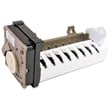
| Ice maker not working | Refrigerator ice maker WPW10190965 | Ice production cycle |
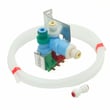
| No water to dispenser/ice maker | Refrigerator water inlet valve W10408179 | Water flow into the unit |
| Frost buildup, warm fridge | Refrigerator defrost heater WP2323198 | Melts evaporator frost |
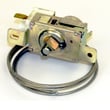
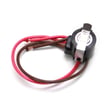
| Frost buildup, defrost won’t terminate | Refrigerator defrost bi-metal thermostat WPW10225581 | Defrost temperature sensing |
| Door not closing/sealing consistently | Refrigerator door closer cam WPW10329686 | Door closing action |
Why it matters
Cooling problems can quickly lead to food spoilage and can also trigger secondary issues like excessive frost, noisy operation, and ice maker failures. Fixing airflow, defrost, or sealing problems early usually prevents bigger repairs later.
Helpful references for this model
- Use the owner's manual for temperature settings, control features, and model-specific checks.
- If you’re chasing a display or control-related symptom, our Whirlpool refrigerator error codes guide helps narrow down the failure area.
Last updated: February 2026