 Installation guide
 Owner’s manual
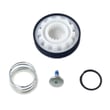


What is a common problem for a Whirlpool washer front loader?
A common Whirlpool front-load washer problem is odor or mildew caused by moisture trapped around the door boot, followed closely by drain and spin issues from restricted draining. For your Whirlpool WTW8500DW0 (a top-load model), the most common real-world issues are filling problems, not draining, and out-of-balance vibration.
Common problems we see (and what usually causes them)
- Washer will not run or fill: installation or water-supply issues, loose fill hoses, or a failed inlet valve
- Stops mid-cycle or “won’t start” symptoms: lid not locking, or the washer not sensing properly
- Won’t drain or won’t spin: drain hose setup problems, a kinked hose, or a drive system issue
- Loud banging or walking: washer not level, feet not locked, or worn suspension
- Leaks: loose fill hose connections, missing hose washers, or drain hose not secured
Quick checks for WTW8500DW0 (most effective first)
Use these steps from the WTW8500DW0 installation guide to rule out the most common setup-related causes:
- Confirm the washer is level and the feet are firmly on the floor; tighten jam nuts after leveling
- Verify fill hoses are tight and all four flat washers are seated correctly
- Make sure the drain hose is secured and not pushed too far into the standpipe (helps prevent siphoning)
- Check the laundry tub or standpipe height is within the typical install range (too low or too high can cause drain issues)
- Plug the washer into a grounded 3-prong outlet (no adapter or extension cord)
Parts that commonly fix these symptoms on WTW8500DW0
If the basic checks do not resolve the issue, these model-matched parts are frequent solutions:
| Symptom | Common part to check | What it affects |
|---|---|---|
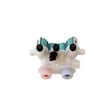
| Won’t fill or fills slowly | Washer water inlet valve W11165546 | Water entering the washer |
| Won’t start, lid error, stops | Washer lid lock assembly W10810403 | Lid locking and cycle enable |
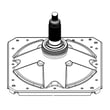
| Excessive vibration, off-balance | Damper assembly W11130356 | Tub suspension and stability |
Why it matters
Front-load odor and drain complaints often come from moisture and restricted draining. On a top-load Whirlpool WTW8500DW0, correct leveling and drain hose setup are just as important because the washer may refuse to fill, splash, siphon, or vibrate excessively when installation conditions are off.
Last updated: January 2026
What is the life expectancy of a Cabrio washer?
A Whirlpool Cabrio-style top-load washer typically lasts about 11 years with normal household use and proper installation and care. For your Whirlpool WTW8500DW0, keeping the washer level, using correct water supply conditions, and preventing overloads helps you reach that expected lifespan.
Typical lifespan and what affects it
Most Cabrio-style washers land in a similar range, but real-world life depends on usage and maintenance.
- Loads per week: more cycles usually means faster wear
- Installation quality: a level floor reduces vibration and stress
- Water conditions: correct pressure and temperature help valves and seals
- Detergent habits: too much HE detergent can cause residue and odor
- Drain and spin health: slow draining or off-balance spinning accelerates wear
Quick care checklist for longer life
Use these habits to reduce strain on the drive system, suspension, and lid lock.
- Keep the washer level and stable; re-level if it starts walking
- Avoid consistently overloading; bulky loads should move freely
- Use HE detergent and measure carefully
- Leave the lid open between loads to help the tub dry
- Address new noises early (grinding, squealing, loud banging)
Common wear items (and what they impact)
If performance drops, these parts are often involved on top-load designs like WTW8500DW0.
| Symptom | Often related to | Example part for this model |
|---|---|---|
| Won’t start or stops mid-cycle | Lid lock not engaging | Washer lid lock assembly W10810403 |
| Won’t fill or fills slowly | Inlet valve or supply screens | Washer water inlet valve W11165546 |
| Excessive shaking or banging | Suspension not controlling tub movement | Damper assembly W11130356 |
Why it matters
Knowing the typical 11-year life expectancy helps you decide whether to repair or replace. If your WTW8500DW0 is near that age and showing multiple symptoms (fill, spin, vibration), targeted part replacement can restore reliability without replacing the whole washer.
For installation and care basics (level floor, water pressure, electrical requirements), follow the WTW8500DW0 installation guide.
Last updated: January 2026
How do I find the model number on my WTW8500DW0?
Your Whirlpool washer’s model number is on the appliance identification label; once you find it, match it exactly (letters and numbers) to order the correct parts and use the right documentation for your WTW8500DW0. The installation guide also provides a place to record the model and serial numbers.
Where to look on the washer
On Whirlpool top-load washers like the WTW8500DW0, the model and serial tag is typically in one of these spots:
- Under the lid, around the lid opening (top rim of the cabinet)
- On the underside of the lid
- Along the back edge of the lid opening
- On the rear exterior panel of the cabinet
How to read and use the number
Write the model number and serial number exactly as shown on the label.
- Use the full model number, not just the first few characters
- Keep letters and numbers in the same order (example: WTW8500DW0)
- If there is a revision after the model (sometimes shown on the tag), record it too
- Use the model number when selecting diagrams and parts such as a lid lock, water inlet valve, or control board
Quick checklist
| What to capture | Why it matters |
|---|---|
| Model number | Ensures correct part fit and correct diagrams |
| Serial number | Helps identify production variation and compatible revisions |
| Any suffix/revision | Prevents ordering a similar-looking but incompatible part |
Why it matters
Whirlpool washers often share similar cabinets and controls across model families; using the exact model number prevents wrong-part returns and speeds up troubleshooting.
Last updated: March 2026





