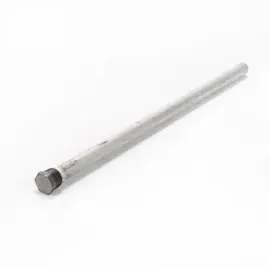
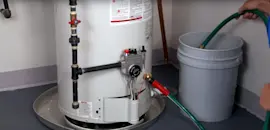
Owner’s manual
 Error Codes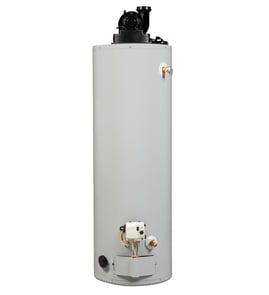


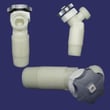
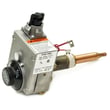


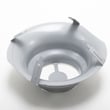
Is it cheaper to repair or replace a water heater?
For a Kenmore 153331472 gas water heater, it’s usually cheaper to repair when the tank is sound and the problem is a serviceable part (pilot, thermocouple, valve). Replacement makes sense when the tank is failing or when safety-related damage has occurred.
- Repair when the issue is ignition or burner related (pilot won’t stay lit, weak flame, intermittent heating).
- Repair when a normal wear part is failing (thermocouple, pilot assembly, drain valve, intake screen).
- Replace when the tank itself is leaking (not fittings) or corrosion is advanced.
- Replace if the heater has been flooded; the manual states the unit must be replaced.
- Replace after a flammable vapor ignition event; the manual indicates the entire water heater requires replacement.
- Service/replace parts if the ECO (energy cut off) activates; the manual notes the gas control valve/thermostat must be replaced by a qualified technician.
These are the kinds of fixes that often restore hot water without replacing the whole heater:
| Symptom | Likely area | Example part for model 153331472 |
|---|---|---|
| Pilot won’t stay lit | Flame sensing/thermocouple | Thermocouple 100108267 |
| No ignition or unreliable lighting | Pilot/ignition components | Water heater pilot assembly 100111380 |
| Poor combustion, shutdowns, airflow issues | Air intake restriction | Water heater air intake screen 100111332 |
| Rotten egg odor, faster tank corrosion | Anode protection | Water heater anode rod 100109434 |
For model-specific lighting and safety steps, follow the 153331472 owner's manual.
Repairing a gas water heater is often about restoring safe combustion and reliable ignition. Replacing the whole unit is the right call when the tank or safety conditions make continued operation unsafe, even if the heater still “sort of” runs.
Last updated: February 2026
What is the average labor cost to install a 50 gallon gas water heater?
Labor to install a 50-gallon gas water heater typically runs about $400 to $1,000 for a straightforward replacement; the price goes up when venting, gas piping, or plumbing needs to be modified. For Kenmore models like 153.331572 (50-gallon), we recommend following the safety and installation steps in the owner's manual.
Most installers price labor based on time, complexity, and code requirements. Common labor-only ranges include:
- Like-for-like swap (easy access, existing vent and gas line): $400 to $700
- Moderate complexity (some piping or vent adjustments): $700 to $1,000
- High complexity (relocation, major venting or gas work): $1,000+
These items commonly add time and cost to a gas water heater installation:
- Permit and inspection requirements
- Venting changes (draft hood, vent connector, chimney liner issues)
- Gas line resizing, new shutoff valve, or sediment trap updates
- Water line rework (corroded shutoffs, rigid piping, tight clearances)
- Bringing the installation up to current local plumbing and fuel-gas codes
- Haul-away of the old tank and site cleanup
| Scenario | Labor-only range | Why it changes |
|---|---|---|
| Straight replacement | $400 to $700 | Minimal changes; fastest job |
| Some upgrades needed | $700 to $1,000 | Extra parts, testing, adjustments |
| Major modifications | $1,000+ | Venting or gas work can be time-consuming |
A gas water heater installation is not just “hooking it up.” Proper venting and safe gas combustion are critical for reliable hot water and safe operation. Using the correct installation steps and clearances helps prevent nuisance shutdowns and performance problems.
Your Sears PartsDirect model page is for Kenmore 153.331472 (40-gallon), but the same manual series also covers 153.331572 (50-gallon). The owner's manual is the best place to confirm the exact installation checklist and requirements for your specific tank size.
Last updated: February 2026
How do I read my water heater model number?
Your Kenmore water heater model number is printed on the rating plate (data label) on the heater. For model 153331472, the rating plate identifies the exact unit so you can match the correct parts list, manual, and specifications.
On this Kenmore gas water heater, look for the rating plate on the tank jacket or behind an access panel. The manual also shows the rating plate location in the “Get to know your water heater” diagram in the owner's manual.
- Check the outside of the tank jacket first (often on the side)
- Look near the burner access area and doors (inner and outer door area)
- Use a flashlight; the label can be low on the tank
- Write the model number exactly as shown (numbers only for this model)
- Keep the label intact; it is used for identification and service
For this series, the model number is the key identifier that ties to tank size and the correct parts list.
| What you’re checking | What it tells you | Example for this page |
|---|---|---|
| Model number | Exact product version | 153331472 |
| Brand | Parts and documentation family | Kenmore |
| Fuel type (from label/manual) | Correct ignition and venting parts | Gas (natural) |
Even one digit off can point to a different tank capacity or parts set. Before ordering, match the model number from the rating plate to the model shown on the manual and parts list.
- Match all digits; do not use a “close” model
- If you’re comparing similar models, confirm tank size on the label
- Use the model number when selecting ignition parts like the thermocouple 100108267 or the water heater pilot assembly 100111380
Using the correct model number helps ensure you get parts that fit your burner and pilot system, venting setup, and tank configuration; it also prevents ordering the wrong anode rod, drain valve, or door gasket.
Last updated: February 2026
What is the most common problem with a gas water heater?
The most common gas water heater problem is the burner not heating because the pilot will not light or will not stay lit. On Kenmore model 153331472, this often traces to combustion air issues, a dirty flame-arrestor/base-ring filter, or a failing thermocouple or pilot assembly (see the troubleshooting and maintenance sections in the owner's manual).
- Pilot will not light or won’t remain lit: weak pilot flame, dirty pilot, or a failing safety sensing component.
- Burner will not ignite: pilot is out, no gas supply, clogged pilot line, or a bad thermocouple.
- Yellow or “lazy” burner flame: insufficient combustion air or venting problems.
- Sizzling or frying sound with moisture: normal condensation during cold-water refill or heavy hot-water use.
- Rotten egg smell: water chemistry reacting with the anode rod.
- Confirm the gas shutoff valve is fully open and other gas appliances work.
- Check the area for adequate make-up air (closets and tight spaces commonly starve the burner).
- Inspect and clean the base-ring filter/flame arrestor area if lint and dust are present.
- Look for signs of overheating around the burner door area (often tied to airflow or venting).
- If the heater has been unused for 2 weeks or more, run hot water at the farthest faucet for several minutes before using connected appliances.
If basic airflow and gas-supply checks look good, these are the most common service parts for Kenmore 153331472:
| Symptom | Common fix | Part to consider |
|---|---|---|
| Pilot won’t stay lit | Flame sensing issue | Thermocouple 100108267 |
| Pilot won’t light reliably | Ignition/pilot component issue | Water heater pilot igniter 100110936 |
| Pilot issues plus weak/unstable flame | Pilot assembly problem | Water heater pilot assembly 100111380 |
| Lazy yellow flame, overheating shutdowns | Restricted intake air | Water heater air intake screen 100111332 |
A gas water heater depends on correct combustion air supply and venting. When air is restricted, the flame can turn “lazy,” heat builds in the combustion chamber, and safety devices can shut the heater down. Keeping the intake area clean and the pilot system healthy prevents nuisance shutdowns and no-hot-water complaints.
Last updated: February 2026
What is the life expectancy of a Kenmore water heater?
Most Kenmore tank-style gas water heaters typically last 8 to 12 years. Your Kenmore model 153331472 can reach the high end of that range when it is installed correctly, the burner area stays clean, and the tank is maintained per the 153331472 owner's manual.
A water heater’s service life is mainly driven by water quality, maintenance, and how hard the unit works.
- Water hardness and sediment: more sediment means more heat stress and noise
- Anode rod condition: a worn anode speeds up tank corrosion
- Combustion air and venting: restricted air intake or poor draft can shorten component life
- Temperature setting: higher settings increase scaling and stress
- Leak history: recurring moisture around fittings can lead to early failure
These are the most effective, practical steps for a Kenmore gas water heater like model 153331472:
- Flush a few gallons from the tank periodically to reduce sediment
- Inspect and replace the anode rod when it is significantly depleted
- Keep the burner area and air intake path clear (do not block the intake)
- Verify the vent draft hood and venting are secure and unobstructed
- Address pilot or ignition problems quickly to prevent repeated failed heating cycles
If performance issues start showing up, these parts are often involved:
| Symptom | Commonly related part | What it can cause |
|---|---|---|
| Pilot will not stay lit | Thermocouple 100108267 | Burner shuts off, no hot water cycles |
| Slow recovery, rumbling | Water heater anode rod 100109434 | More corrosion risk, more sediment issues |
| Weak or inconsistent pilot/ignition | Water heater pilot assembly 100111380 | Intermittent heating, nuisance shutdowns |
| Poor combustion air flow | Water heater air intake screen 100111332 | Sooting, shutdowns, reduced efficiency |
Once a tank begins corroding internally, repairs shift from “replace a part” to “prevent a leak.” Replacing wear items (especially the anode rod) and keeping combustion air flowing helps you get the full expected lifespan.
Last updated: February 2026