Owner’s manual
 Error Codes


How to hard reset kenmore washer?
To hard reset your Kenmore washer model 11022712100, we recommend a simple power reset: unplug the washer (or switch off the breaker) for 1 minute, then restore power and start a cycle. This clears minor control glitches and cycle “hang-ups.”
Quick hard reset steps (power reset)
- Push in the Cycle Control knob to stop the washer.
- Unplug the power cord from the outlet (or turn the breaker off).
- Wait 60 seconds.
- Plug the washer back in (or turn the breaker on).
- Close the lid and pull the Cycle Control knob out to restart.
For model-specific operating details (including stopping and restarting a cycle), follow the steps in the 11022712100 owner's manual.
If the washer still will not start, agitate, or spin
A “reset” will not fix a mechanical or safety-interlock problem. Check these common causes next:
- Lid not fully closed; this model will not agitate or spin with the lid open.
- Normal cycle pause; some cycles pause for about 2 minutes.
- Extension cord in use; do not use an extension cord.
- Overload or unbalanced load; reduce load size and redistribute items.
- Drain setup issue; a clogged drain hose or a standpipe higher than typical limits can prevent draining/spinning.
Parts that commonly affect spin or “won’t run” symptoms
| Symptom | Common check | Related part for this model |
|---|---|---|
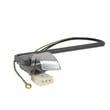
| Won’t spin/agitate | Lid switch operation | Washer lid switch WP3949238 |
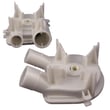
| Won’t drain/spin | Pump obstruction or failure | Washer drain pump WP3363394 |
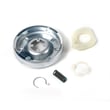
| Motor runs but no agitation/spin | Drive coupling worn | Coupling 285753A |
Why it matters
A hard reset clears temporary electrical logic issues, but repeated no-spin/no-drain problems usually point to a lid switch, drain pump, coupling, or a load/installation condition. Fixing the root cause prevents mid-cycle stops and protects the drive system.
Last updated: February 2026
How to read Kenmore washer model numbers?
Kenmore washer model numbers are read left to right: the first 3 digits identify the manufacturer, the next group identifies the base design, and the final digits show feature or production variations. For model 11022712100, the 110 prefix is the key identifier when matching parts and manuals.
What each section of the model number means
Most Kenmore washer model numbers follow this pattern:
- Prefix (first 3 digits): manufacturer code (for example, 110)
- Middle digits: base platform or series (the core design family)
- Ending digits: version details (feature package, engineering change, or production run)
Quick example
| Example model | Prefix | What it tells you | Why you use it |
|---|---|---|---|
| 11022712100 | 110 | Manufacturer family | Ensures correct parts list and manual |
Where to find the model number on the washer
On Kenmore model 11022712100, we use the same location described in the documentation: the model and serial label is under the washer lid.
- Lift the lid and look around the rim of the opening
- Write down the full model number and serial number
- Use the complete number (all digits) when ordering parts
For the exact label location and how Sears expects it recorded, use the 11022712100 owner's manual.
Why it matters for parts and troubleshooting
Kenmore model numbers often look similar, but small digit changes can mean different components (like a lid switch, drain pump, or gearcase). Using the full model number helps us match the correct replacement part the first time.
Common examples where the exact model matters:
- Lid not sensing closed (often points to a lid switch such as washer lid switch WP3949238)
- Won’t drain or drains slowly (often points to a drain pump)
- Agitator issues (dogs, cam, or agitator assembly)
Last updated: February 2026
Is it worth replacing the pump on a washing machine?
Yes, it’s usually worth replacing the drain pump on a Kenmore washer model 11022712100 when the washer is otherwise in good shape and the problem is clearly a no-drain or leak-at-pump issue; a pump replacement is a targeted repair that often restores normal draining without the cost of a new washer. For safety and correct disassembly steps, follow the 11022712100 owner's manual.
When pump replacement is the right call
We recommend replacing the pump when you see classic drain-pump symptoms:
- Washer won’t drain or drains very slowly
- You hear the motor running but little or no water leaves the tub
- Water leaks from the front/bottom area during drain or spin
- A burning smell or loud grinding during drain (pump impeller damage)
- The washer stops before spin because it can’t empty
If your washer drains fine but won’t spin or agitate, the pump is usually not the root cause.
Quick cost and decision guide (practical “50% rule”)
A simple way we evaluate value is comparing repair cost to replacement cost.
| Situation | Typical recommendation | Why |
|---|---|---|
| Pump is the only confirmed failure | Replace the pump | Lowest-cost fix for a no-drain washer |
| Multiple major failures (leaks + drive issues + electrical) | Consider replacing the washer | Costs stack up quickly |
| Washer is in good condition and you can DIY | Repair is usually worth it | Labor savings changes the math |
What to check before buying a pump
Before ordering parts, we verify the basics that can mimic a bad pump:
- Confirm the drain hose isn’t kinked or crushed
- Check for a clog in the drain hose or standpipe
- Make sure the lid is closing and the lid switch is working (a failed switch can stop drain/spin)
- Look for small items (coins, socks) blocking the pump inlet
- Unplug the washer before inspecting internal components
If the washer won’t run drain/spin with the lid closed, the washer lid switch WP3949238 is a common fix on this platform.
Why it matters
A weak or leaking drain pump can prevent proper draining, which can stop the spin cycle, leave clothes soaking wet, and increase the chance of water damage. Replacing the correct failed part (pump vs. lid switch vs. hose) avoids repeat breakdowns.
Last updated: February 2026
What is the average lifespan of a Kenmore washer?
A Kenmore washer typically lasts 10 to 15 years. For Kenmore model 11022712100, you can reach the high end of that range by using correct load sizes, keeping the washer clean, and fixing wear items early; normal wear in drive and drain components is what usually ends service life.
What affects washer lifespan most
- Overloading (extra strain on the drive system and suspension)
- Poor draining (standing water stresses the pump and can cause odors)
- Unbalanced loads (increases vibration and wear)
- Hard water and detergent buildup (can shorten valve and tub life)
- Delayed repairs after new noises, leaks, or weak agitation
Maintenance we recommend (high impact, low effort)
Use the care and use guidance in the 11022712100 owner's manual and stick to these habits:
- Load so items move freely during washing (not packed tight)
- Use the right amount of detergent; too much causes buildup
- Run an occasional hot wash (or washer cleaner cycle if available) to reduce residue
- Check fill and drain performance; slow fill points to the inlet valve, slow drain points to the pump or hose
- Level the washer and keep loads balanced to reduce vibration
Common wear parts that can shorten life (and what they cause)
| Symptom | Often involved part | What you notice |
|---|---|---|
| Won’t spin or stops when lid opens | Lid switch | No spin, intermittent operation |
| Won’t drain or drains slowly | Drain pump or drain hose | Water left in tub, humming |
| Agitates weakly or slips | Agitator dogs or motor coupling | Poor wash action, rattling |
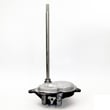
| Loud grinding or oil leak | Gear case | Noise, leaking, poor spin |
If your washer is not spinning reliably, the washer lid switch WP3949238 is a common fix on this platform.
Why it matters
A washer that is loaded correctly and drains and spins normally runs cooler, vibrates less, and puts less stress on the gear case, clutch, and motor. That directly translates into more years of dependable operation.
Last updated: February 2026